Thursday, 1 July 2010

A 'JOY' to be in Abbotsbury

My first Blog pleasure today is to welcome the United Arab Emirates (Salam alikoum) to the readership, and while I know this is not Oman I'm wondering if this addition is anything to do with meeting the Omani National Sailing Team the other day? In addition, we now have readers from the Asian/Pacific Region and while not specified as to country there is the same welcome as above. To increase readership and Country Tally (now standing at 73) we ask ALL readers to pass this link to their friends and families, it's always good to welcome new interest! Thank You.

http://bagsy-thecaptainslog.blogspot.com/

The intention was to catch the 05-20 X53 service to Abbotsbury, in an attempt to catch up with the Gull-billed Tern of yesterday, but in the event I was offered a lift by 'long time' birding friend Ken Parker. As it happened we followed the said bus for part of the drive, arriving at the Abbotsbury Swannery Water Meadows at about 05-45. Unfortunately, Kenny only had about 90 minutes during which time we did shift location trying the beach a little further west, but at both met with no success. Returning to the meadows, I was left alone but within the hour the Tern put in a brief appearance flying distantly over the hide, across the Fleet before turning east towards Ferry Bridge. Not totally satisfactory, but a view nonetheless, I stuck it out a little longer until Ken anounced by phone that he was about to return.

The Water Meadows with the Fleet Lagoon in the middle distance and the Chesil Bank in the background. The Hide is left of center, the artificial Tern Island to the right of that and to the extreme right many of the large 'herd' of Mute Swans can be seen if magnified.

Informing Ken of my brief sighting encouraged us both, and acting on further information we returned to the beach in company with a 'twitcher' from Herefordshire, but again no luck. News came over on the pager at about 09-00 that it had been seen from within the Swannery bound, so it was time to play our 'ace card'. We have friends who work there and let us in, allowing us to venture to another hide overlooking the nesting Common Tern Colony where we immediately picked up on the target bird. Unfortunately, it was very mobile but allowed decent views but no photographs.

As we looked from the meadows the Cruise Liner 'Saga Ruby' steamed west at the start of another cruise.

Swannery staff members David Wheeler and Steve Groves flanking Ken Parker.

At the hide we also encountered these Black Swans, long time residents there, as are a few Bar-headed, Greylag and dozens of Canada Geese. During our stay we also recorded a number of Whitethroat and Blackcap, c5 Ravens, singles of Peregrine, Green Woodpecker, Common Buzzard, Sparrowhawk and heard a There were also several Common Terns at the hide feeding young.

While in the area I took advantage of a long overdue look around this most picturesque village and I'd like to dedicate the rest of this post to former resident of Abbotsbury and my next-door neighbour Joy Langford, her family Andrew, May, Trevor and Oliver, but not forgetting friend to all of us Roy Henderson.

The Duck Pond

The old Abby ruins viewed across the pond.

The Tithe Barn. I did try to get to Gerald's room but Lynne Arnold didn't have access and there was no one there who did.

The Abbot's house.

The entrance arch and Abbey ruins.

The Parish Church of St Nicholas.

Ancient, but undated, effigy.

View down the Naive.

and towards the Choir and Gallery.

I just had an idea that this was Don & Liz's old house?

The Old School now the Strangways Hall.

The Ilchester Arms public house, many a good night spent here!

The main street looking west.

The Swan public house, had to pop in for a 'pie & a pint'.


Num Perc. Country Name

drill down215884.13%United KingdomUnited Kingdom
drill down1154.48%EstoniaEstonia
drill down863.35%NetherlandsNetherlands
drill down491.91%United StatesUnited States
drill down281.09%CanadaCanada
drill down210.82%


drill down170.66%JapanJapan
drill down150.58%AustraliaAustralia
drill down90.35%SpainSpain
drill down80.31%DenmarkDenmark
drill down60.23%New ZealandNew Zealand
drill down50.19%ColombiaColombia
drill down50.19%ArgentinaArgentina
drill down40.16%NorwayNorway
drill down30.12%IrelandIreland
drill down30.12%BelgiumBelgium
drill down30.12%FranceFrance
drill down30.12%IndiaIndia
drill down20.08%Russian FederationRussian   Federation
drill down20.08%Moldova, Republic OfMoldova,   Republic Of
drill down20.08%GermanyGermany
drill down20.08%United Arab EmiratesUnited Arab   Emirates
drill down20.08%PortugalPortugal
drill down10.04%TurkeyTurkey
drill down10.04%Costa RicaCosta Rica
drill down10.04%IndonesiaIndonesia
drill down10.04%SwedenSweden
drill down10.04%FinlandFinland
drill down10.04%BelarusBelarus
drill down10.04%CroatiaCroatia
drill down10.04%MexicoMexico
drill down10.04%ThailandThailand
drill down10.04%PolandPoland
drill down10.04%CyprusCyprus
drill down10.04%EcuadorEcuador
drill down10.04%ItalyItaly
drill down10.04%SingaporeSingapore
drill down10.04%EuropeEurope
drill down10.04%Czech RepublicCzech Republic
drill down10.04%Asia/pacific RegionAsia/pacific   Region

Wednesday, 30 June 2010

The Young Ones - Cliff Richard

There had been a promise of overnight rain, which came to naught, but the sky was overcast as I headed for Radipole at 06-00. On the way there were c2 Goldcrest singing in the Melcombe Regis Cemetery, with only a few dozen Swifts of note at the reserve. On the walk to Lodmoor, I noted the House Martins were still feeding young beneath the eves of the flat-lets with the now usual chorus of screeching Common Terns as I entered the Moor.

Not sure about this, could it be Self Heal?

Shelduck and brood.

Common Tern colony, almost covered in young birds.

On both islands there were young Terns everywhere, indicating excellent breeding so far this year, but there is a conundrum I just cannot figure. It's not unusual to see small numbers of these Terns flying off the reserve, gaining high altitude and heading to the west. Similarly, they are seen passing over Radipole and my house presumably to the Fleet as returning birds can be seen carrying 'fish'. The question is, why would they prefer to travel 3+ miles to achieve what their fellow colonists do just 400 feet away from the nests?

The hedgerows are now smelling sweet with Honeysuckle.

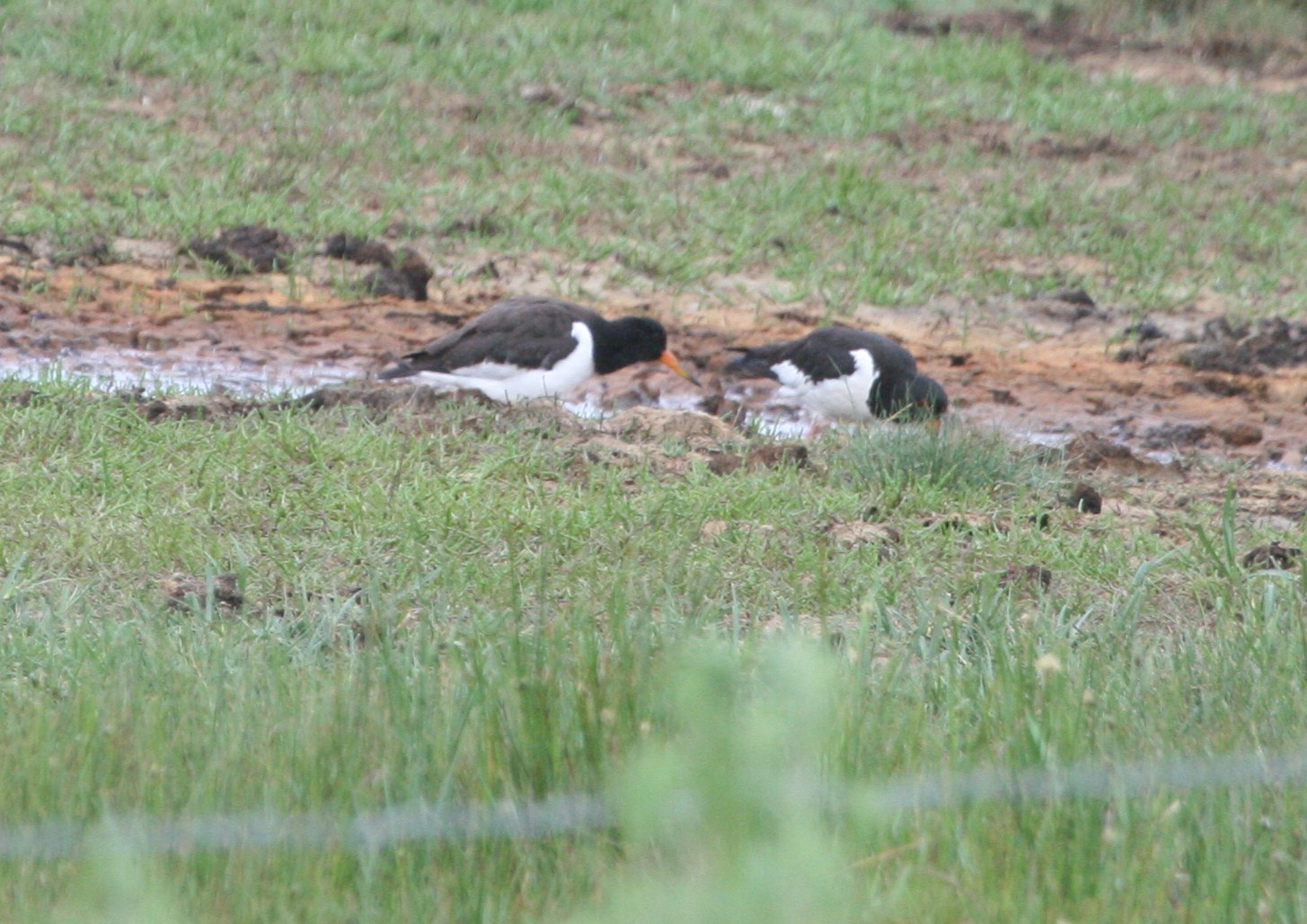
2 of the 3 Oystercatcher juveniles, almost full grown and feeding well.

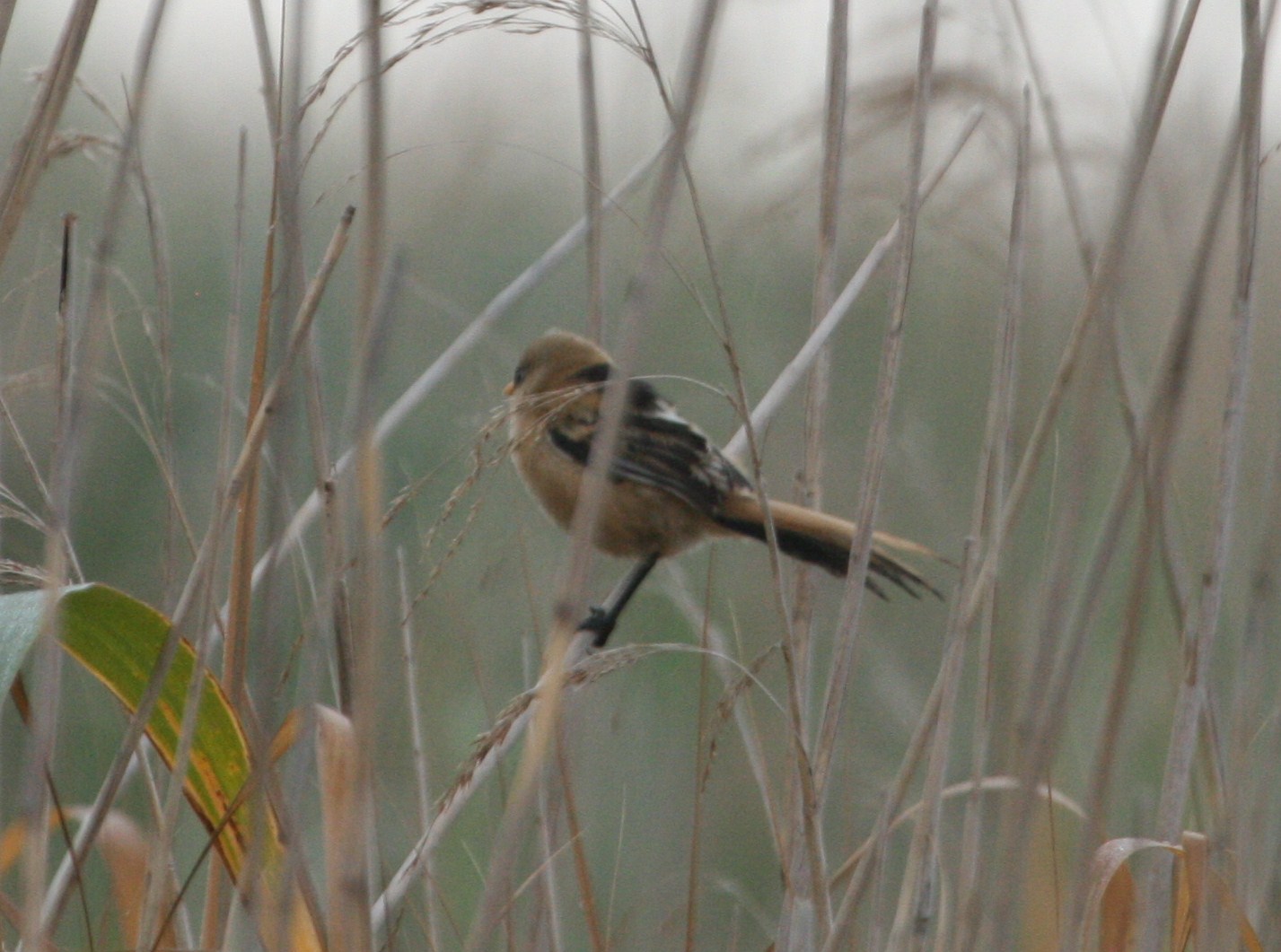
Young Bearded Tit, one of c12 birds seen today.

How predictable, more (totally unnecessary) strimming at Lodmoor. Despite the finding of probably one of the rarest varieties of Orchid in Great Britain and the paths being 4 feet wide, they still have a compulsion to cut 2 feet into the reed-beds - Nature Lovers my arm!

Juvenile Black-headed Gull

My first returning Mediterranean Gull (foreground) of the Summer, with adult and juvenile Black-headed Gulls.

Many of the young Mallard are gaining weight.

Most of the Wildfowl on the Moor are looking scruffy as they moult their feathers. This female Tufted Duck doesn't look too bad!

Branched Bur-reed,

just like the one they used to have at Radipole Lake.

Blooming plant were covered in insects and the odd arachnid.

The Spider and the Fly, it's behind you.

News came through at mid-day of a Gull-billed Tern, a real rarity for Dorset, at Abbotsbury but I was 'wrong footed' and couldn't get out there. However, unless something dramatic happens before dark, I'll be on the 05-15 bus tomorrow.

Gull-billed Tern, unfortunately not the Dorset bird. This photograph was taken near Darwin, Australia in 2008.

and finally.

As I arrived home, mid-afternoon, laden with shopping a huge Raptor passed overhead and purposefully to the south. It was an Accipiter about the size of the pursuing Herring Gulls and while I did get my binoculars to bear I could see nothing, except its size, that might confirm a Goshawk.

Tuesday, 29 June 2010

Ceylonese Summer

Don't know how I managed to omit this photograph yesterday, but readers must be getting used to that. Here are a pair of Large Red Damselflies, with one having the other by the 'scruff of the neck'.

Hugh left, Janet behind tripod and my mate from Weymouth, Alex with dreadlocks all becoming 'twitchers'!

Hugh & I enjoying a cup of Chi.

It's been a full day in the galley for me, punctuated by attention to a few outstanding items, as my friends Hugh and Janet arrive from Christchurch at 19-00 for dinner. We met while on a tour of Sri Lanka in 2006, and have remained firm friends ever since. On the strength of that, there follows a series of photographs of that trip.

Asian Openbill

A supposedly rare Black Bulbul

Black-necked Stork

Blue-tailed Bee-eater

Brahaminy Kite

Changeable Hawk Eagle

Malabar Pied Hornbill

Painted Stork

Pheasant-tailed Jacana

Sri Lankan Junglefowl

Little Praticole

Stork-billed Kingfisher

Yellow-wattled Plover

Leopard, the King of them all!

Unfortunately, I am not able to publish my latest RSPB findings at this time, save to say I have written to Sarah Alsbury and have received, in part, an inadequate reply, a promise of viewing the legal documents associated with the ringing of the Little Terns plus an invitation to meet Dante Munns the RSPB Dorset Area Manager. Certainly a step in the right direction, and an opportunity that will not be wasted by me! Watch this space.

and finally, I can report from the RSPB's Luke Philips that it was not he who found the 'rare' Orchid reported over the past 2 days but a RSPB Volunteer Botanist. Thank you Luke, the pint remains in place.

Monday, 28 June 2010

Linden Lea - William Barnes

However I forgot to post this photograph yesterday, I'll never know being not only my favorite from the Dorchester group, but also the most evocative!

This is Queen's Avenue on the southern edge of the town, and complete with its double row of mature Linden (also called Lime and Basswood) Trees you would have to go a long way to view a finer 'Avenue' than this. Probably my favourite tree in the forest, we had 2 monsters outside of the Hut where I spent the last 2 years of my childhood on Nottington Lane, but the name Linden was familiar to me long before this. As the solo soprano in the Bramcote Hills School for Boys (close to my home in Chilwell, Notts) Choir, we/I sung the song 'Linden Lea' at the National Inter-Schools Championships at the Royal Albert Hall, Nottingham, which we won. Originally a poem, written in the Dorset dialect, by William Barnes it was adapted to music by Ralph Vaughn Williams.

Within the woodlands, flowery gladed,
By the oak trees’ mossy moot,
The shining grass blades, timber-shaded,
Now do quiver underfoot;
And birds do whistle overhead,
And water’s bubbling in its bed,
And there, for me, the apple tree
Do lean down low in Linden Lea.

When leaves, that lately were a-springing
Now do fade within the copse,
And painted birds do hush their singing
Up upon the timber tops;
And brown-leaved fruit’s a-turning red,
In cloudless sunshine overhead,
With fruit for me, the apple tree
Do lean down low in Linden Lea.

Let other folk make money faster
In the air of dark-roomed towns,
I don’t dread a peevish master;
Though no man do heed my frowns,
I be free to go abroad,
Or take again my homeward road
To where, for me, the apple tree
Do lean down low in Linden Lea.

Today could have been described as 'a little dull' on the bird front, but the beauty of wildlife watching is no such thing as a 'dull moment'.

Already quite a number of Oedemera nobilis were visiting the flowers of Great Bindweed. This insect, one of 7 in the family, has no 'common' name but given its beauty it should have!

Oedemera nobilis this one is a male.

Large Skipper & Meadow Brown on Greater Knapweed, and

"If you go down to Fancy's Farm to look for Butterflies, Flutterbies, open your eyes, full of surprise" (Willow Farm - Genesis).

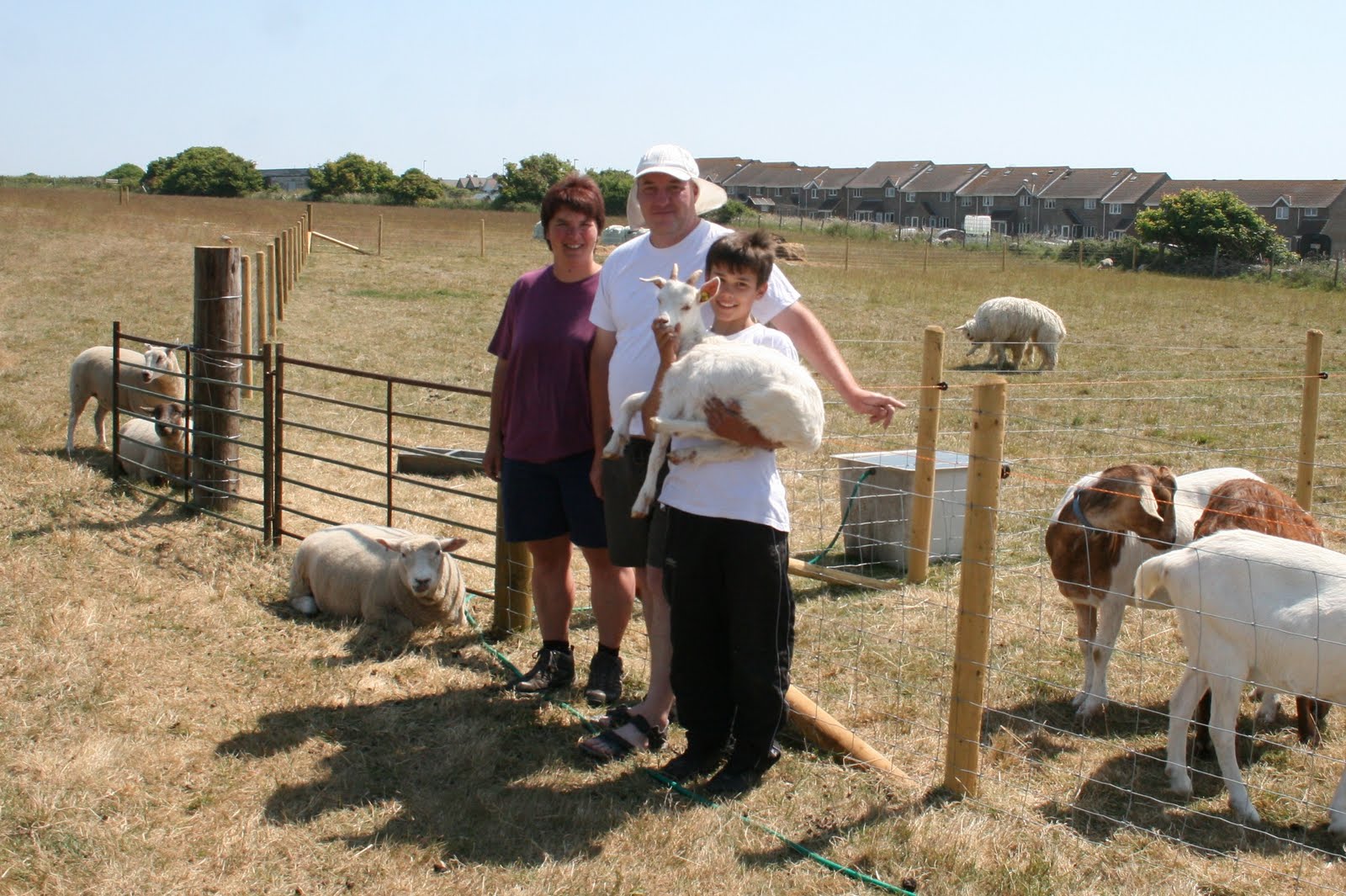
Sue (nee McColm and niece of Roger a former 'ship-mate of mine) & John Illsley, with young helper (slave hee, hee) Jack Ayles, surrounded by some of the diverse animals on their 'Open Farm' at Reap Lane, Southwell, Portland.

'Genesis' may have composed these words above for part of their opus Supper's Ready (from the Foxtrot album), but the words fit perfectly for the farm. Open on a Sunday, it is easily reached via the No1 (First) bus which leaves Debenhams, Weymouth about every 15 minutes, alighting at the 'second' bus stop on Reap Lane and walking back on yourself up the track leading to the West Cliff.

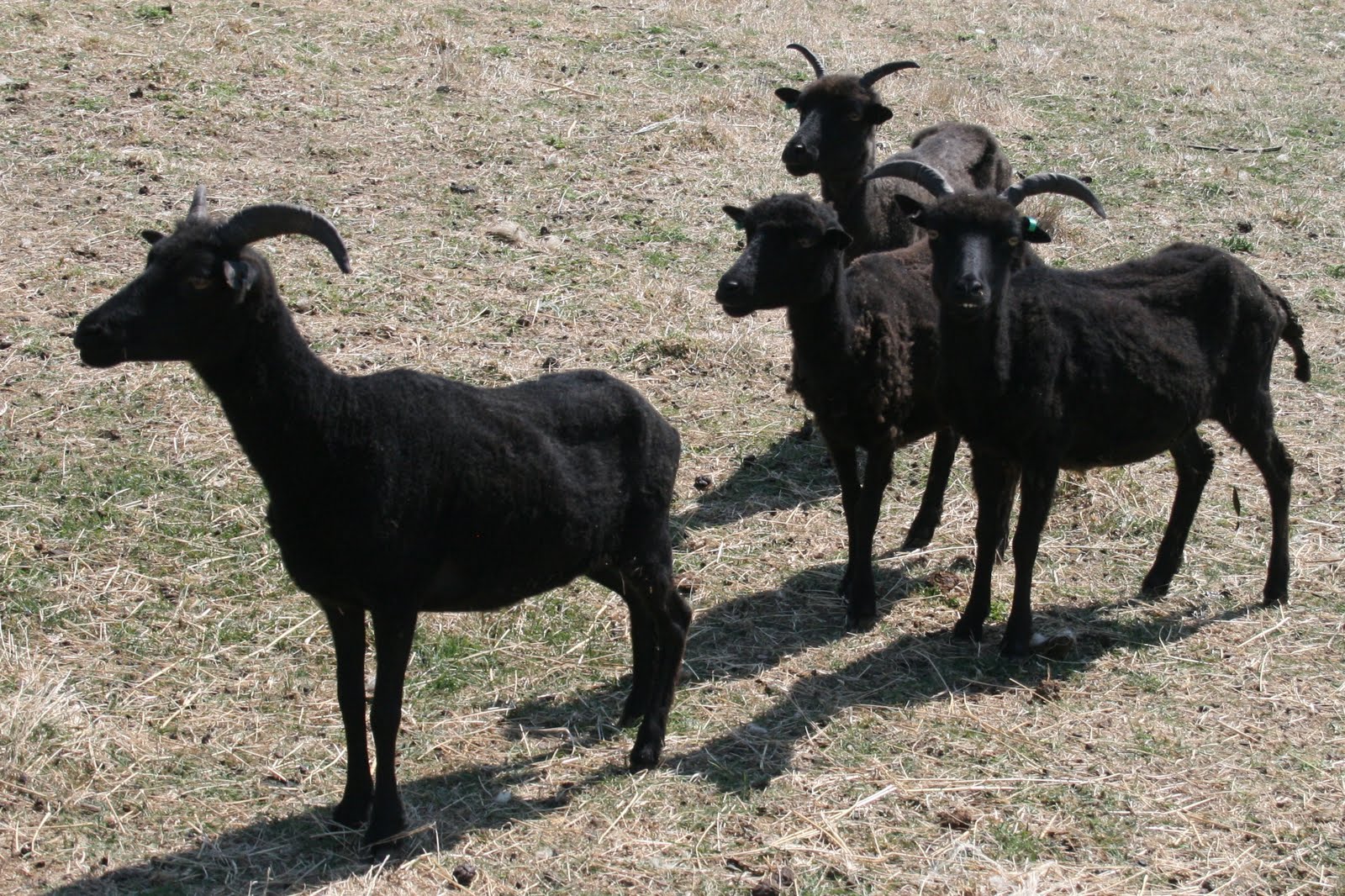
Hebridean Sheep

John assured me that all 4 of these Alpacas are males, so we'll put it down to 'male bonding'.

I was given the 'Cook's Tour' this morning and enjoyed every second of it, so get up there and see it for yourself.

This is the horse I reported savaged by a dog last week. The wound, top inside of the front right leg, can just be seen and I'm please to say quickly healing. Let's hope the dog is alright - BANG!

Red Campion now in bloom.

A visit to the supermarket on the way home, I bumped into the Omani National Sailing Team. All here for training and I suppose some acclimatisation, they are all working hard to gain a coveted place on the Olympic Crews. A deft salam ali koum (peace be with you) and next thing we were swapping stories of Muscat, Salalah, Dhofar and Masirah. I wish the team Good Luck and welcome them to Weymouth & Portland.

Yesterday's Bee Orchid is reproduced again here as I receive some words of wisdom from Luke Philips of the RSPB. It is fantastic to be put right on these post items and photographs, as once again I admit to being no expert on many of these things, but sure as hell love their beauty!
Thank You again Luke.

Bagsy,

The orchid is the atrofuscus variety which was first discovered at Radipole a few years ago (2006 is ringing bells?) but it's before my time here in Dorset. The first was out a few weeks ago roughly 8 foot away from the really nice one that's out now. I am fairly sure it was the first Dorset record of this variety and it was first discovered in the UK as recent as 2001 in Sussex. Hope this is of use and it certainly is a great specimen!
cheers

Luke Philips

and on the subject of the RSPB

There is yet another most disturbing report emanating from the Little Tern colony at Ferry Bridge, which if proven true will be the worst case of Wildlife disturbance so far during what has become known as my 'campaign', and will likely involve a prosecution by the Police? I have so far presented some of the facts uncovered to:-

Sarah Alsbury
Operations Manager
The RSPB
Ryan House, Sandford Lane, Wareham,
Dorset, BH20 4DY
01929 555987

which I intend publishing via tomorrows post, hopefully accompanied by her reply.

This is her reply to both Edwin Welland (Chairman of the Portland Bird Observatory) and Paul Harris local Wildlife Lover when stating disagreement of the 'ringing' the Little Tern chicks.
I must point out that the concerns, in his case, were those of Mr Welland alone and not those of the PBO.

Dear Mr Welland,

Thank you for your email dated 22 June to Nick Tomlinson. It has been passed to me as the Project Manager of the Little Tern Wardening Scheme.I appreciate your concern and would like to assure you that the decision to ring some of the chicks was thought through carefully. The wardening team have worked tirelessly to give the little terns the best possible chance of breeding successfully, including watching through the night. They would not do anything that they thought would jeopardise the colony.

The issue was discussed within the RSPB, Don Moxom of Ilchester Estates (a joint partner of the project) and experts in the field. This included Dr David Norman one of the most experienced ringers in the country and very experienced with little terns. It was decided to go ahead because
a) the retrieval of ringing data provides very valuable information, which can aid our understanding of the colony and assist with future conservation efforts, and b) the ringing was planned in a way that did not risk the welfare of the colony. This was done in the following ways:

1) The ringer is a very experienced A ringer and has been ringing (under licence) the terns at the colony for many years.

2) We planned the operation very carefully - we have mapped and marked all the nests and the location of chicks was plotted before entering the colony each time.

3) The time chosen was a warm sunny day. Brooding birds do not sit tight on the eggs but fly up constantly to show off gulls etc. Therefore, on a sunny day for a very short period of time, we are sure that the eggs would not have been affected. If any predators were around, they were deterred by our presence and the terns settled back quickly.

4) Individual chicks were chosen and the ringer was guided to their position by the warden stationed outside the colony via mobile phone thus reducing searching time to a minimum.

5) Once a chick had been ringed the ringer quickly withdrew from the colony. Each incursion into the colony lasted approximately 2 minutes and timing was logged.

6) In all 5 chicks (out of 10) were ringed with large amounts of time between each. The whole operation was done over about a 3 hour period.

I trust this allays your concerns - let's hope for a successful season this year.

Yours sincerely,

Sarah Alsbury


and finally:-

Tommy Capello or Fabio Cooper? either way a CLOWN in the view of many an Englishman.