Saturday, 19 November 2011

Yankee Doodle Dandy

At precisely 07:00, the appointed time, our birding mate Duncan Walbridge pulled up alongside me in his Jaguar and we were soon off in search of the rare bird note yesterday! A little cooler today and with some threatening looking clouds overhead there had to be a chance of rain, but before we reached our destination at 07:50 the clouds had been moved on by what little wind there was.

Regular readers will doubtless recognise the location from just a few days ago when I was in Lyme Regis, Dorset on the trail of Dipper on the river Lim. As we were the first (and as it turned out the only) birders on location there was time to scan the sea-front to see who else might be here,

but following the curve of the bay and onward to

The Cob (end of the pier) there was no one else in sight. So, we set about the task of finding our target, but very soon we were distracted by a fine

adult male Black Redstart perched on the sea wall.

I couldn't turn up a photo opportunity like this, so it was time to linger a while as the other 3 continued the search. When finally catching them up, they had found the object of our desires but it took me a full further 10 minutes to pick it up.

Perched, seemingly contentedly, on the rocks (middle-ground) there was chance for a few photos but the light was not of the best forcing numerous changes to camera settings.

The main thing was we had now all seen this 'first winter' Spotted Sandpiper a rare visitor from the Americas, breeding in the Northern sub-Continent and wintering in the Southern.

With just 2 hours to high tide and the wave action increasing against these rocks it seemed sure this little fella would soon have to move - which it did. With some attempt at re-locating, the other 3 were soon tempted to have a look for the local Dippers leaving me to continue the search and finding

a few Rock Pipits.

On their return, Duncan, brother Graham plus mutual and long time birding friend Graham Bright spent some more time looking at the Black-start which had now been joined by an equally stunning

female Black Redstart,

with a Cormorant flying past at close range.

The Sandpiper was found in this little bay just to the east of its original location,
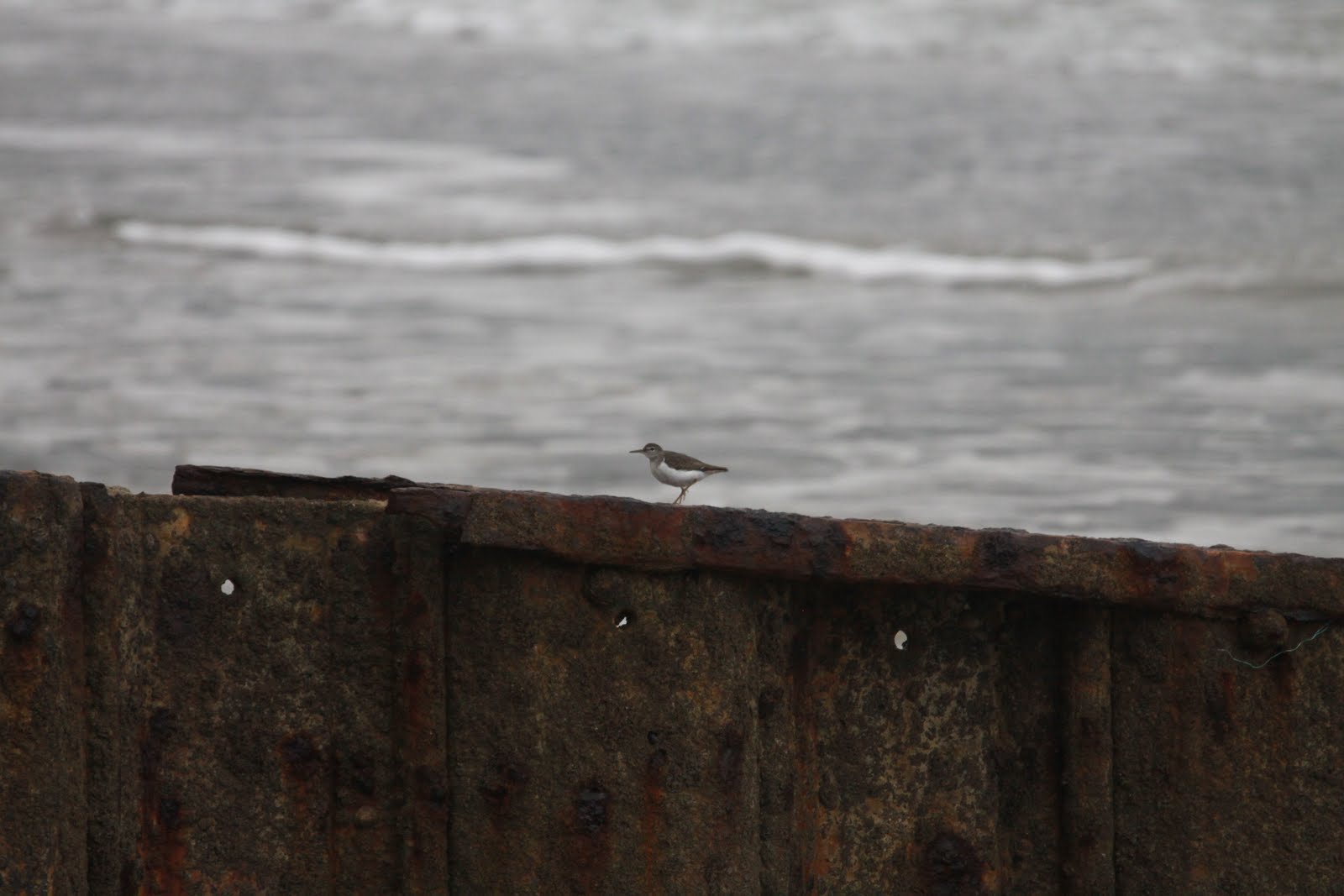
perched on one of the groynes.

It did take a short stroll along the shingle beach allowing a few more shots.

This according to Green, The Birds of Dorset, is only the 4th to be recorded in the county the others being at The Nothe, Weymouth in 1973, Christchurch Harbour in 1976 and Stanpit Marsh (the same area as the previous) in 1984.

For Graham Bright and I, this was a Dorset 'tick' and only my 3rd of the species in Great Britain which brought my Dorset List to a memorable 350 species.

What seemed most strange, given the magnitude of this bird, was the absence of any Dorset let alone other birders - maybe they were waiting for the 'Pager' to go off???

The following 2 photographs, from the archive, are published for interest the first showing the similarity with

Common Sandpiper (rarely found States-Side but common here) which is the confusion species in this plumage, but as the second shows

not much room for confusion when the Spotted Sandpiper is in Summer/Breeding plumage.

Before leaving to head for home, this Guillemot was seen close to shore, and once back at Portland I opted for a wander around the Top Fields finding this late

Painted Lady.

It would be a reasonable bet to think the Spotted Sandpiper will over-winter at Lyme Regis giving me an opportunity to re-visit and maybe get some better images - only time will tell!

Friday, 18 November 2011

Rosie Oh Rosie - Don Partridge

By the look of the dark storm clouds rolling in from the English Channel early morning, it seemed very likely we would have rain before long but they kept on moving and it may have been Dorchester that copped the wet stuff!

Goldcrest was all to report from the cemetery, but walking to the north end of Radipole Reserve it was immediately obvious that it was to be a Gull morning.

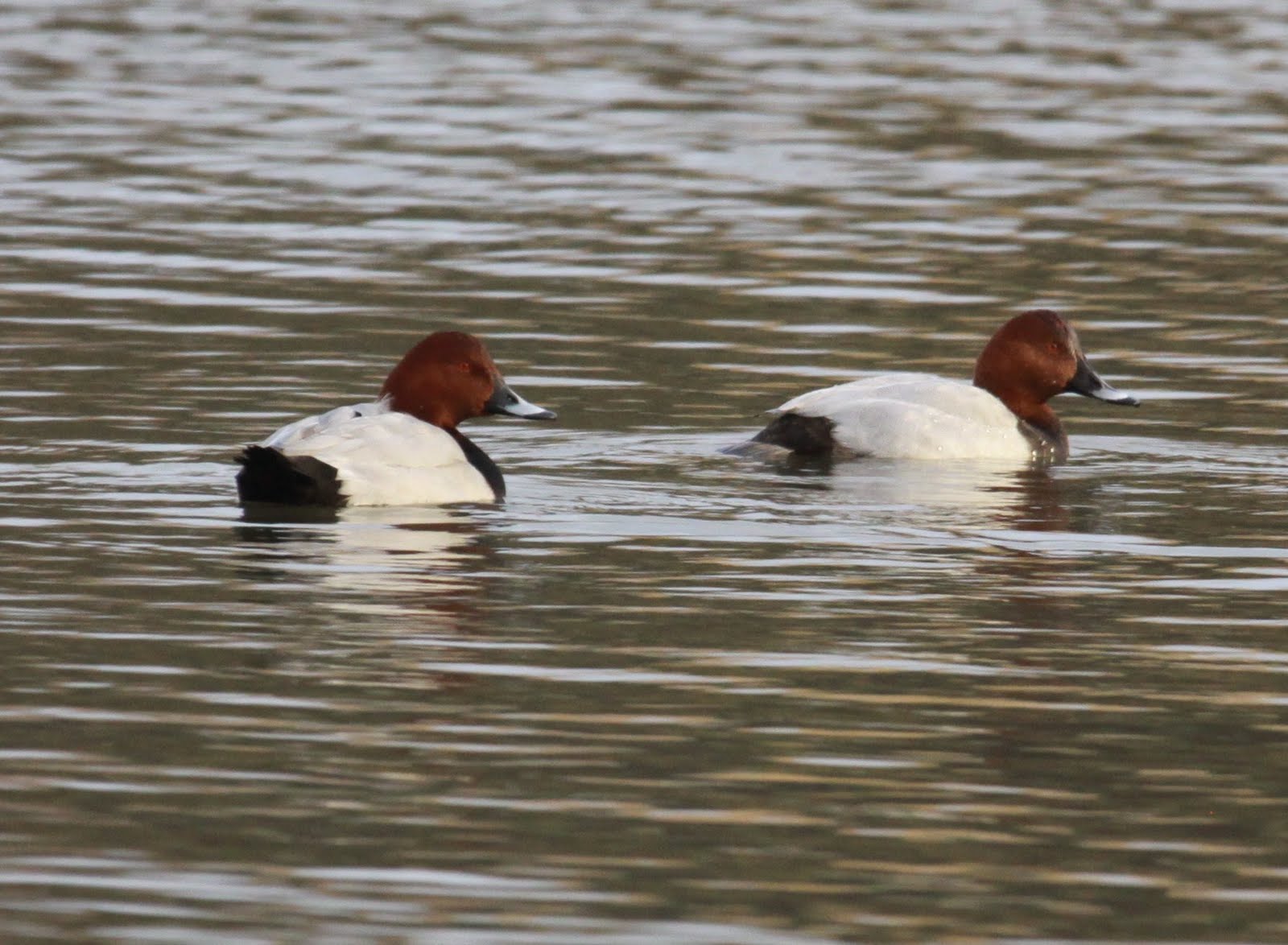
Time to look first though at some of the Pochard which are now arriving in small numbers, but

then approaching from along the Wey Valley came hundreds (maybe thousands) of mixed Gulls. The best place to view these birds, as they usually stop to bathe, is the main bridge at the Visitor's Centre, but in my haste

I startled a Brown Rat which had almost found complete cover before the shuttle went down.

It was not unusual to find fellow birder Ian Stanley there, who had already made some counts of this mixed flock including Mediterranean Gull (foreground and thought to number 300+), Herring Gull (centre) and Lesser Black-backed Gulls. In addition there were Great Black-backed, Common and Black-headed Gulls

many of which took to the air and left as quickly as they had arrived. Probably best of the lot were the 30 or so

Lesser Black-backed Gulls (this one about to land)

and showing a 'ring' on each leg. The ring on the left leg was metal and thin seemingly having not number/letter configuration, while the other black plastic type with white lettering. If you're reading this Ian, it seems to read 0AF2 what say you?

There also appeared to be some size difference with the landing bird

(centre) seeming to be noticeably larger than the other two.

If 'returned' (over to you Ian) the information on the ring can reveal much about the Gulls movements etc. The day had already followed the course of yesterday, and that pattern was to continue with the arrival of RSPB Staff at the Information Centre and Danny once again informing us that the

Rosy Starling was on view again at Lodmoor. Unfortunate for him, Ian had to head for work but once again I quickened my pace towards the bird I had 'dipped' before.

It was still there, though distant and flighty, but seen well enough to add to the GB Year List. These 2 shots are from the archive, the top one showing a juvenile Rosy (right) in comparison with 2 Common Starlings

A closer look would have been better, so I took a walk around the Lodmoor Country Park but didn't see one Common let alone the Rosy, but contented myself with a photograph of this large 'Bracket' type Fungi.

Portland was once again very quiet but a Collared Dove on this garden feeder made for some light relief before walking to the Observatory. There, it was doubted I could make any contribution to the Day List but found my sighting of a

Fieldfare (archive) was in fact an addition. At this point a most interesting piece of news was received via 'the pager' of a rare American vagrants arrival in the west of the county. Not wishing to tempt providence I'll leave it at that for now, but hope to bring some positive news and photographs tomorrow????

Walking the Bill Road back to catch the bus, 2 raptors were hunting prey either side of the road

Firstly this Common Buzzard

followed by a Common Kestrel.

It's a 07:00 start tomorrow, so as the Four Tops once said
"I'll Be There"

Thursday, 17 November 2011

All Quiet on the Western (and every other) Front

Despite a decent day weather-wise, long sunny periods, little in the way of cloud and wind (in the lee of Weymouth at least) and a warm feel, it was unproductive bird-wise. The cemetery remained devoid while Radipole only came up with mostly the expected

Shelduck,

2 x Great Spotted Woodpecker,

a few Reed Bunting,

about 2000 Wood Pigeons in

4 separate flocks of an estimated 500 each,

with at least one remaining on the ground!

with a few Bearded Tits along the Loop walk. Crossing the car park and intending to go to Portland, a message arrived to alert me to the Rosy Starling showing well at Lodmoor so it was a quick diversion.

A prolonged search there didn't turn up the bird with all else seen being

a number of Common Snipe

mostly feeding,

a fairly obliging Cormorant,

good numbers of Lapwing & Dunlin but that was just about all.

I see these jet aircraft flying in and out of Hurn (spelt correctly this time I believe) and think they are trainer aircraft. I expect there is someone out there who will let me know. Hoping for a better day tomorrow - see you then!