Friday, 23 July 2010

The Lunatics Are On The Grass - Pink Floyd

Yesterday finished on a high, as an previously invitation to dine with the Edward's was turned down, but on further insistence late afternoon I weakened and went round. Howard and Cheryl Lewis, from Australia, are continuing their 'globe trotting' and paying a final visit to his mum in Upwey before they further their journey to South America. Cheryl, who is Sri Lankan, was mighty pleased to hear the news of Muttiah Muralitharan's 800th wicket in Test Cricket, with the last ball of his career, another reason for a toast! As the 'barbie' was flashed up, c5 Little Egrets flew over the garden shortly followed by a Grey Plover that alerted us to its presence with several calls. This bird must have flown over both Radipole and my garden, but Daragh insists that I don't add it to either of my lists as not being in situ at the time? However, a glass or two of 'red' later and plenty of good food, we ended the evening with Mr Bonamassa and the realisation that I'm glad I went. Thank you all for a splendid time.

Muttiah Muralitharan, top left, erupts with joy after dismissing India's Pragyan Ojha in Galle to claim his 800th Test wicket.

This mornings weather was not dissimilar to yesterday except the sky was 7/8th's covered and the wind seemed to have backed to the north west, but it was still a little chilly. In the cemetery the number of Goldcrests had doubled, or was it that I was looking and listening a little harder, but otherwise quiet.

While at a secret location, these Cherry Plums are just about ready for picking

so if they remain in place for just a few more days, I'll be down there with my plastic bag.

and despite the numbers of Gadwall on the 2 reserves, I rarely see a family group

of Gadwall, but that was put to rights with this small party at the concrete bridge.

A closer look at one of the young Gadwall.

Coots too seem to be having a degree of luck, while this one of two allowed a photo shoot.

Again this morning, there was a largish Carp on the cross path of the Loop, something that has become a weekly affair. How these fish get there I'm not sure but it would be foolhardy to discount Otter as the guts and belly are always missing. It was certainly advantageous to this Carrion Crow that was removing an eye as I brought the camera to focus.

In addition there were c2 Common Sandpipers flying around plus a 'singing' Willow Warbler, but then disaster! As if the marauders, under the guise of conservationists, haven't had enough bad publicity via these pages, and the finding of 2 variants of Bee Orchid, likely the only two specimens in the whole of the UK, the RSPB have found it necessary to 'strim' the verges once again. Having been approached by the top authority (the Hardy Orchid Society) to protect these and other rare and delicate plants, how can they possibly know what they are cutting away, and in all honesty do they really care, can anyone believe they do?

PS - don't worry there are plenty more elsewhere (circa the Passenger Pigeon)

Anyhow, at Lodmoor there continues to be success at the 2 Common Tern breeding islands, and it has to be said that is only because thus far the RSPB have left them alone!

An adult Common Tern delivers a freshly caught, Weymouth Bay Sand Eel to 2 juvenile birds waiting at the waters edge.

Here is a young Tern 'on the wing' just one of well over a hundred that have now been counted.

Having met up with Daragh, we puzzled over this fine looking insect, one of two he tells me have been in the area for a few days now. I ventured that it may well be a Hornet, and did mention Hoverfly which it turned out to be. Only by reference to Insects of Britain did I discover that it is of the family Syrphidae and thought most likely to be Volucella inanis, but would love to be put right if it is not.

In addition there were c20 Dunlin, c3 Redshank, c14 Lapwing, c5 Common Sandpiper, c2 Little Egret, c2 Sandwich Terns, singles of Black-tailed Godwit, female Marsh Harrier, Arctic Tern

and this Greenshank that just appeared out of the blue.

Meanwhile, at Ferry Bridge the Common Tern saga continued as

c5 adults also laboured to feed c3 juveniles, as several hundred Swallows and a sprinkling of Sand Martin appeared to be beginning there return passage south.

On the foreshore there were also c60 Dunlin, c22 Sanderling, a single Turnstone, a dozen Ringed Plover, c3 Mediterranean Gulls plus an overflying Whimbrel.

On the Island (Portland) things were quiet with the only sighting worthy of note were the Butterflies of which

Peacock and

Red Admiral fell to the camera.

Thursday, 22 July 2010

Waders of the Lost Arc

With just 'half' cloud cover early this morning, it was always on the cards that the chill south west breeze would warm up as the sun rose higher in the sky, but it was a long time coming. Jacket zipped to the top, I wandered through the cemetery only to find c3 singing Goldcrests of note, but before reaching the concrete bridge at Radipole there was already a sign of what has become a scarce bird here. Waders in particular have suffered in recent years because of the artificially high water levels, and with the call of at least one Green Sandpiper overhead there seemed very little chance of it alighting. There were in fact c3, the first I have seen at the reserve for a couple of years or so, but despite a number of low passes and good coverage of the full length of the lake, with no mud it simply wasn't a place for them to stop over.

Further along there was a Little Grebe with c2 youngsters,

2 photographs being better than one, but the juveniles were determined to keep out of the picture.

There were also c7 Great Crested Grebes, one pair also showing off c2 youngsters, but other than that it was a Little Egret in flight, c2 Common Terns, a few Sand & House Martins with the Swifts being absent today. Onward to the Rodwell Trail which was similarly dismal with very little bird song at all except from the ubiquitous House Sparrows, a Dunnock of two and the odd Wren.

This Grey Squirrel, unusual there did put in an appearance, as did

a confiding Blackbird.

There are of course still plenty of wild flowers along the course of the old railway line, but this

Chicory is newly bloomed since I was last down this way.

The scene at Ferry Bridge was much as it had been on Tuesday, except I was able to get a little

closer to the Little Terns, this juvenile with parent being quite accommodating.

Finally, the young bird took off, and in both images the newly applied 'rings' can be seen.

Also 'ringed' was this young Mediterranean Gull

which was in company with about a dozen others, again in

various states and stages of plumage. However, what were new additions, for me at least, were c4

Turnstones mostly retaining at least some

summer plumage. There were also a few Dunlin and Sanderling, the regular pair of Oystercatchers, and

this Ringed Plover that obligingly allowed a shot or two.

Finally, I heard from Daragh later in the day that there had been Ruff, Wood Sandpiper and a Bittern at Lodmoor this morning. No need to ask where I'll be tomorrow!

Wednesday, 21 July 2010

A Man of Kent or Kentish Man

Unlike the previous half a dozen days, there was no news this morning before 08-00 of the White-tailed Lapwing/Plover (whichever its name is) at Dungeness. Despite that, and the fact it was potentially the height of the school/works traffic Bowie, Sheila and I set off prompt at 8a.m. to undertake the 400+ mile round trip to see not only an extremely rare visitor to our shores, but one that has also put in a few miles itself. Seen at Minsmere on the east coast of England, the same bird has also been recorded in Holland, Slimbridge to the west and now on the south coast of Kent.

The roads were virtually clear all the way and even after a short coffee break and search for an update on status (fortunately positive) at Winchester we still arrived only a little after noon. The first identifiable feature was the Dungeness Nuclear Power Station perched on the coast almost where the English Channel meets the North Sea.

Having sort advise as to location at the RSPB Visitor's Center we headed for the ARC Gravel Pit back from whence we had come, and soon met some fellow 'birders' who had it lined up in their telescope - TICK!

Up until checking last night I couldn't remember if this species was on my world list, but all came flooding back when thumbing through my notes from India - it was. The photograph shows our fist sighting, so it's now on my GB list as well - Yes it is there!

Dungeness Lighthouse - another for Paul & Tess Lifton the Lighthouse Family.

Yellow-horned Poppy

Ditto, I haven't see any on Chesil Beach this year.

We moved along from 'the Screen' where all the other 'birders' were and these were the views,

not you might say brilliant, but through the telescope very good indeed! Think you'll need to 'right click' on these images.

Large Flowered Evening Primrose

and in close up, very common here.

Worth a 10 minute stop of anybodies money,

a typical ancient Kent church.

Common Blue Butterfly

Then on to Wye also in Kent where we hoped to see Late Spider Orchid, but the god's were not on our side so we continued on apace to Greywell near Basingstoke, Hampshire where both Orchids and Butterflies were numerous.

Marsh Fragrant Orchid were plentiful

and despite being slightly past their best we were lucky to see them in full flower.

A single Silver Wash Fritillary

showed very well even at

'take off'.

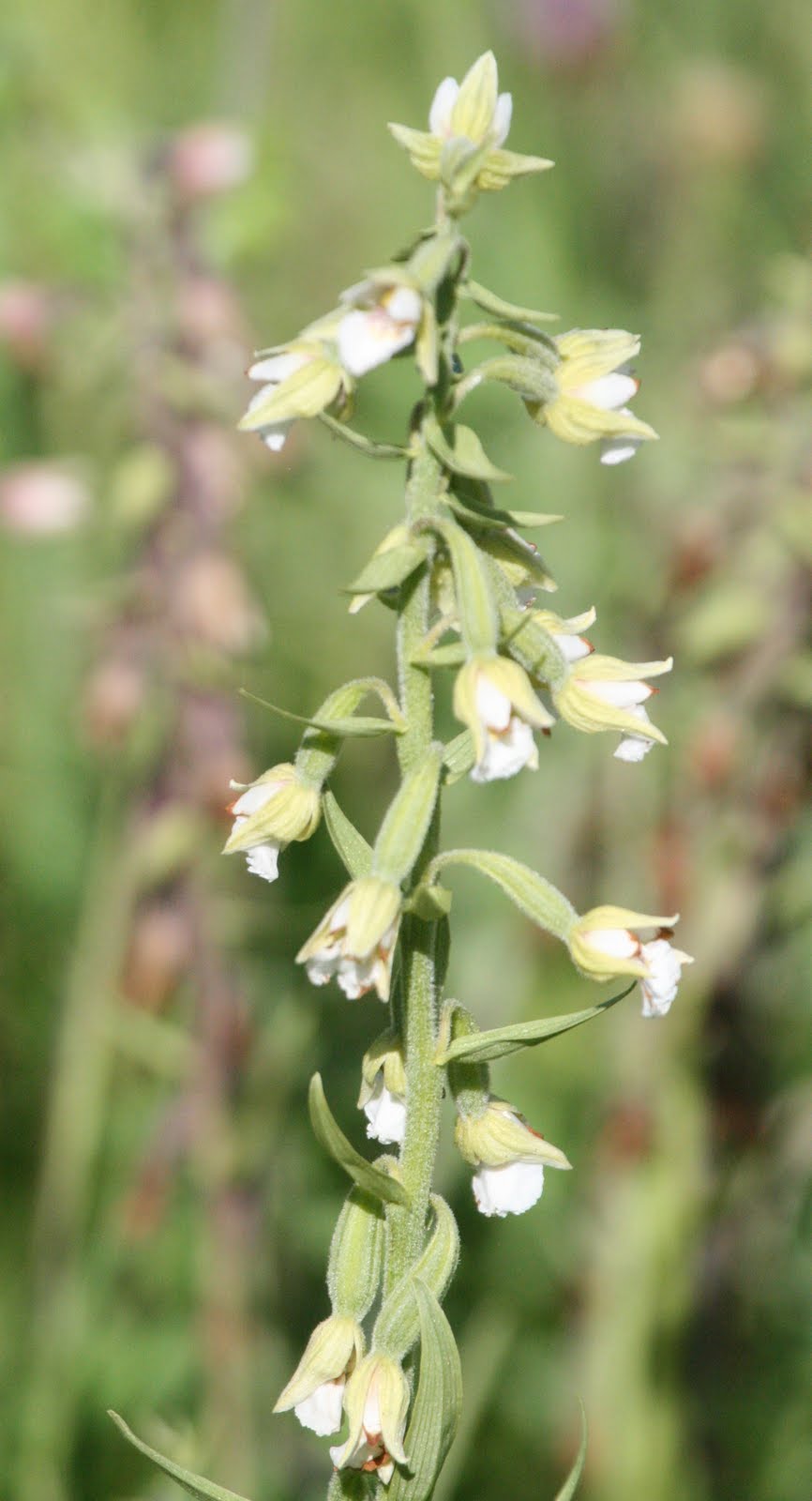
Marsh Helleborine (represented by 2 variants) were

also on show in numbers, but far too technical for me.

Other butterflies included Small & Large Skipper, Small Copper, Large White, Gatekeeper, Comma, Peacock, Small Tortoiseshell, Marbled White, Meadow Brown plus this

Ringlet (my first of the year) and several

Green-veined Whites

A Man of Kent is said to have been born East of the River Medway, while a Kentish Man would have been born to the West. This, by all accounts, can still cause offense in Kent, the county known as the Garden of England!

Tuesday, 20 July 2010

Just 'Do It' - It's Later Than You Think!

It was good to get back to the usual beat again today and to see just how well many of the young birds are doing. In the cemetery several Dunnock, Wrens and Blackbirds were in family groups, but while the pair of Collared Doves were in the area of their nest site no young were seen.

At Radipole there looked to be dozens of Coots in the west channel but well outnumbered by juvenile Herring Gulls down at Westham Bridge while the most numerous of all were Swifts.

Herring Gull (juvenile)

With the tide well out at Ferry Bridge it was always going to be worth a look but it turned out to be much more productive than anticipated. Despite the first young Little Tern taking to the wing a week ago this morning was the first time I had seen one, while the were a couple of dozen adults fish carrying and preening on the exposed sand. Other Terns included c3 Common, one carrying a fish and squawking as though there were a youngster in attendance,but no,and c5 Sandwich one a juvenile. c15 Mediterranean Gulls, in various stages and states of plumage, was a decent count, while there were 4 times that many Black-headed Gulls c13 being juveniles. A lone Redshank was the best of the Waders, but c7 Sanderling (a long awaited first for the year) accompanied c35 Dunlin, c12 Ringed Plover and c2 Oystercatcher as well as c5 south bound Little Egret.

Single Sanderling (foreground) with a couple of Dunlin

2 Sanderling and Dunlin

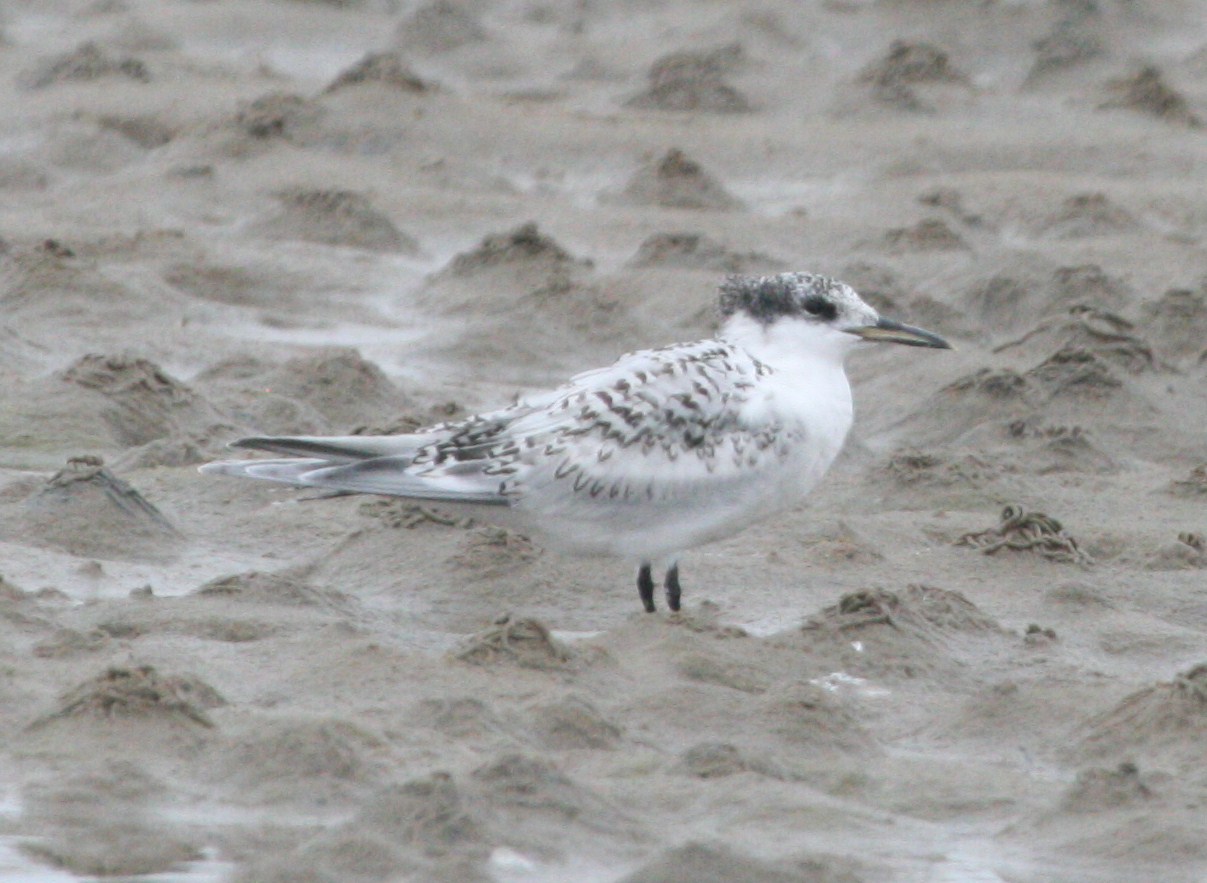
Sandwich Tern (juvenile)

Sandwich Tern (juvenile) after I got a little too close.

Common Tern carrying fish.

Portland was dull by comparison, but there's always something to see, including a group of c11 Swallows flying seaward, several dozen young Goldfinch and Linnet, plus

this Gatekeeper Butterfly, my first of the year.

With a little patience I managed this 'open wing' shot.

On the way home I noticed this young Herring Gull awaiting the arrival of mum with the groceries.

Unfortunately, the day ended on a very sour note as I saw the headline of this evening's Dorset Echo in a local shop, announcing the untimely death of mine, and many others, friend Steve Needham. Just 6 short days ago Steve and I were swapping anecdotes of diving in the Gulf of Aqaba, from where he had just returned, enthusing about the shoals of migrating Hammerhead Sharks. It has been a while since I dived there so the memories came flooding back.

Tributes to Tragic Weymouth off-licence boss


TRIBUTES have been paid to a popular dad who has died tragically young. The family of Steve Needham say he was someone who would go out of his way to help anyone. They said that 42-year-old Steve, who managed Cheers off-licence in Weymouth, was a man who regularly carried out good deeds for others.

His family has been overwhelmed by support from customers and dozens of sympathy cards sent by well-wishers. Steve’s funeral will be held on Thursday and people have been asked not to wear mourning clothes to remember the dad-of-two. He died suddenly at home in Chickerell of natural causes.

Tracey Sparks, his partner of 22 years, said: “This has made us realise just how much people thought of Steve. “It’s now like something in the shop isn’t quite right. “It’s like losing your arm but it’s much, much more than that.” Steve, dad to Aimee, 14, and Craig, 12, ran the family business in Abbotsbury Road with his parents Shirley and Fred Needham for 20 years. Shirley, 62, said: “We want the kids to grow up knowing how much everybody loved Steve.

“We’ve had so many people asking about what happened to him. We’ve had both men and women coming into the shop and crying.” Keen diver Steve took up the hobby aged 25 and reached the professional rank of dive master. “His life was all about the family, the shop and diving,” said Tracey, 38. She added: “He was quite a private person who didn’t like being in the limelight. He had two different faces. “One was the businessman at the shop and the other side of him was the family side which was a much softer side.”

Former Budmouth school pupil Steve wanted to have children before he was 30, Tracey said. “He couldn’t do enough for them. He loved them to bits. Anything that Steve could do for them, he would.” Steve, who would work seven days a week every day of the year in the shop, would try and help anyone who asked him. Shirley said: “He found lodgings for some of the workmen who are working on the roundabout down the road. “He helped Polish people get accommodation and helped people move into flats around here. He would always know how to get people in touch with the right people. People would come in to buy something and they’d still be talking to him 45 minutes later. “He’d always be laughing and joking with people.” Anyone who knew Steve is invited to his funeral at Weymouth Crematorium on Thursday at 1.45pm.

R.I.P. Steve