Appologies for this extremely poor post. Everything that could have scotched my efforts have prevailed and at 23-00 I now have to go to bed. I will make best efforts to rectify things and post more photographs tomorrow.
Firstly, I should introduce the readership to my fellow travellers and advisors. Cathy Harlow is our Tour Leader and Naturalist from Naturetrek, ably assisted by Desire Rajery our Local Guide, both will be with us throughout the trip, From Edinburgh comed Maria Djumie, William Plumb from Suffolk, Jonas Christiansen is a Dane living in Sweden, while Steve & Jules Bennett are Shropshireites. Steve Woodhan is almost a neigbour from Wiltshire, Caroline Tero from Lincolnshire and a quartet of Australians comprising John Goldie, Kathy Walker plus Michael and Janette Lenz. Picture to follow.
Saturday 24th October 2010
Two Days In The Rain Forest
It was well known that there would be not Internet connection at Ranomafana Lodge where we will be spending the next 3 nights covering the National Reserve of the same name. To keep abreast of the Blog I am here typing this report by candle light on 'note pad'which I will transpose when the occasion allows. There was just enough time after breakfast this morning to visit the Monument depicting the 18 areas of Madagascar and a little road-side birding before setting off.
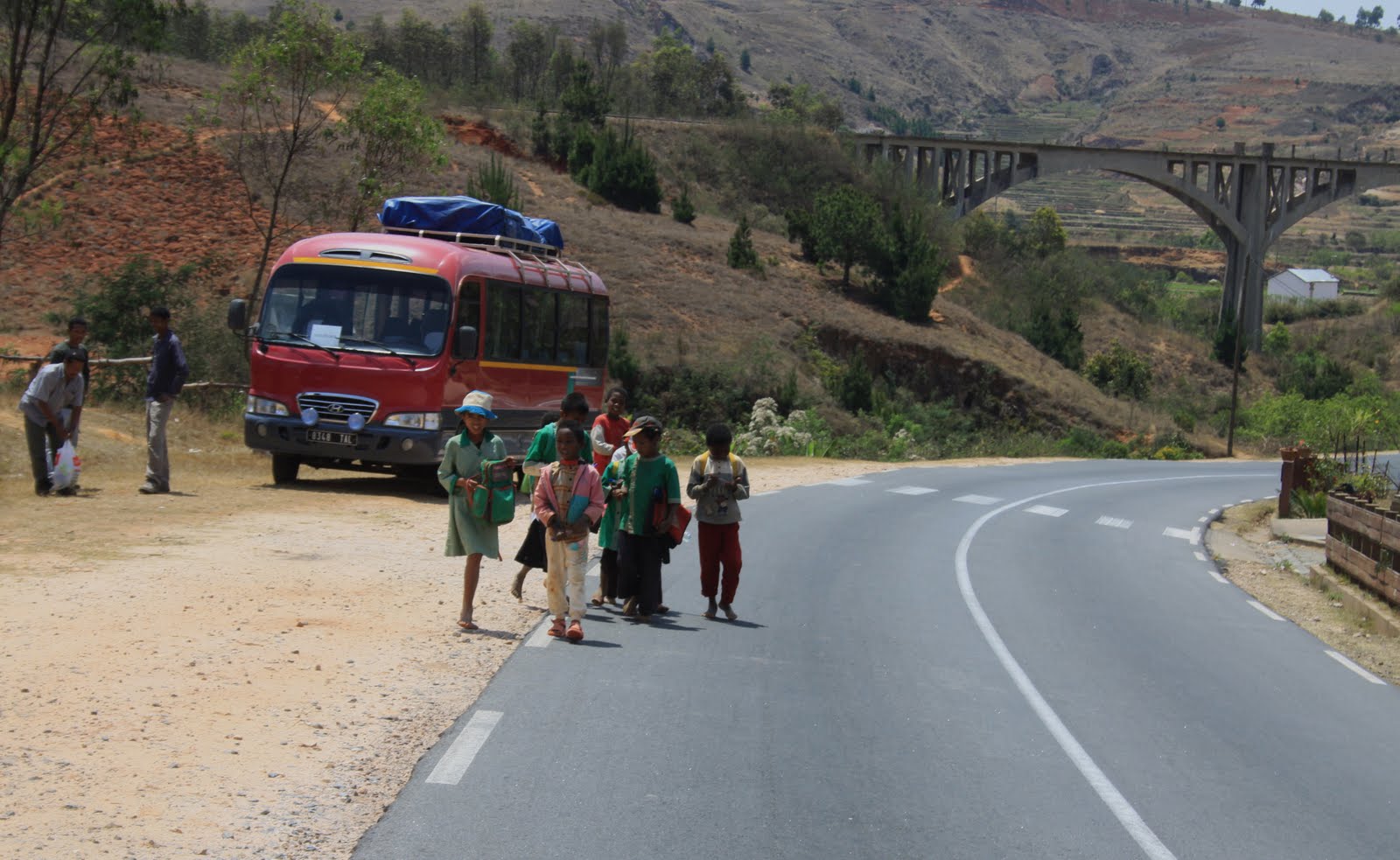
Despite the 7 hour drive to the reserve there was still time to puctuate it with stops to view the wildlife, and while at some altitude the temperature was perfect. The terrain was dominated by rice paddies among rolling hills with some vegitation, but the whole of this area had been deforested.
* = World Lifer - (E) = Endemic
The additions to the trip list were:- Brush Warbler*E, Green-backed (Striated) Heron, Common Stonechat, Madagascar Bulbul*E, Madagascar Lesser Cuckoo*E, Common Quail, Yellow-billed Kite, Madagascar Coucal*E, White-throated Rail*E, Common Jery*E, Souimanga Sunbird*E, Madacascar Snipe*E, Madagascar Cisticola*E, Three-banded Plover,
Elegant Skink, Nose-horned Chameleon,
Giant Lubber Locust
Golden Orb Spider
Trip Ticks - 40
World Ticks - 20
Endemics - 40

 Madagascar Harrier now split fron Reunion Harrier leaving just an estimated 30 individuals in the wild.
Sunday 24th October 2010
Not surprisingly, 'rain' was the order of the day, but undetered we all headed off to the hills. Dense, lush and bearly spoiled by man, this is some of the most pristine of its kind I have ever seen. While the trip preamble had described the going here as 'moderate', the fiercly undulating paths coupled with thw wet weather and some of the vegitation (especially the Vine Bamboo complete with spikey clusters) made it fairly hard going. Of paramount importance were the Lemurs so they were the target for the first part of the day, and with the aid of guides complete with mobile phones they were not too difficult to locate. After lunch it was more a birding expedition, with those with a more general wildlife interest going one direction while us 'birders' went in another, where we were lucky on most counts. It has to be said, these locals guides are worth their weight in gold, so even the most sculking were coaxed into view. Late afternoon we ventured a little further afield to a huge area of low vegitation with a few pine trees that looked like heath. A still river intersected the area where we would look for a Duck, a Nightjar anda Flufftail, all of which we 'dipped' (missed). Unfortunately, this was the only opportunity at this site but 2 of the 3 would be
available elsewhere.
Additions include:- Madagascar Harrier*E, Madagascar Buzzard*E, Madagascar Blue Pigeon*E, Madagascar Turtle Dove*E, Blue Coua*E, Pygmy Kingfisher*E, Broad -billed Roller, Pitta-like Ground-Roller*E, Velvet Asity*E, Mascarene Martin* (Islands Group) E, Ashy Cuckoo Shrike*E, Grey Emutail*E, Common Newtonia*E, Madagascar Paradise Flycatcher*E, Green Jery*E, White-throated Oxylabes*E, Crossley's Vanga*E, Spectacle Greenbul*E, Blue Vanga*E, Hook-billed Vanga*E, White-headed Vanga*E, Chabert's Vanga*E, Forest Fody*E,
In addition the following were heard but not added to the list:-
Vasa Parrot,
Madagascar Nightjar
Milne-Edwards Sifaka, Red-bellied Lemur, Golden Bamboo Lemur, Red-fronted Brown Lemur, Brown Mouse Lemur, Eastern Ring-tailed Mongoose, Easten Sucker-footed Bat, Madagascar Tree Boa, Short-nosed, Short-horned, Parson's, Belted, Will's and Cryptic Chameleon, Satanic Leaf-tailed, Lined Day and Peacock Geckos, Ornate Plated Lizard, Giraffe-necked and Giant Weavil plus Baron's Painted and Madagascar Tree Frogs.
Trip Ticks - 63
World Ticks - 42
Endemics - 62
The next day, Sunday 24/10/10, we were again given a choice of 'general' or 'birding' with the latter party increasing from 4 to 9. Again we were extremely fortunate ( due to the local and dedicated guides) to see another wonderful list of birds unavailable anywhere else in the world. Having sain that, none were 'on a plate' but the terrain today was much less arduous, while the rain abated by 10-00 but the light remained subdued. On that trek we even happened upon a couple more Lemurs and by the time we all rendezvoued once again there was still time to revisit the heath. With 2 hours to spare (siesta), Bill and I decided decided to walk in the direction we would be heading to be picked up on the way. Lucky we did as almost the first bird we encountered was yet another 'lifer' in the shape of a Stripe-throated Jery, and further up the hill the find of the day a Madagascar Flufftail which was one of the outstanding species from yesterday. At the site we awaited the arrival of the Ducks at the roost but took a diversion in the meantime where c5 'Ducks' were seen distantly. There followed a good deal of conjecture as WE put the birds to flight causing a conflicy of identification. However, in the meantime our guide had found a close and perched Nightjar and as we viewed this amazing bird a Meller's Duch flew over our heads. Another great day.
Bird additions:- Tylas
Trip Ticks - 40
World Ticks - 20
Endemics - 40
 The National Park

 Madagascar Cuckoo Roller
 doing it`s impersonation of a Wryneck.
 This is not children playing with a home made go-cart, this is survival, even the smallest hve to work.
 Tylas, what was once called Tylas Vanga is now not considered q Vanga at all.
 Madagascar Tree Boa
 Millepede
 Butterfly
 Gold Bamboo Lemur my first Lemur, stunning.
 Comet Moth
 Madagascar Bulbul
 Madagascar White-eye
 Common Jery
 Common Jery