Saturday, 30 October 2010

At Last We're Back With You!

Much more to come, hopefully soon, right now flight awaiting, battery running low and damn lucky to get Internet access anyway. Take care, hope to be back tomorrow from Fort Dauphin. So much more to come!

Tuesday 26th October 2010

Following on from the last post, we spent a excellent 2 days in and around the Isalo National Park. After an early (05-30) walk around the hotel grounds, where we easilr found distant Benson's Rock Thrush and Naquama Dove' we breakfasted before driving the short distance to the Canyon de Singe and Rat Canyon where the local tribe bury their dead, the rodents taking full advantage. We looked for, but didn't find, Verreaux;s Sifaka but did stumble upon a small troup of the even more scarce Red-fronted Brown Lemur and a number of Madagascar Black Swift. Some took advantage of the Piscine Naturelle to take a cooling swim while I headed off for my daily meditation and singing session, must keep those chords streached. Any kind of wildlife watching was difficult in the seering heat, so by mid-day we returned to the hotel for lunch and a short seista,after which a few of us climbed a nearby mountain to best enjoy a dramatic sunset. The day ended on a bit of a worrying note as on our decent we lost one of our party, and took a full 90 minutes to find her. It is pleasing to report that all's well that ends well.

Madagascar Cisticola

Benson's Rock Thush

A fine Hotel

Bloom

The Canyons

A plague of Moths

Spider eating Cicada

Madagascar Cuckoo Roller

Madagascar Black Swift

Madagascar Buzzard

Yellow-billed Kite in flight

and perched.

Our local support team - well done lads.

From back left:- Caroline Tero, Michael Lenz, Janette Lenz, Kathy Walter, John Goldie,Jules Bennett, Steve Bennett, William Plumb, Steve Woodham, Jonas Christiansen
Marie Djumic, Yours Truely, Cathy Harlow (Tour Leader)

Mascarine Martin

O'Shaughnessy's Chameleon

Orchid

Ornate Plated Lizard

Red-fronted Brown Lemur

Ditto face detail


Wednesday 27th October 2010

An even earlier start this morning, we left Isalo at 04-00 to make the most of the birds at the dry transitional (between rain and spiny forests) forest at Zombitze just an hour down the road. On the way we passed through the Sapphire mining town of Hakaka, which until just a short decade ago was a village of 200 people, now swollen to 20,000 and rife with crime on account of the precious stones. In transit we found the introduced Helmeted Guineafolw, in numbers, feeding at the side of the road, plus the far less obliging Madagascar Buttonquail conceled by the forest edge. There followed a very easy walk along a spongy but dry forest track, where we soon encountered Grey-headed Lovebird, Crested Coua and Lesser Vasa Parrot. There were 2 very important target species in this unique parcel of woodland and we were not to leave disappointed. Firstly, our 'local' guide found a single Hubbard's Sportative Lemur roosting in a tree hole, followed shortly after by Appet's Greenbul, a serious 'sculker'. In all we saw 4 of these rare birds which only inhabit this area (in the world) and I was even lucky enough to capture the images below. In addition Sakalava Weaver, Coquerel's Coua and Rufous Vanga were added to the list, and as we arrived back at the main road, after a 3 hour walk, a troop of Verreaux's Sifaka were waiting for us. Not totally obliging, some shots were obtained but the sun was now taking its toll. It was unanimously agreed that once reaching our hotel a period of poolside relaxation would ensue, as all ideas of visiting the local Botanical Gardens were dispelled. On the downside, I was one of the few to miss seeing the elusive Running Coua, while Great Coua was only heard. We spent the night at Tulear.

Weaver's Nest

Madagascar Street Scene

Zebu taxi from the pier to the boat.

Madagascar Fody (female)

The Island of Nosy Vee

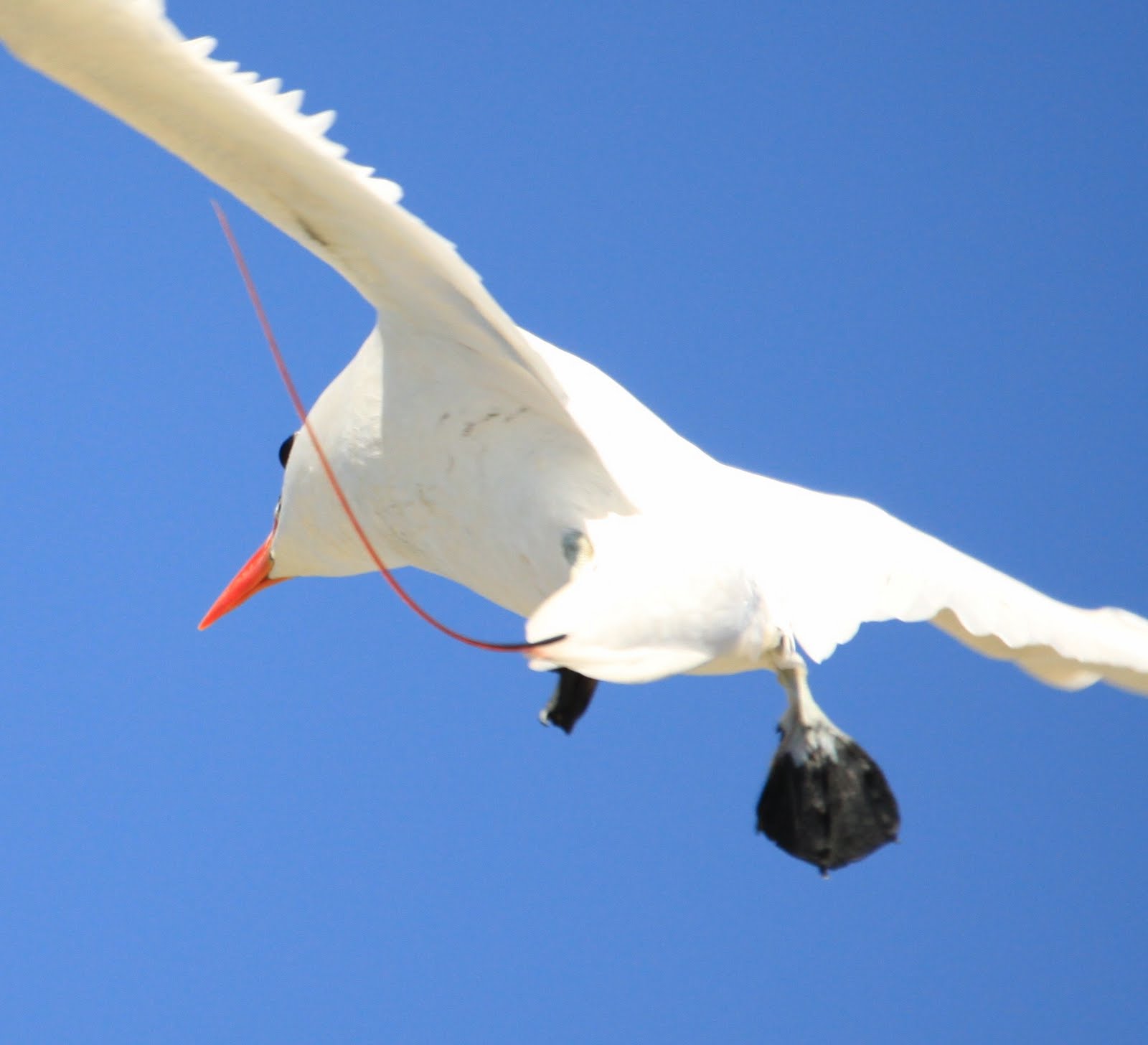
juvenile Red-tailed Tropicbird

detail Red-tailed Tropicbird

adult Red-tailed Tropicbird

Ditto detail


Mad Fody male

Litteral Rock Thrush

Parasitic Wasp

Namaqua Dove male

and female

Brush warbler

Men fish from these flimsy looking canoes far out to sea.

Pirogues ply the local waters transporting all manner of cargo.


Children returning home from school are expected to collect water from the village well.

Hope to be able to tell you more about these tombs if and when time allows.

Madagascar Buttonquail

Locust

Madagascar Plover

a rare bird indeed.

Mad Lark

Ditto


Pied Crows

Island of Nosy Vee

Black-winged Stilt

Curlew Sandpiper

Tuesday, 26 October 2010

Driving South At Midnight and I Must Have Been Insane - Stone Roses

Monday 25th October 2010

Another long drive today, but not without the little pockets of interest along the way and some stunning scenery. From Ranomafana we continued south through the Madagascan Southern Highlands, stopping for a while at Fianarantsoa, the second largest city and former capital, while later there was a chance to see the manufacture of paper embossed with wild flowers. Further on we stopped at the recently opened reserve of Anja, saved almost single handily by a local man who persuaded the community that the local Ring-tailed Lemur Troops were a valuable asset and a life of tourism began. The reserve is set among beautiful scenery and a backdrop of gigantic mountains known as 'Inselbergs'. Soon after this, and passing the town of Ambalavao, the vista became even more imposing as we reached the vast grassy plains of the Savannah, flanked by huge granite towers two of which are referred to as the Door to the South. Add to that an endless supply of Red Termite mounds and the billowing clouds of smoke from hundreds of acres of grass burning, I thought we'd arrived at Radipole.

We arrived at Hotel le Jardin du Roy, isolated except for a sister hotel some distance away in the area named Isalo, with the heady smell of Jacaranda in the air it was immediately apparent this was a well appointed establishment.

As may be imagined the photo file is filling rapidly, and with the absence of Internet in some place and a 'snail pace' where it is available not all pictures are going to be published. I will endeavour to add as many as I can but this may turn posts into 'pictorials' which I feel sure most readers will not object to. With the addition of just 4 new species to the Trip List, 3 being World Lifers African Marsh Owl, Rand's Warbler & Benson's Rock Thrush all *E p[us African Black Swift* the list now stand like
this:-

Trip Ticks - 67
World Ticks - 44
Endemics - 66

and Madagascar Scops Owl was heard.

and the bad news is, once again it looks like 2 nights without Internet as we head even further south, to the coast in fact, but please keep checking there are still a few 'goodies' to come! Thank You.

The Audience. A little magic never hurt anyone, especially a child, so why fellow travellers handed out pens, writing pads, crayons etc, I indulged the youngsters in a trick or two. Intrigued is not the word and their smiling faces were a picture. It is fantastic to be in their country, long may it and the 'wildlife last'!

Broad-billed Roller


Golden Orb Spider

Madagascar Tree Frog

Pitta-like Ground-roller

Female (left) & male Lined Day Gecko

That's it 'Big Boy' get over here!

Madagascar Blue Pigeon. Heavy rain, top of the canopy, bad light, oh yes nearly forgot crap operator!

Giant Weevil

Giraffe-necked Weevil

Red-bellied Lemur

If you arrive at work next Monday feeling bored, fed up with the boss and wished you worked elsewhere, please spare a thought for this lady. She sits there day after day making 'gravel' by hand, yes 'gravel'.

Brush Warbler an abundant but often difficult to see bird, akin to our own Cetti's Warbler.

Hook-billed Vanga, dispatched this huge frog

then hung it, as a Shrike might in the branches of a bush, then proceeded to eat it.

Detail, showing hooked bill.

Baron's Painted Frog,

even did a 'belly roll' so we could view the underparts.

What a fantastic creature at no more than 3/4 of an inch.

Madagascar Magpie Robin

The dark fish are Tilapia which most of us have eaten and very much enjoyed.

Malagasy, another river fish that we have not tasted.

African Marsh Owl

In rapidly fading light, this big beauty flew across the road in front of the bus and settled fairly close by.

Ring-tailed Lemur of the 'darker' subspecies,

this very confiding 'troop' were shown to us in the relict forest at Anja.

All of the people we meet are so friendly,

but the children go berserk with waving when they see 'white' faces. It is also refreshing to find little begging as such.

Monday, 25 October 2010

Publish And Be Damned

Appologies for this extremely poor post. Everything that could have scotched my efforts have prevailed and at 23-00 I now have to go to bed. I will make best efforts to rectify things and post more photographs tomorrow.

Firstly, I should introduce the readership to my fellow travellers and advisors. Cathy Harlow is our Tour Leader and Naturalist from Naturetrek, ably assisted by Desire Rajery our Local Guide, both will be with us throughout the trip, From Edinburgh comed Maria Djumie, William Plumb from Suffolk, Jonas Christiansen is a Dane living in Sweden, while Steve & Jules Bennett are Shropshireites. Steve Woodhan is almost a neigbour from Wiltshire, Caroline Tero from Lincolnshire and a quartet of Australians comprising John Goldie, Kathy Walker plus Michael and Janette Lenz. Picture to follow.

Saturday 24th October 2010

Two Days In The Rain Forest

It was well known that there would be not Internet connection at Ranomafana Lodge where we will be spending the next 3 nights covering the National Reserve of the same name. To keep abreast of the Blog I am here typing this report by candle light on 'note pad'which I will transpose when the occasion allows. There was just enough time after breakfast this morning to visit the Monument depicting the 18 areas of Madagascar and a little road-side birding before setting off.

Despite the 7 hour drive to the reserve there was still time to puctuate it with stops to view the wildlife, and while at some altitude the temperature was perfect. The terrain was dominated by rice paddies among rolling hills with some vegitation, but the whole of this area had been deforested.

* = World Lifer - (E) = Endemic

The additions to the trip list were:- Brush Warbler*E, Green-backed (Striated) Heron, Common Stonechat, Madagascar Bulbul*E, Madagascar Lesser Cuckoo*E, Common Quail, Yellow-billed Kite, Madagascar Coucal*E, White-throated Rail*E, Common Jery*E, Souimanga Sunbird*E, Madacascar Snipe*E, Madagascar Cisticola*E, Three-banded Plover,

Elegant Skink, Nose-horned Chameleon,
Giant Lubber Locust
Golden Orb Spider

Trip Ticks - 40
World Ticks - 20
Endemics - 40


Madagascar Harrier now split fron Reunion Harrier leaving just an estimated 30 individuals in the wild.

Sunday 24th October 2010

Not surprisingly, 'rain' was the order of the day, but undetered we all headed off to the hills. Dense, lush and bearly spoiled by man, this is some of the most pristine of its kind I have ever seen. While the trip preamble had described the going here as 'moderate', the fiercly undulating paths coupled with thw wet weather and some of the vegitation (especially the Vine Bamboo complete with spikey clusters) made it fairly hard going. Of paramount importance were the Lemurs so they were the target for the first part of the day, and with the aid of guides complete with mobile phones they were not too difficult to locate. After lunch it was more a birding expedition, with those with a more general wildlife interest going one direction while us 'birders' went in another, where we were lucky on most counts. It has to be said, these locals guides are worth their weight in gold, so even the most sculking were coaxed into view. Late afternoon we ventured a little further afield to a huge area of low vegitation with a few pine trees that looked like heath. A still river intersected the area where we would look for a Duck, a Nightjar anda Flufftail, all of which we 'dipped' (missed). Unfortunately, this was the only opportunity at this site but 2 of the 3 would be
available elsewhere.

Additions include:- Madagascar Harrier*E, Madagascar Buzzard*E, Madagascar Blue Pigeon*E, Madagascar Turtle Dove*E, Blue Coua*E, Pygmy Kingfisher*E, Broad -billed Roller, Pitta-like Ground-Roller*E, Velvet Asity*E, Mascarene Martin* (Islands Group) E, Ashy Cuckoo Shrike*E, Grey Emutail*E, Common Newtonia*E, Madagascar Paradise Flycatcher*E, Green Jery*E, White-throated Oxylabes*E, Crossley's Vanga*E, Spectacle Greenbul*E, Blue Vanga*E, Hook-billed Vanga*E, White-headed Vanga*E, Chabert's Vanga*E, Forest Fody*E,

In addition the following were heard but not added to the list:-

Vasa Parrot,
Madagascar Nightjar

Milne-Edwards Sifaka, Red-bellied Lemur, Golden Bamboo Lemur, Red-fronted Brown Lemur, Brown Mouse Lemur, Eastern Ring-tailed Mongoose, Easten Sucker-footed Bat, Madagascar Tree Boa, Short-nosed, Short-horned, Parson's, Belted, Will's and Cryptic Chameleon, Satanic Leaf-tailed, Lined Day and Peacock Geckos, Ornate Plated Lizard, Giraffe-necked and Giant Weavil plus Baron's Painted and Madagascar Tree Frogs.

Trip Ticks - 63
World Ticks - 42
Endemics - 62


The next day, Sunday 24/10/10, we were again given a choice of 'general' or 'birding' with the latter party increasing from 4 to 9. Again we were extremely fortunate ( due to the local and dedicated guides) to see another wonderful list of birds unavailable anywhere else in the world. Having sain that, none were 'on a plate' but the terrain today was much less arduous, while the rain abated by 10-00 but the light remained subdued. On that trek we even happened upon a couple more Lemurs and by the time we all rendezvoued once again there was still time to revisit the heath. With 2 hours to spare (siesta), Bill and I decided decided to walk in the direction we would be heading to be picked up on the way. Lucky we did as almost the first bird we encountered was yet another 'lifer' in the shape of a Stripe-throated Jery, and further up the hill the find of the day a Madagascar Flufftail which was one of the outstanding species from yesterday. At the site we awaited the arrival of the Ducks at the roost but took a diversion in the meantime where c5 'Ducks' were seen distantly. There followed a good deal of conjecture as WE put the birds to flight causing a conflicy of identification. However, in the meantime our guide had found a close and perched Nightjar and as we viewed this amazing bird a Meller's Duch flew over our heads. Another great day.

Bird additions:- Tylas

Trip Ticks - 40
World Ticks - 20
Endemics - 40

The National Park


Madagascar Cuckoo Roller
doing it`s impersonation of a Wryneck.
This is not children playing with a home made go-cart, this is survival, even the smallest hve to work.
Tylas, what was once called Tylas Vanga is now not considered q Vanga at all.

Madagascar Tree Boa

Millepede
Butterfly

Gold Bamboo Lemur my first Lemur, stunning.

Comet Moth

Madagascar Bulbul

Madagascar White-eye

Common Jery

Common Jery