By and large the day began much as the last few both weather and bird-wise. Overcast and gloomy did quickly give way to some outbreaks of sunshine but rain did look likely, things remained warm overall, while the wind (a brisk westerly) didn't even manifest itself until arrival on the cliff at Barleycrates.
Goldcrests and Robins continue to dominate in the cemetery, with little else to keep me, so quickly on to Radipole. There the water level is still being kept low but as far as Waders were concerned seemed only to have attracted 3 Black-tailed Godwit. Elsewhere on the reserve 3 Kingfishers were active along with a single Common Sandpiper, plenty of Teal, Bearded Tits 'pinging' from the reeds, the long staying Arctic Tern remains and numbers of

 Reed Bunting
 appear to be increasing. One of the best and certainly most endearing birds to land in the county for many a day, remains here for what must be a third year.

This image was taken on the 24th July 2011, since when (just 65 days)


the
Hooded Merganser has moulted into this fine plumage. Not quiet complete yet but a few days should see it pristine!

Close to the Westham Bridge sluices I found this unusual looking plant with thorny leafs and stems. A flick through the 'wild' flower book produced no answer as to what it might be, so looks like I'll need to call on my mentor John Gifford to sort it out. Given that so much WWII bomb rubble from the High West Street/Chapelhay area was used to form footpaths etc here, it may well be a cultivated plant. There is much evidence of this around the reserve with Plum, Crab Apple, Bay
et al growing all over the place.

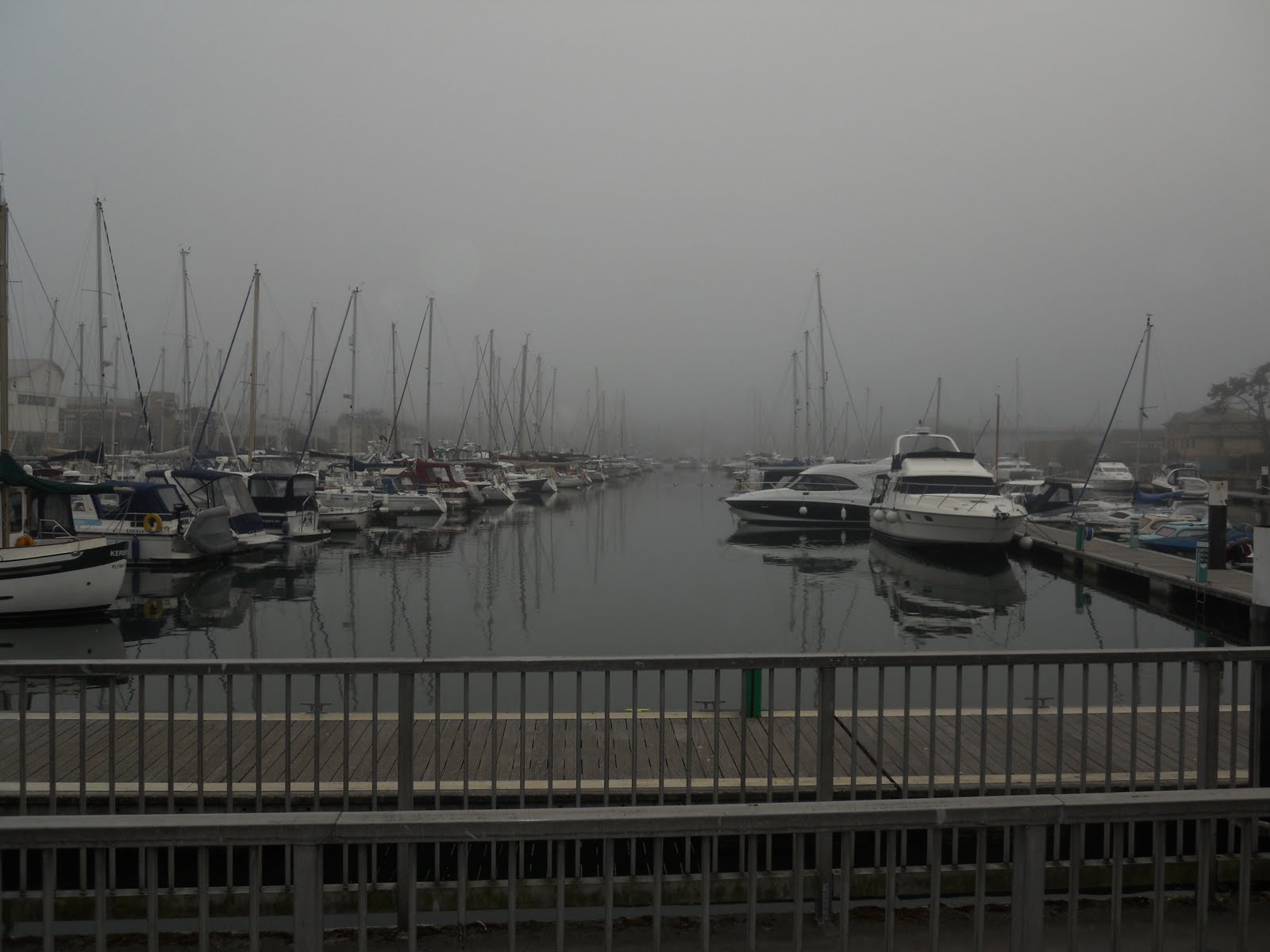
Taking a quick weather observation as I arrived at what we used to call the Backwater as children (Weymouth Inner Harbour would be more appropriate) things looked a little bleak towards Portland.

However, we persevered, taking a look at some of the decent size
Grey Mullet that now prosper here. Portland once again was a dead loss for me, retracing my route of yesterday seeing only a hand full of Swallows, 3 Stonechat and 2 Ravens.

Lodmoor was my next port of call where
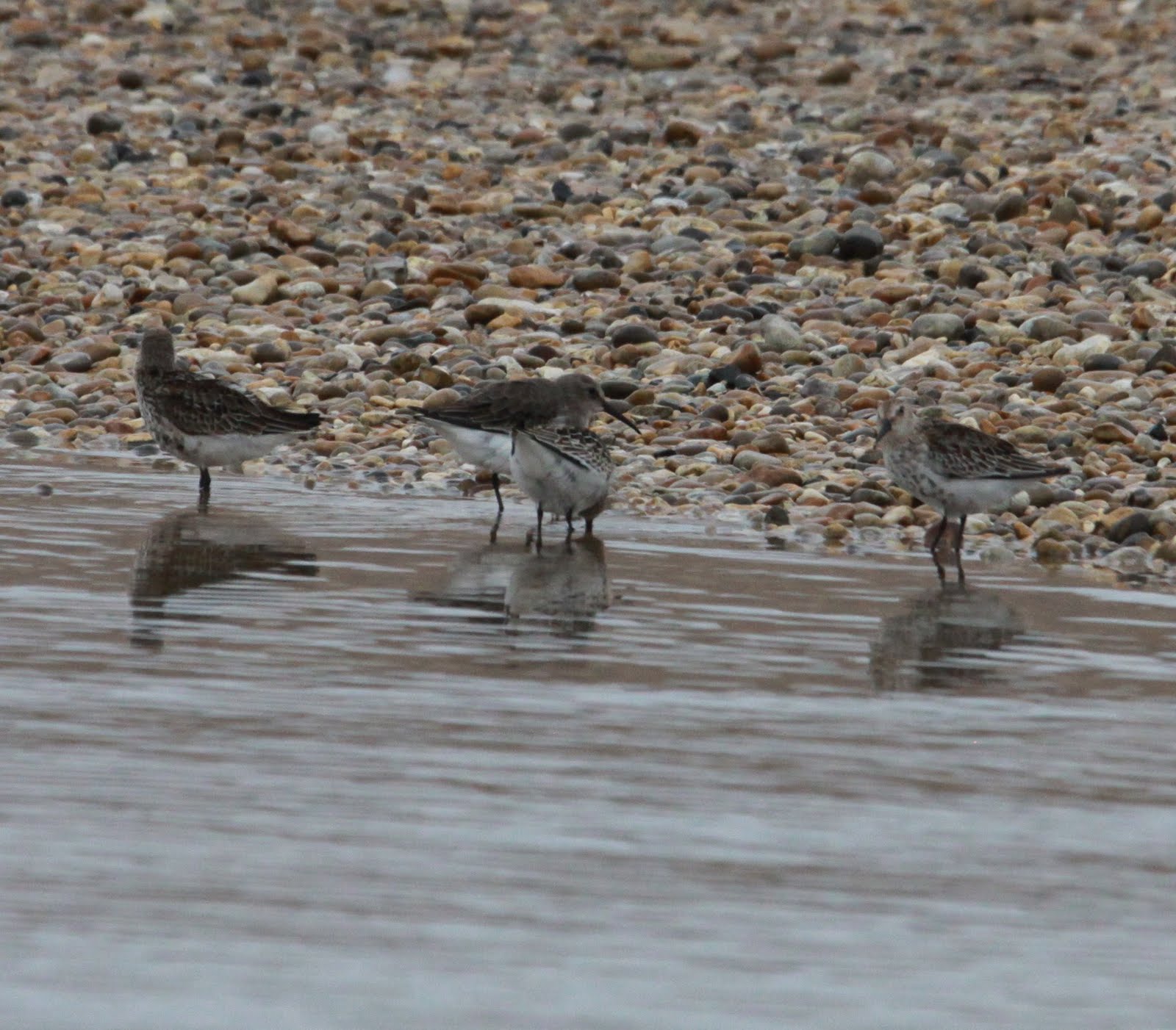
Lapwing, Little Egret, Common Buzzard, Red & Greenshank, Dunlin, Common Sandpiper plus a single Grey Plover were seen in quick succession, and it was worth taking a little time to watch this
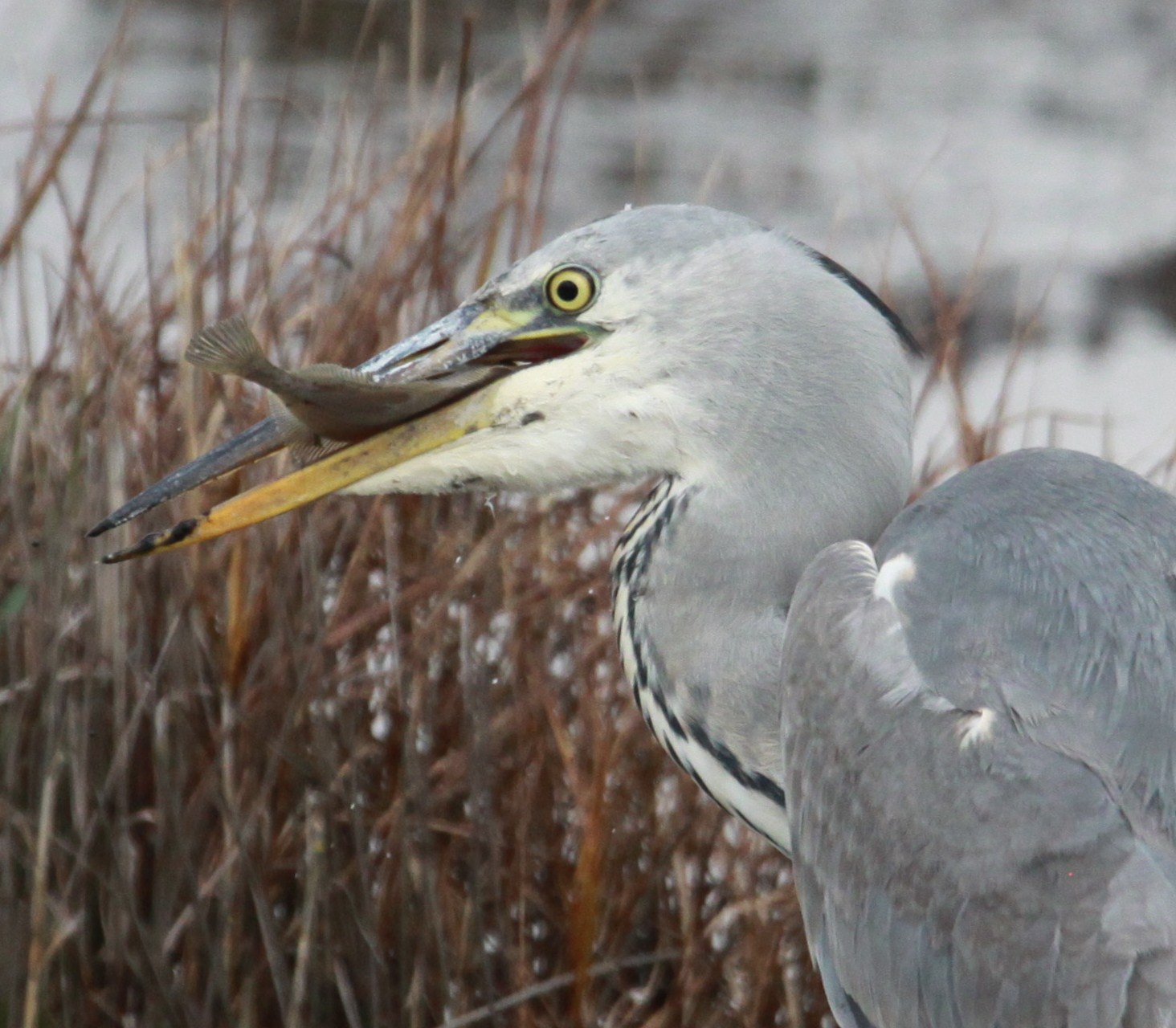
 Grey Heron
Never hurried in their hunting technique, it just stood motionless eyes firmly fixed on one spot.

Quicker that my eye could see, it's head plunged into the water and emerged with this small
Dab.
Not a huge profit for such a long wait, but maybe bigger fish next time and

at least we've eaten today!

The main thrust of my visit was to try and see a
juvenile Red-backed Shrike that was spending a third day on the Moor, and on arrival the news was good. It had been seen regularly and often but, as is often the case, had just disappeared from view. The wait was a full 20 minutes, and even then the bird only lingered for a short time before presumably catching another insect.

With no chance of securing a photo these 2 images come from the archive, the bottom one showing an adult bird. So, while thumbing through a few shots I again returned to the Venezuela section to bring you a few more from the Hato Pinero visit in 2009.
 Roadside Hawk
 If the Pearl Kite isn't the niftiest little raptor, I'd like to know what is!
 Rufous-vented Chachalaca
 Saffron Finch
Certainly not David Attenborough, but an Ocelot for all that!
 Fresh out of bed, I had to rub my eyes, was that a 'clear blue sky'? A second take and sure enough "there ain't a cloud in sight" (Mr Blue Sky, ELO) but it was quite a different view looking north where the Ridgeway Hills where shrouded in low cloud/fog. A squadron of Canada Geese flew in as I arrived at Radipole having left the cemetery, so often referred to in these pages and shown by the treeline in the background of this image, full of birdsong. However, the warmth of the uninterrupted sun made it more a day for insects than birds as the first sighting fell to this
 female Migrant Hawker dragonfly.
 There are now good numbers of juvenile Moorhen on the reserve, and next to show was a rather unexpected
 Painted Lady butterfly.
 Gadwall, this a male, are resident here and with little else to report except for a steady trickle of migrating Swallows, signs of 'erupting' Bearded Tit and singles of Common Sandpiper, Kingfisher, Song Thrush and Great Spotted Woodpecker it was off to Portland.
 First contender for the log here was this magnificent Convolvulus Hawk-moth
 which, when held by the Warden, gives a better idea of dimension. The reed beds at Radipole, Lodmoor etc are now all but devoid of Acrocephalus Warblers but there are still a few stragglers passing through the Bill. At Culverwell 3 Reed Warblers were seen by some observers, while later
 this Sedge Warbler was plucked from a mist net by visiting 'ringer' Martin.
 Those in the know informed me that this tiny bird, about to leave for Africa,
 should weigh somewhere in the region of 12 grammes, however this individual had prepared
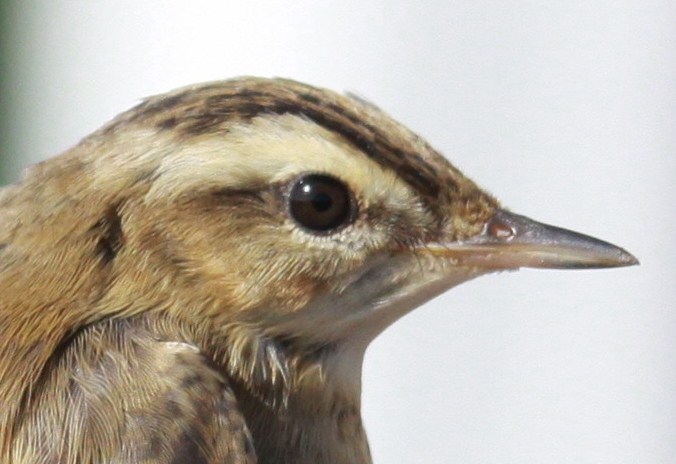 particularly well clocking in at a massive 17.7 gm. Let's hope it does well en-route!
 On the way home this Great Tit kindly posed for a shot, a common species probably taken a little for granted, but given such plumage and cocky personality worth much more than a mere glance!
 An 'open' and
 'shut' case for this Red Admiral butterfly,
 and although Public Enemy Number 1 in the countryside the
 Magpie is also worth a second look especially on such a day when the sun glances off its feathers.