Thursday, 12 January 2012

A Matter of 'Lif-er' or Death - Iron Maiden

My first encounter with bird-life this morning was a Song Thrush, in the cemetery, singing its little head off but that was not the only sign of the Springlike conditions. The sun was out, the sky was blue, there wasn't a cloud to spoil the view and it wasn't 'raining, raining in my heart; and along with a few early budding Daffodils and Snowdrops it could just as easily have been early April.

Redwings also abound in local gardens, a Goldcrest was also in full song while on Radipole there was evidence of a number of Reed Buntings, 'pinging' Bearded Tits plus vocal Water Rails and Cetti's Warbler.

At the north end of the reserve a small flight of

Canada Geese came noisily into land as common small birds were also well represented, such as

Robin and
Dunnock as usual feeding on the pathways,

as this Blue Tit was happy to pose for a while

before demonstrating some aerobatics.

At the Visitor's Centre Bridge things were completely different with at least 73 Common Snipe counted, while the 15 Black-tailed Godwit remain in place.

However, the most numerous species by a full mile was Mediterranean Gull (most of the above, representing just a small percentage of the whole) were Meds and about the only time I remember having difficulty 'spotting' the Black-headed Gull among them instead of the other way round!

In addition there were also many, many dozens arriving continuously from the directions of the Wey Valley and the Fleet, some overflying while others dropped in.

My own guess-timate of numbers was well over 400 giving great opportunity to study all ages of this brilliant little Gull.

The majority of adult birds were still in 'winter plumage'

but there were a couple already sporting the 'black hood'

of 'summer (breeding) plumage' birds.

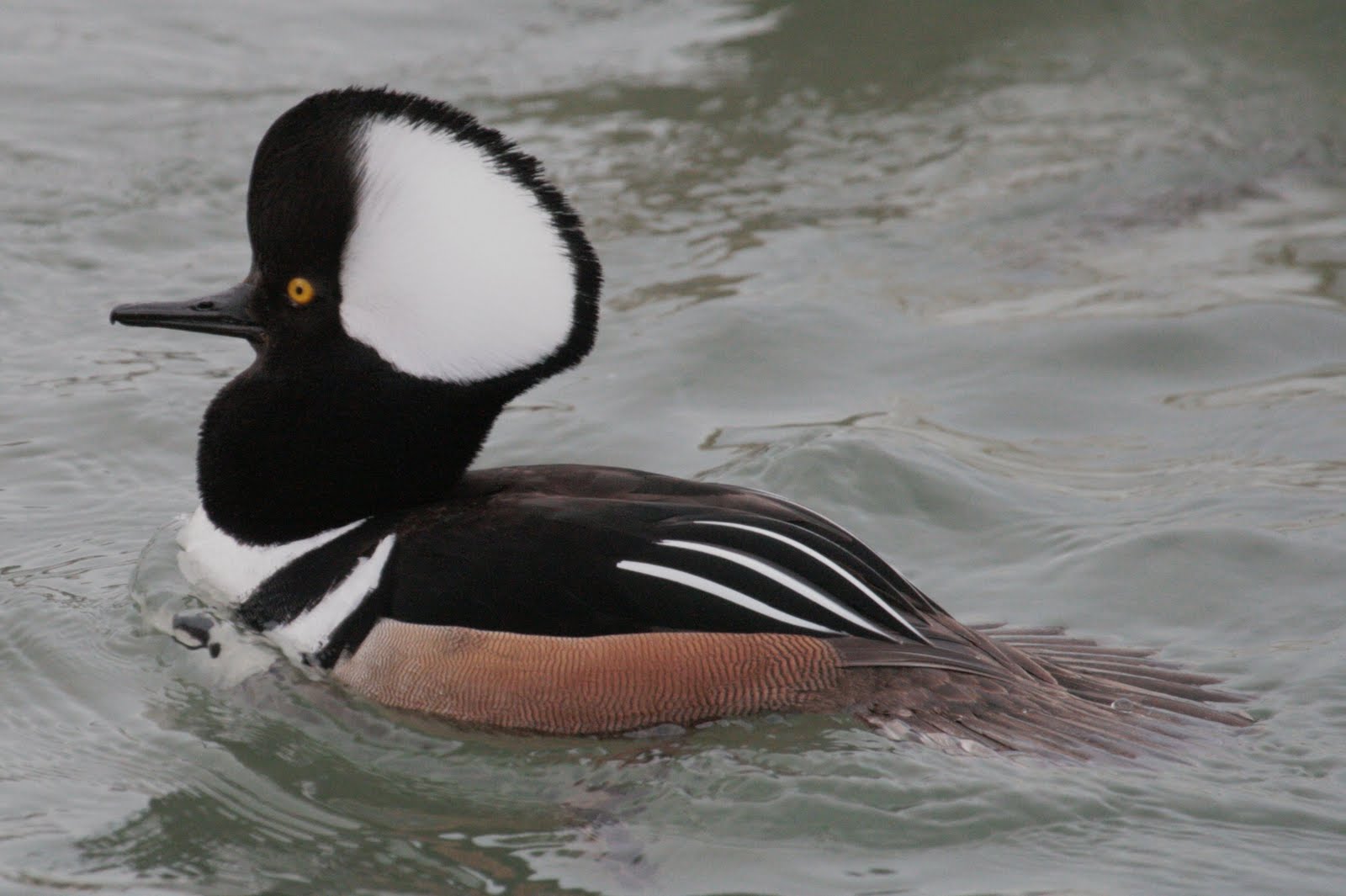
Not to be out done, Black-headed Gulls too were showing developing 'black caps',with finally a fine sight of the Hooded Merganser in flight.

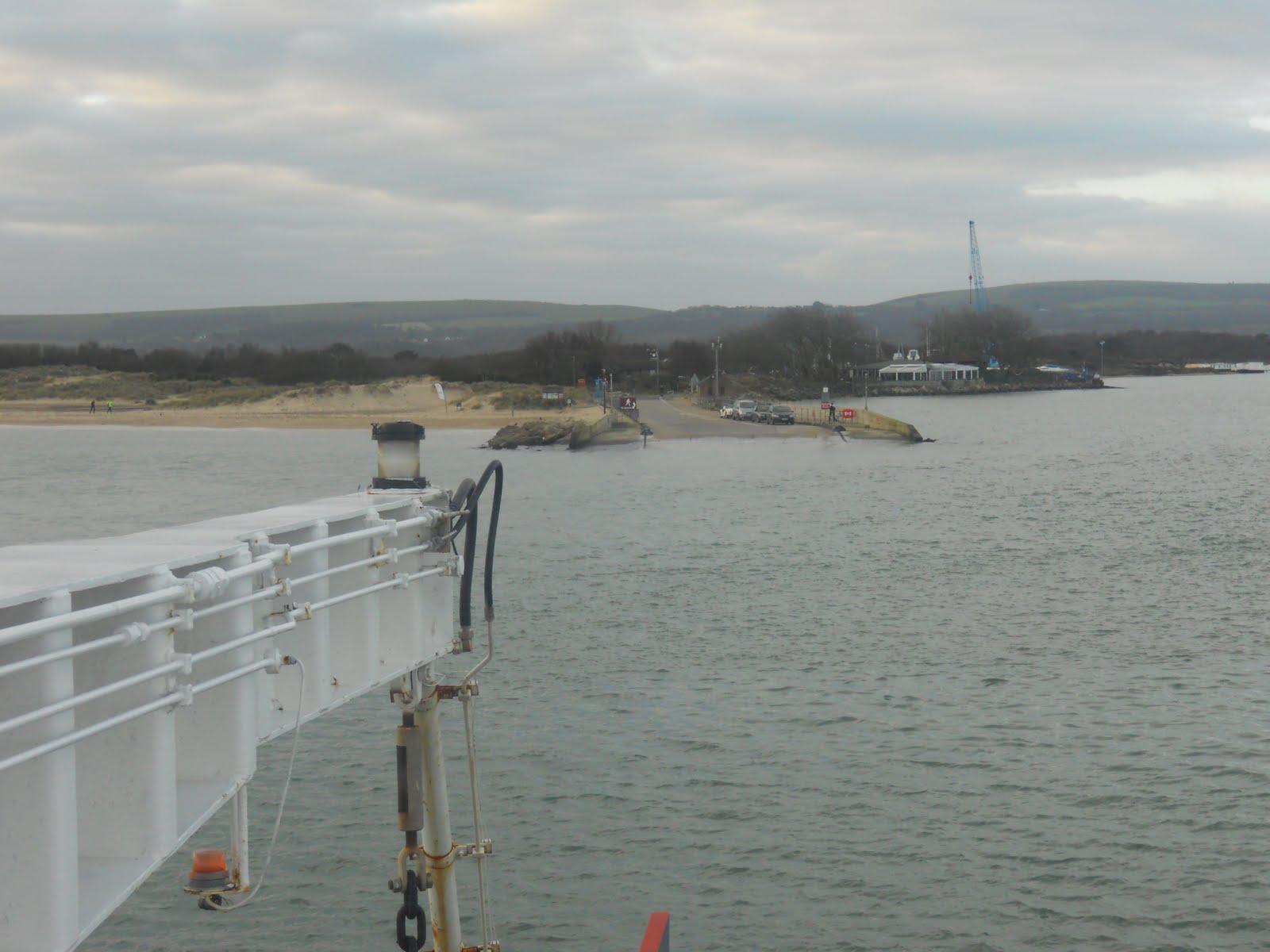
Then came the call I had been hoping for, Sheila Edwards announcing that the trip to Calshot, a small village situated close to Southampton in Hampshire, was very much on. Beating a hasty retreat to their house, I scouted around the garden finding more signs of Spring with a

Red Admiral Butterfly on the wing along with

2 separate, but unidentified, species of Hoverfly.

A clear run in perfect conditions though the New Forest and beyond found us in the village just 2 hours later. There was no hurry, or need for such, as what followed was a long, long wait for the object of our desires, so time for a little 'ship spotting' as a number of vessels sailed south through Southampton Water, onward to The Solent and eventually the English Channel.

The first was Nagato Reefer, one of a class of merchant ships known as 'Reefers' or Refrigerator Ships, temperature controlled to transport perishable commodities mostly fruits, meat, fish, vegetables and dairy products.

This was followed by a medium size Tanker, the name of which I failed to note, while all this time

a crowd of some 50 or so birders were gazing into

THIS. A massive tangle of Clematis where probably within was our target, seen briefly by some just before our arrival. There was a little respite as there were a few familiar faces among the crowd such as Julian Thomas and Mike Spicer - good to see them!
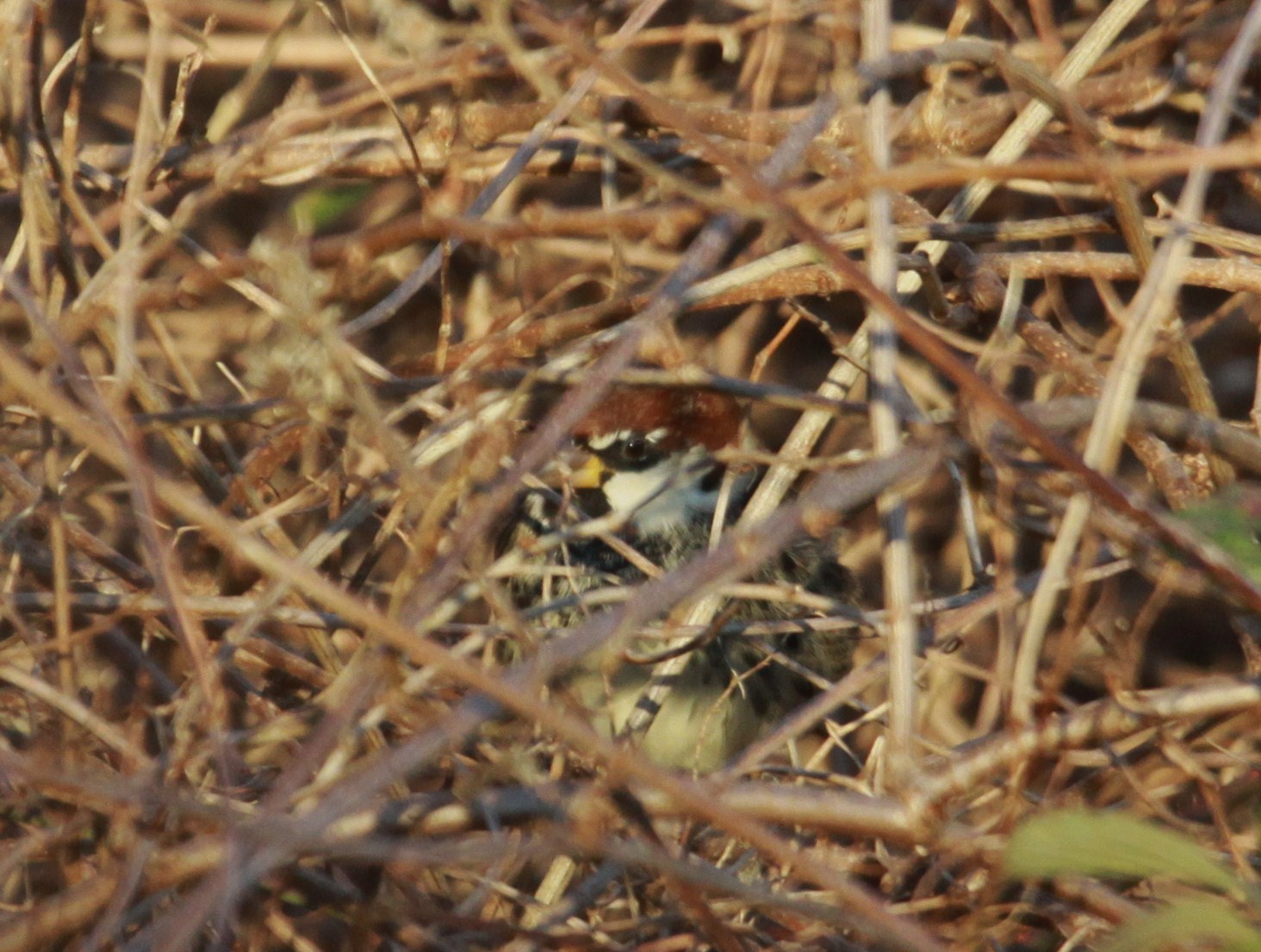
But then, after a full 2 and a half hours, the call went out to say the bird had been be re-located,

as was the crowd each of us trying for an advantageous view along the narrow strip between two hedges.

Not at all cooperative it remained mainly in cover, slowly moving towards the top of the bush,

where finally, the Spanish Sparrow* showed it's full glory.

The first record of this species in the UK was from Lundy Island in 1966,

while today's bird, which is said to have been in situ for many days, is only the 8th record for the country and a new addition to my own Great Britain List!

PS
El Spadger made it onto the early morning BBC TV News, with reports of the gathering crowds travelling to see it, its possible origins and how it had already charmed one of our own House Sparrows producing at least one 'hybrid' youngster. As we understand it, this is going to be called Hacienda Sparrow - Viva Espania!

The Year (January) List now stands at 162

Wednesday, 11 January 2012

Back In The Old Routine - The Strawbs

It seemed rather novel to be following what is my usual daily route this morning, through the cemetery and on to Radipole but most of the day promised to be a little mundane. However, at this stage in mild and almost windless conditions with a fully covered sky there were great expectations of 2 Warblers to add to the list. The first might be found in the northern section of the graveyard and the other on the Radipole Reserve.

For the non-birders, a quick explanation of 'pishing' which is making that kind of sound through the mouth, mimicking the alarm call of a small bird in an attempt to entice other small birds to investigate reveal themselves. It was this technique I adopted soon after clearing the Council workmen chopping down a bush. On the very first attempt a number of Blue & Great Tits showed themselves while

a female Blackbird also seemed interested, but the bird I was after was soon to follow as a

male Blackcap* also popped out of the bush along with a couple of

House Sparrows.

First encounter at Radipole was with a small group of Shoveler, this male paying scant regard to my presence and soon

got its broad bill back into the nose-bag. By the time I reached the viewing shelter 3

Cetti's Warbler had made themselves heard issuing that most distinctive and melodic song, and 3 Bullfinch had also shown briefly.

Lots of Gulls were congregated in the northern part of the lake such as this Common Gull, but there were rarer Gulls here today to be sorted out.

Pochard

Among this gathering was one of the rarer Gulls mentioned, can you see it yet?

One of 2 Ring-billed Gulls was very much keeping its distance, but there was no sign of either the Iceland Gull of a few days ago or the Caspian Gull. There were also a good number of Common Snipe here on the exposed mud, along with 15 Black-tailed Godwit and a Water Rail.

Cormorant

Moorhen and before this visit was over the

Hooded Merganser was seen feeding under the pier of the Gurkha Restaurant. Personally I have never seen this bird take anything but natural food, and this morning it continued to do this. It would dive in the shade of the Gurkha and with 100% success rate bring to the surface a small Black Crab. Watching it deftly dealing with these hard to handle creature was worth the walk alone. Each claw and leg was skillfully nipped off before the body too was devoured, great to watch!

But, it was now time for the afore mentioned 'mundane' such as food shopping before returning the hire car, sorting mail and buying a new pair of boots. The later were purchased in Dorchester, our county town, where an opportunist shot was taken of this splendid

Bentley, temporarily stuck in traffic.

Late afternoon I made another bid for the Caspian Gull, seen over the past couple of days at the pre-roost wash and brush up for many Gulls, at Radipole. No luck with the bird, but did get to see long time birding friend Hugo Wood-Homer along with Bristol birder Dan Pointon - good to see you both.

The Year (January) List now stands at 161

Tuesday, 10 January 2012

A Day In Devon - A Game of Two Halves

With a whole bag full of new species for the Year List, I set off for Devon before daylight and with the promise of decent birding weather. First stop was

noted as a catchment for rarer birds, there was the prospect of at least half a dozen additions?

Within one hundred yards of the car park the first of these manifested itself in the shape of a Rock Pipit* so surely this was 'game on'? Next was a job for the Opticron 'Mighty Midget' telescope, for which I have to thank Kieth at In Focus for putting my way, and a thorough scan

across the vast bay. Particular attention was paid to the area of Langstone Rock as it was here the Bird Alerts were reporting 3 species of Scoter. Of these I could see only one at this distance, but closed to find it was the best of the bunch

a Surf Scoter*. It should be pointed out that the whole day was not one of good photography, in fact the camera was hardly used, so most of the images in this post are from the archive. A female (similar to the 2 birds left of picture) seen fairly well through my own optic, but even better via that of a charming couple from North Derbyshire - Thanks to them! In addition between us we picked up on over a dozen Great Crested Grebes, Razorbill, Guillemot and Gannet, plus Red-throated Diver and Slavonian Grebe which already grace the list.

Shortly before leaving my new found friends spotted 3 Eider* cruising across the bay comprising of a single male and 2 females (foreground). There was no sign of the Velvet Scoter or the male American Wigeon which both, annoyingly, put in appearances after my departure. It was a 15 minute drive to the next site, where the only birder to be found reported that the target was a mile away and mostly out of sight. However, luck was with me as the

Glossy Ibis* flew a little nearer giving reasonable views through the 'scope, but again misfortune didn't allow me to see the Long-eared Owl which is believed to have been photographed earlier?

The next path was via Dartmouth, home of the Britannia Royal Navy College the tower of which can just be seen peaking above this hillside.

Certainly one of my favourite towns in the county, this shot shows the Inner Harbour,

this the course of the Ferry and

the Outer Harbour.

One of two crossing the River Dart, this is the Higher Ferry.

Cirl Bunting* was next to be added, and after the short drive to the quaint village of

Aveton (John) Gifford (John Gifford is a mate so couldn't resist the pun) Bewick's Swan* quickly followed. 2 things surprised me about this bird, firstly that it is a juvenile and there were no adults with it, plus its tiny size. Dinky to say the least.

Having missed a couple of things en-route it was good to strike lucky with a bonus by way of 2 Greenshank*. However, time was getting on and there was one more call to make to see a juvenile Spotted Sandpiper on the estuary of the River Ply, Plymouth. This is when I got hopelessly lost in the conurbation of the city, and by the time I pulled myself out of that mess the light would have precluded any sort of view of the Sandpiper. Return to Base!

The Year (January) List now stands at 158

Monday, 9 January 2012

Home Again - Blackmore's Night

Well at last I'm heading towards home, but get the feeling that the visit may be short lived. Having done no birding in what might be considered my local area, there was much to catch up on but armed with information provided by John Gifford, Sheila Edwards and Paul Harris how could I fail????

Leaving Parley Court at 08:30 the first destination was the

east side of Poole Harbour here looking towards Sandbanks and the most expensive real estate in the world. There were good numbers of

Red-breasted Merganser* both male

and female on the sea, while 'scoping from Evening Hill

towards Brownsea Island a number of

Spoonbills could be seen distantly in the lagoon.

From there it is just a short drive to the Sandbanks/Studland Chain Ferry where there was a 'point blank' encounter with a

Razorbill. Unfortunately as I raised the camera it dived, for what seemed like ages, a long way off in mid-channel.

Nothing else of note was seen before arriving at the Studland side, but parking close to the Ferry it wasn't long before finding a Red-necked Grebe* in Shell Bay, as reported yesterday.

Onward to the Heath overlooking The Littlesea Lake and further afield to Bournemouth, where 2

Dartford Warbler were first located by their distinctive rasping calls. Knoll Beach produced a couple of small Grebes that were too distant to identify, while further on close to the Studland Car Park

2 Ring-necked Parakeet* looked as though they were awaiting my arrival. The waterbirds in the bay here were a little closer to the shore, where both Black-necked Grebe* and Slavonian Grebe* were seen along with a Great Northern Diver* and quite a few

Mediterranean Gulls*.

Driving past Corfe Castle, buily by William the Conqueror in the 11th Century, a short stop was made at the woodland close to Middlebere in the hope of a Lesser Spotted Woodpecker but that was not to be so I continued on to the Watercress Beds at Tincleton where there were also 2

Green Sandpiper. It was here that I received information relating to 2 Bewick's Swans in that vicinity. This would have been quite a coup as there had been no 'wild swans' in the notebook since the first day in Norfolk, maybe staying further north in the mild conditions? Search as I may, they were never found but perhaps they will be relocated later.

During the search I slowed for this Pony & Trap, which makes for a really nice picture, while at Ilsington Farm there appeared to be dozens of

Yellowhammer.

Close to Dorchester I visited Monkey's Jump, with nothing to report, then just before Martinstown the Bat's Lane turn-off is usually reliable for Corn Bunting* where they seem to favour the 2 lone Ash trees half way along. There was a mixed flock in the trees, with just 3 being positively identified, but there were surely more than this?

Eventually, I arrived in Weymouth and made straight way for Lodmoor where 2 Long-billed Dowitcher have been seen in recent days, but there was no sign or report of them today. Undeterred,

Littlesea Caravan Park was my next port of call where there were some familiar faces from the past. These 3 lads from Shropshire were visiting Scotland the same time as me in 2009, where together we found a Parrot Crossbill much to all our delights. Today the news was not quite so good as they had journeyed south to 'twitch' the Dark-eyed Junco and had now been waiting 3 hours for the Hume's Leaf Warbler* without success. It had been last reported at 08:55 but nothing since, so I decided to cut my losses and have a look for the

Richard's Pipit* which has been in the fields close to the Bridging Camp since before Christmas.

It didn't disappoint today being located soon after arrival, and closing to photograph range. Returning to the Warbler, word was that it had been returning to a small stand of Sallows to roost at 15:00 precisely, which is exactly what it did. A short visit to drop a small token of appreciation into Paul Harris and a cup of tea with my friend Lesley Brown ended a darn good day, and by 17:30 I was tucked up in the old homestead and getting ready for another foray tomorrow. I'll talk again then!

The Year (January) List now stands at 151