Wednesday, 9 June 2010

Shooters, Strimmers & Young Waterfowl

The sky was once again leaded this morning and a quick look north to the Ridgeway Hill showed there was every chance of rain. With little, if any, wind and a clear atmosphere, for me these are the ideal bird watching conditions so I continued and made my rounds of the cemetery. With little of note there it was straight on to Radipole, with the male Blackcap once again singing behind me, I encountered a small swarm of House and Sand Martins, the total number being about 50. At the kissing gate I was met by c4 of the 'white ducks' shown below, which in earlier days may well have been referred to as 'Call Ducks'. These are likely Aylesbury or farmyard birds that someone has gotten fed up with and 'dumped' at the lake, but years ago would have had a very important purpose.

As the name implies they 'call' and in the days of active 'duck decoys' they would have been used to attract their 'wild' cousins which eventually ended up on a plate.

As this picture shows the duck decoy was a long tunnel of wire mesh decreasing in height along its full length. The calling birds would be placed at the entrance and when the wild ducks alighted they would be chased down the funnel to easy capture. In the picture a small dag is being used, which would run between the palings, appearing and disappearing to the intrigue of the wild bird. Invariably, they would follow the dog and once again face easy capture. There is still an active duck decoy at Abbotsbury Swannery, but these days it is used solely to catch birds to be 'ringed' and released.

You don't have to walk far on either of our reserves these days to find 'legalised' damage by the RSPB, the so called Managers of these precious areas, so it was no surprise to find that in the last few days someone, not content with 'strimming' the verges of the paths, have now climbed into the reed-beds and started mechanical cutting there. Just how long is everyone going to sit idly by and watch this wanton desecration go on???? Don't worry the day is rapidly approaching when the real CONSERVATIONISTS will have their moment!

Over at Lodmoor, it seemed the who area was awash with juvenile birds, literally dozens of young birds, but before arrival I bumped into this 'colour ringed'

Pied Wagtail. It would be useful if any of our readers could get this record to the relevant authority and report its whereabouts. It was seen feeding on pavement insects right outside the Pier Bandstand, Weymouth Sea-Front.

adult Canada Goose with juveniles.

Others included this young Carrion Crow, not quite flying yet, 4 or 5 broods of Mute Swan cygnets plus the newborn of Mallard, Shelduck, Pochard, Coot, Moorhen and Great Crested Grebe.

This elegant Grey Heron was simply worth a shot as being so close, while also on the Moor Marsh Harrier, Lesser & Common Whitethroat, Dunlin, Lapwing and Redshank were seen, and later I was informed of a 'reeling' Grasshopper Warbler at the northern edge.

At Ferry Bridge, the fore-shore was once again devoid of birds, but the long-staying pair of Red-breasted Merganser where still in the Fleet as a dozen or so Little Terns were still feeding and 'fish passing' (part of their courtship ritual).

Great Britain's smallest Tern

the aptly named Little Tern is an adept

fisherman, and so good to watch making these pre-plunge hovers.

and so to Portland

where I caught this Meadow Pipit busily constructing a nest, and it was obvious there had been an emergence / influx of Butterflies and Moths.

This Common Blue

and Dingy Skipper were among a good variety which included Small Tortoiseshell, Red Admiral, Small Heath, Large White and my first of the year Meadow Brown (all butterflies) and a few Silver Y moths.

This Kestrel perched obligingly on the old Admiralty fence, but it was now time for a coffee at the Bird Observatory. Not a lot reported there except for singles of Manx Shearwater and Reed Warbler, so it was quickly on to the bushes of Culverwell.

On the way this fine looking (probably converted) trawler passed the Bill, and by the looks of what must be added accommodation amidships, and the 'A' frame aft, I would guess she is probably employed on trials or research of some description? You'll note she's under a Swedish flag.

What might be considered the 'best till last' I entered the Culverwell bushes and immediately encountered the singing of what could only have been an Acrocephalus Warbler. The song was not as familiar as the daily heard Reed and Sedge Warblers, nor did it sound like the Blyth's Reed Warbler I had recently heard at length in Estonia. I had to dig deep into my memory of birdsong, realising this was indeed a Marsh Warbler (I have heard a few in the past, but all abroad). There was a Marsh Warbler caught and ringed at the Portland Bird Observatory, and during just 2 brief glimpses (one in flight) I did note this individual bearing a 'ring'. Not that this confirms an identification, as most small birds here are ringed, but in my mind everything leads me to make this a positive identification on song alone.

and finally a story that met my ears today which I hope our new PM reads this evening.

On the very day (yesterday) David Cameron, our brand new Prime Minister, got on his hind legs and told the Nation how his measures to redress the financial deficit will 'hurt us all', c2 'Marksmen' arrived in the town from Nottingham. The gunmen, reputedly employees of the Department for Environment, Food and Rural Affairs (DEFRA) a Government Department, arrived in what was described as a 'top of the range Rapper's 4 x 4 and immediately decanter into the Premier Inn for a 2 night stay. At 05-00 (a good time not to raise public awareness) they drove to Lodmoor, unveiled their 'Purdy' shotguns and blasted to death a single Ruddy Duck. One of them then plunged into the reed-bed, disturbing everything before him, to recover the body of the hapless bird. Apparently, they then headed back to Nottingham! Let's hope for the sake of man and duck-kind the first round of 'cuts' include these 2 'Herberts' and the tools of their trade.

Tuesday, 8 June 2010

Rain Stop Play - Not Here!

I'd like to start today's post by extending a huge thank you to Jacqueline and all my other friends at Sotomayor, Arica, Chile for their kind thoughts. The same to Anna Piatkowska, family and friends, now returned to south east Australia, after our meeting at Hato Pinero, Venezuela for your company then and the endorsement of you invitation for me to visit you in Melbourne - I WILL come! Austrian Stefan Kainbacher for the brief but most pleasant lunch we all shared, and Doru Popovichi who gave me so much help in Bucharest. Your E-mails have been very welcome - I hope we all meet again and you pass my 'link' to all your mates. Thank You!

Grey is the only way to describe this morning, but while the rain was threatening it wasn't falling, so that meant I was out! Ferry Bridge, at the very least, seemed like an option as I made my way to The Rodwell Trail, and a cacophony of bird song. The tiny Wren was the most predominant bird, numbers singing all the way along the trail, but there were also sounds from Chiffchaff, Blackcaps and Lesser Whitethroat, while House Sparrows continued to build nests and a Garden Warbler was feeding young.

This male Blackbird, ably assisted by its partner, was also feeding

a brood of young, of which this was one.

Along the way were a number of common wild flowers, with these

Woody Nightshade just a day or so past their 'sell-by-date and

Common Valerian in 3 colours, usual pink, deep red and white.

Describing the fore-shore at the 'bridge' disappointing would be a gross understatement with just c2 immature Herring Gulls and a single Oystercatcher, but with the rain now starting all that was detected of any Little Terns were their 'calls'.

Barleycrates Lane at Tophill Portland was next, but bird numbers were about the same.

This Meadow Pipit, the only one I've seen since my return, lingered long enough for a photo call, after which all that were seen were a few Swallows coming in from the sea, and an absolute host of
Slugs and

Snails

Once on the brink of extinction, the Portland Sheep has a great deal to offer, renowned for the flavour of their meat, were once plentiful on the Isle of Portland, yet the breed had to be rescued from the brink of extinction in 1973. Now, with the benefit of enthusiastic new owners, they look to have found a fresh role in a niche market not only for their meat but also horns which are prized in button and walking-stick manufacture. Along with this 'flock' at Reap Lane there are also Chickens, Pigs and even Alpacas (one of the finest meats I have ever eaten).

Apart from the few afore mentioned the only other bird, seen in numbers, was Common Whitethroat seemingly holding territories in many bushes.

Just as the day seemed to be paling into 'ordinary' I walked down the slope to the bushy area of Culverwell where I met up with Martin Cade (Warden of the Portland Bird Observatory) and John Lucas, fellow 'birder'. The latter had just located a Red-backed Shrike, and in very quick time the trio were looking at a 'text book' adult male. Unfortunately, at some distance and in growing murky conditions the photographs were never going to be brilliant,

but these two shots give the idea.

Red-backed Shrike

For a clearer look at the bird, Martin Cade has kindly allowed me to publish his image, which it seems only the 3 of us saw.


A clearer view.

Finally, on the way to the return bus I bumped into a couple of mates I haven't seen for a while, who trade under the collective heading of 'Bright & Jenkins Gas Fitters'. Ian Jenkins (left) is one of my drinking pals from Finn's public house in Weymouth, and a character I get on with as well as anyone. We get on so well we dub ourselves 'The Mutual Appreciation Society'. Graham is a very long standing 'birding' friend, but since I moved from the Island to live I see much less of him - good to see you lads!

Monday, 7 June 2010

Back to More Familiar Territory

The weather was given to 'break' at about 11-00 today, so it was an early start through the cemetery and onward to the bye-pass where once again the male Blackcap was singing. Already there were dark clouds building in the west, but as I strolled around Radipole they passed overhead without spilling a drop. Of note, one pair of Mute Swan were tending c2 Cygnets and close by a Moorhen appeared to have just a single chick.

From the shelter I noticed at least one bird was showing interest in the newly constructed

Sand Martin wall, but recon this Grey Heron may find a little difficulty getting into the 'holes'.

A few paces on there was the strangest find of the day, this

Eel, seemingly dead and bleeding from the gills, was very much alive when I offered the toe of my boot. Eels of all species are hardy creature and this one, likely taken by a Gull, Heron or some such predator, was no exception as it swam away readily once returned to the lake.

Other changes that have occurred during my absence has been the prolific growth of all vegetation (where its been allowed to) with the green of the new Common Reed contrasting sharply with last years dead growth, and all peppered with newly flowering Yellow Iris.

Quickly along the sea-front to Lodmoor, where before arrival I could see a continuous passage of Common Tern between the reserve and Weymouth Bay, indicating something was happening at the breeding colony. Rabbits were the first thing to catch the eye, seemingly dozens of them, but as far as I could tell no signs of Myxomatosis. The Common Tern breeding islands were indeed active, and while it was difficult to make a count, numbers were most definitely in 'three figures', really good to see!

The 2 Tern Islands viewed from the main (only) shelter.

A cloud of white (is that an Arctic Tern third from the left?).

A closer view, showing the pipes under which many pairs prefer to make their nest.

every so often, all the Terns get up together making for a wonderful sight.

A single Common Tern takes a rest on a convenient post.

Now, wots this? Looks like a Mummy Canada Goose has probably been standing a little too close to a Daddy Greylag Goose?

Oystercatcher with c2 chicks, now a couple of weeks old. There were originally 4 but 2 have fallen foul to some predator or the other?

What is thought to be the same Arctic Tern that graced the Tern colony last year seems to have returned. Last time it held territory and coaxed a Common Tern into copulation. There followed the laying of a couple of eggs, one of which hatched, but the chick didn't last very long. This time it is getting much less of a welcome. Initially, it did 'build' and defend a scrape, but no partner was forthcoming and in recent days it has been forced to keep its distance, mostly not being allowed to land.

This brood of c4 Mute Swan Cygnets are at Lodmoor and appear to be doing very well.

In addition to these, a number of Shelduck and Canada Geese are showing off their young, while also seen were a female Marsh Harrier, c3 Black-tailed Godwit, a couple of Teal plus singles of Lapwing, Dunlin and Song Thrush were also seen.

Time for a change of venue, so made for Ferry Bridge but as I boarded the bus new arrived of a possible White-throated Sparrow at Southwell, Portland. I did stop at the 'bridge' but only to the tune of c13 Dunlin and c3 Ringed Plover. At Southwell there was even less success with the Sparrow of American origin, so it was home just in time to miss the rain. There looks to be more 'wet stuff' tomorrow!

Keep The Home Fires Burning

As a short precursor to today's post, I was informed earlier by my dear friend Roy Henderson of an article of interest in yesterday's Dorset Echo as per this 'link'.

Arson attack at Weymouth nature reserve (From Dorset Echo)

Those who remember the RSPB (Reserves Manager Nick Tomlinson) response in the Echo to their own bout of pyromania, will recall how he told us that no damage was inflicted, no wildlife was destroyed etc, etc, while making no reference to the cost to the Tax Payer, the suffering of the residents of Grasmere Crescent and close environs, or the destruction of the only Marsh Harrier breeding site ever known at this, or any other, local reserve. There has already been a small response, but as I have said in the past it is not my nature to let important matters rest, and rest they will not!!!!

My reply published on the Dorset Echo Website this afternoon.

Let's make it clear, the fire at Radipole in November was an act of gross incompetence on a day when the wind speed was never less than 25 knots, a easily substantiated fact. On that day the RSPB Local Manager let his employees into a tinder dry reed-bed (a Site of Special Scientific Interest) armed with a box of matches, and I guess without a 'risk assessment' in place? The estimated cost to the 'tax payer' (you and me) was a Quarter of a MILLION Pounds, which seems to have passed by without question, not to mention the destruction of the only Marsh Harrier breeding site in the Borough. The latest fire was set by moron/s, but I'm having difficulty spotting the difference in fire-starters.

The RSPB fire is just one of a catalog of disasters since the start of Mr Tomlinson tenure, examples include the total destruction of a large colony of scarce Southern Marsh Orchids, the building of a Sand Martin Wall in the heart of this SSSI during the 'breeding season' and the wanton destruction of the only public viewable example of an uncommon plant, the Branched Bur-Reed. These are but a few of many malpractices that occur almost daily on OUR Nature Reserves in the name of Conservation.

What's needed is a public investigation, with answers, as to what is happening on OUR reserves, perhaps starting with an examination of Mr Tomlinson's credentials. At the final analysis who are the RSPB answerable to, and how long are they going to be allowed to keep making these catastrophic mistakes?

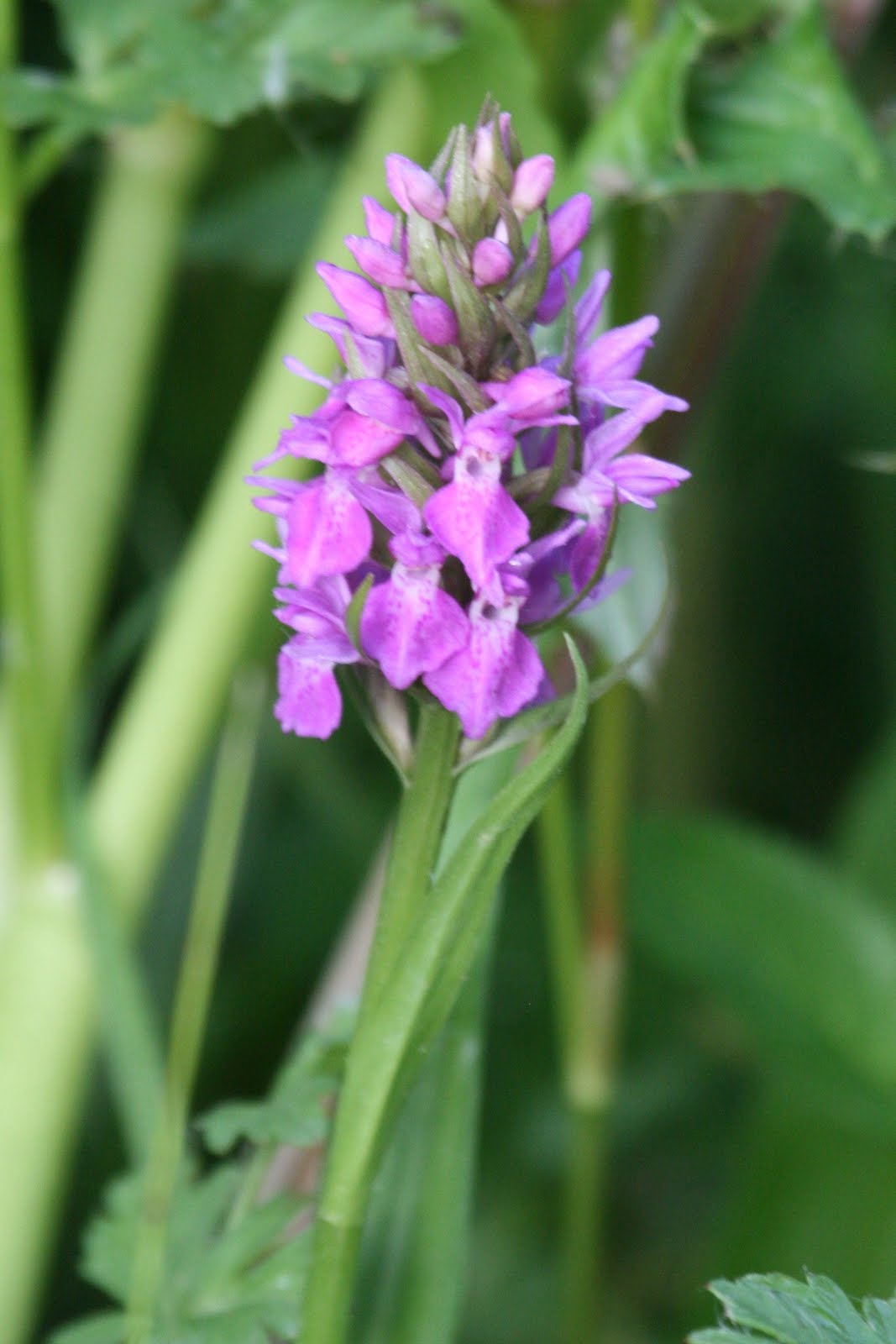
Southern Marsh Orchid, this photograph is one of just c3 I could find on the reserve today. Before the RSPB grubbed out the main colony with a mechanical digger, you would have been able to see many dozens on a similar date in the past!

The Main Post Will Follow Shortly

Sunday, 6 June 2010

Off My Beaten Track

Northern Pintail male & female

June is the only month in which I have never recorded Northern Pintail in the county, so what better reason for diverting away from the usual and trying the much under-visited Rodden Hive. There was little chance of seeing any in the plumage above (photo from the internet), but this location along with Poole Harbour are about the best bets hereabouts. I only had the 'winter season' bus timetable but considered that should be close enough to the summer schedule, but did start off a little earlier to catch the X53 stopping off to find the Coot nest, previously destroyed by Apex Divers was thankfully back in business. While gazing over the Westham Bridge parapet I noticed the Jurassic Coast bus heading for the sea-front, and as well I did allow the extra time as this was it, leaving a full 25 minutes before the winter service.

Coot, back in residence but surely there's a cleaner part of Radipole Lake!

Only ever having caught this service to its final destination, Exeter, I was unsure of the stops en-route quickly being told by the driver that there was no stop at Langton Herring, but he agreed to set me down there - there's a 'pint' in whenever he wants it. This saved a good deal of time as the official nearest stop was about 1.5 miles away and I was already champing at the bit.

Stepping off the bus, the roadside verges were covered in Ladies Smock and it was fortunate I didn't step on this clump.

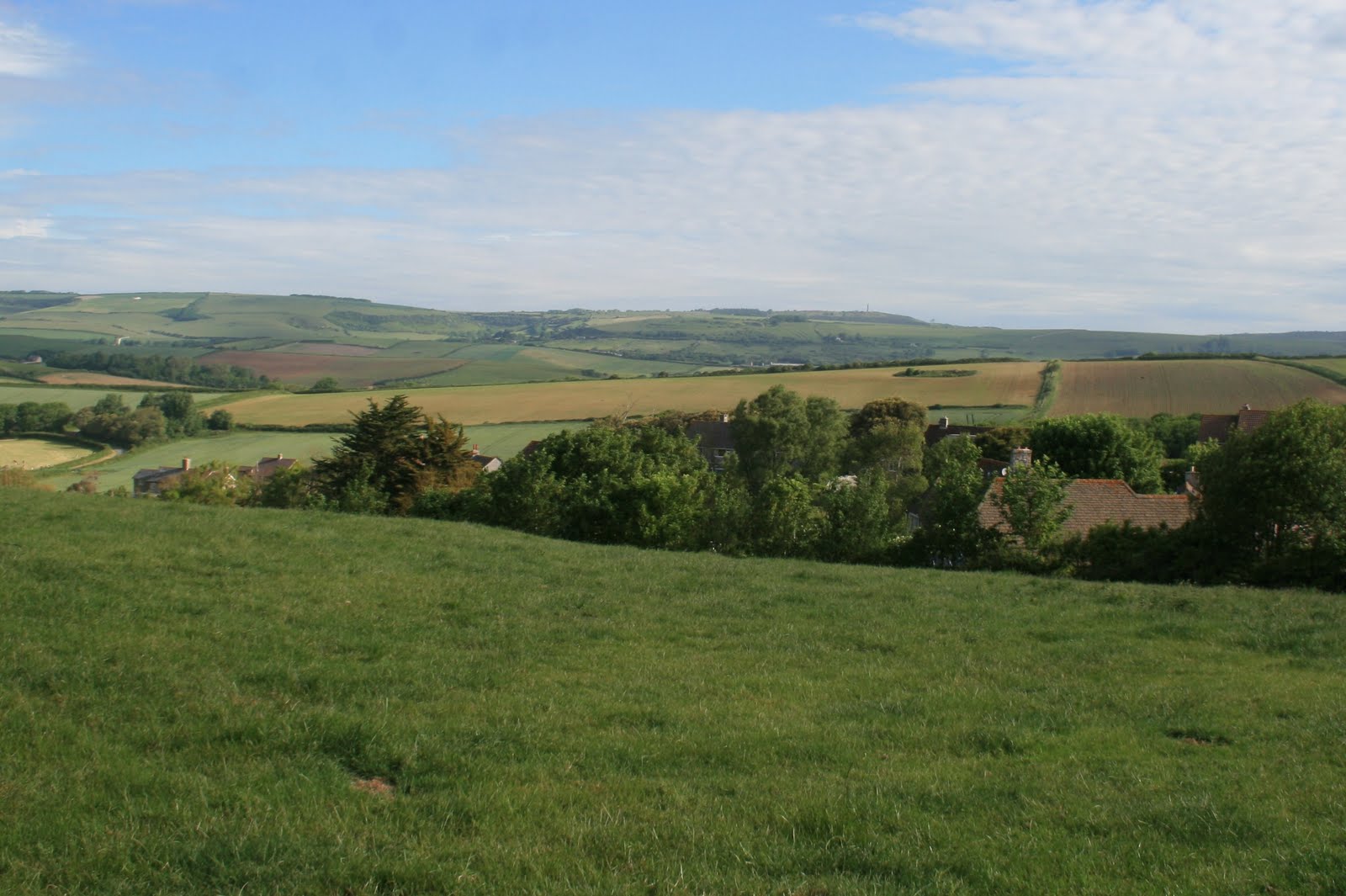
The views across the rolling Dorset countryside, as you walk to the small hamlet of Langton Herring, are spectacular,

and if that were not enough, the Hawthorn (May blossom) was also in full flower disturber only by a good number of Whitethroat, several Pheasant and a lone Green Woodpecker.

Although a little more modern in many ways than the archetypal Dorset village, Langton is one of my favorites, but as stated before I don't visit as often as I might!

The church of St Peter is a small ancient Gothic building of stone, comprising chancel, nave, south aisle, south porch and low square embattled west tower.

The tower is 18th century but the rest of the church is medieval although it has the usual Victorian restoration. It seats 180 and the registers date from 1682.

The Village Hall constructed in 1895, the pink flower is Common Valerian.

A few dwellings just before reaching the pathway to the Fleet and Slipway.

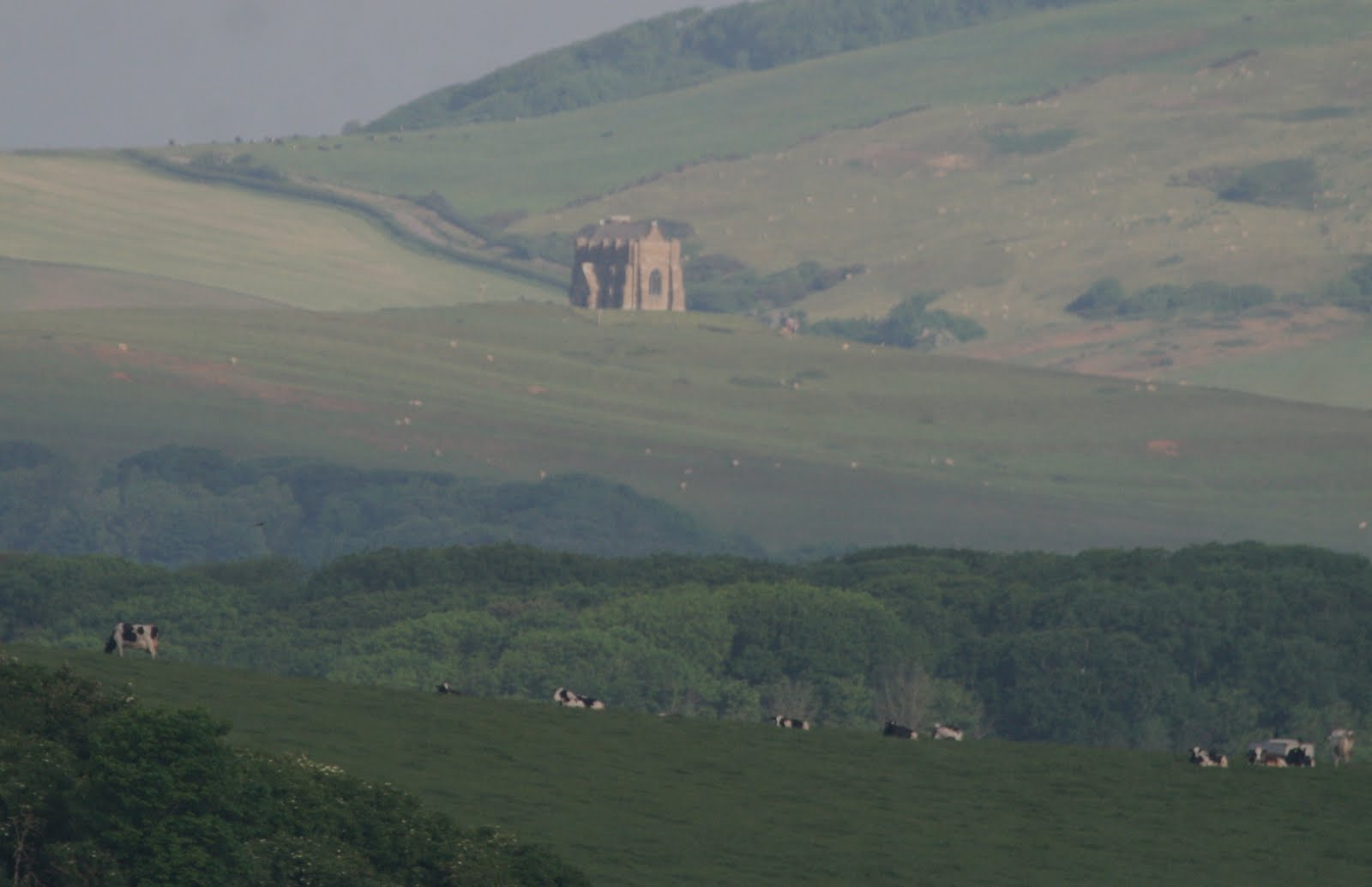
Again the views are extraordinary, and when expanded show:-

The Hardy Monument, a tribute to Nelson's Sea Captain, Thomas Masterman Hardy who was born in the village of Portesham in the valley below the column.

Saint Catherine's Chapel is thought to have been built in the first half of the fifteenth century as a Pilgrim chapel for Abbotsbury Abbey. Its position on the top of a hill about 80 m (260 ft) high, overlooking the coast from Portland Bill to Bridport, meant that it was a prominent feature for seafarers. The construction is notably robust in order to withstand the elements; the walls (made of locally quarried ashlar stone) are 4 ft thick and supported by stout buttresses, and the roof is (very unusually) also made of stone.

Which way now?

Rodden Hive, a small bay in the Fleet nestles below Langton Village and is protected on 3 sides by rolling hills, while on the fourth side the mighty Chesil Beach guards it from the sea.

Poppy & Daisy

I just know this as Field Poppy, but with over 120 varieties to choose from who knows. Suffice to say that it great to see them once again punctuating crop fields and the like.

From the brow of the hill this sea of Ox-eyed Daisies came into view, and the SW breeze became more apparent out of the lee.

and on closer inspection.

Only c2 Yellowhammer were seen but there were also plenty of Skylarks throughout, a couple of Mistle Thrushes, singles of Jay, Kestrel and another Green Woodpecker.

female Common Blue Butterfly.

Cuckoo Spit (so called, as it starts to appear on plants the same time as the Cuckoo bird arrives) is in fact plant froth sucked from stems to protect the nymphs of various species of Froghopper. The little green 'bug' within gains protection from predators as the spit as it is acidic, as well as provision of moisture and defence against the elements. The meadows today were swamped with the stuff.

Small Heath Butterfly

Large Skipper Butterfly, in addition to which there were a number of Yellow Shell Moths and what appeared to be many Grass-veneer Moths.

Arriving at the cove there seemed to be but a few birds, not surprising perhaps given the presence of this 'dog' Fox, but after a 2 hour vigil the following had been recorded. A handful of Black-headed Gulls, 2 Little Egret, 13 Shelduck, 3 Pintail, a pair of Wigeon, 9 Grey Heron, 4 Mallard, 18 Mute Swan with just one Cygnet, singles of Moorhen, Coot, Oystercatcher, Yellow Wagtail and an out of season Red-breasted Merganser. Good birdwatching I thought given the time of year!

The usually squelchy clay fore-shore was dry enough to walk a I started east, while the decaying and also dries Zostra Sea Grass providing a springy cushion. Above the Langton Herring Coastguard Cottages.

This male Linnet was the first of many to show as I walked towards Herbury, and the c2 Partridges that alighted from the path before me were thought to be Greys?

Just before reaching this 'finger post' c2 more, this time definitely, Grey Partridge took to the air allowing good flight views.

Red Admiral Butterfly, in addition to which Small Tortoiseshell & Speckled Wood Butterflies were see as was my first Silver Y Moth of the year.

A 'birder' at Herbury.

One of the Buttercup family.

At West Fleet Farm this fine small herd of what are thought to be Charolette Cows were worth a look, and as luck would have it, this coincided with the appearance of a female Wheatear and a pair of singing Corn Buntings.

Don't mention the Second World War bunker.

I'm thinking these are Brown-tailed Moth caterpillars as the lateral white dots are right, but see no sign of the 2 red spots at the tail end. Maybe they are freshly hatched?

and as I was walking up Fleet Lane,

this little fella appeared.

A movement in the grass alerted me to its presence,

followed by an excursion across the road,

after a little jump or two, then

disappeared as quickly as it had arrived. I'm calling this Weasel as there is no pronounced dark end to the tail, unless advised otherwise.

A Dog Rose.

The full extent of my walk today is part of England's first UNESCO designated World Heritage site, considered of great importance to Earth Science. The whole site stretches some 95 miles, starting at Studland, Dorset to the east and ending at Exmouth, Devon in the west. Representing some 185 million years of Earth's history, in some parts at the western end rocks have been proven to be 250 million years old. The site includes the world famous Chesil Bank which is thought to comprise of some 100 million tons of pebbles, naturally sorted by size, with small gravel to the west and large potato size cobbles at the Portland end (east). The beach has been calculated as moving 5 meters inland every century, sit and watch long enough and you'll see that's true!

To be continued........