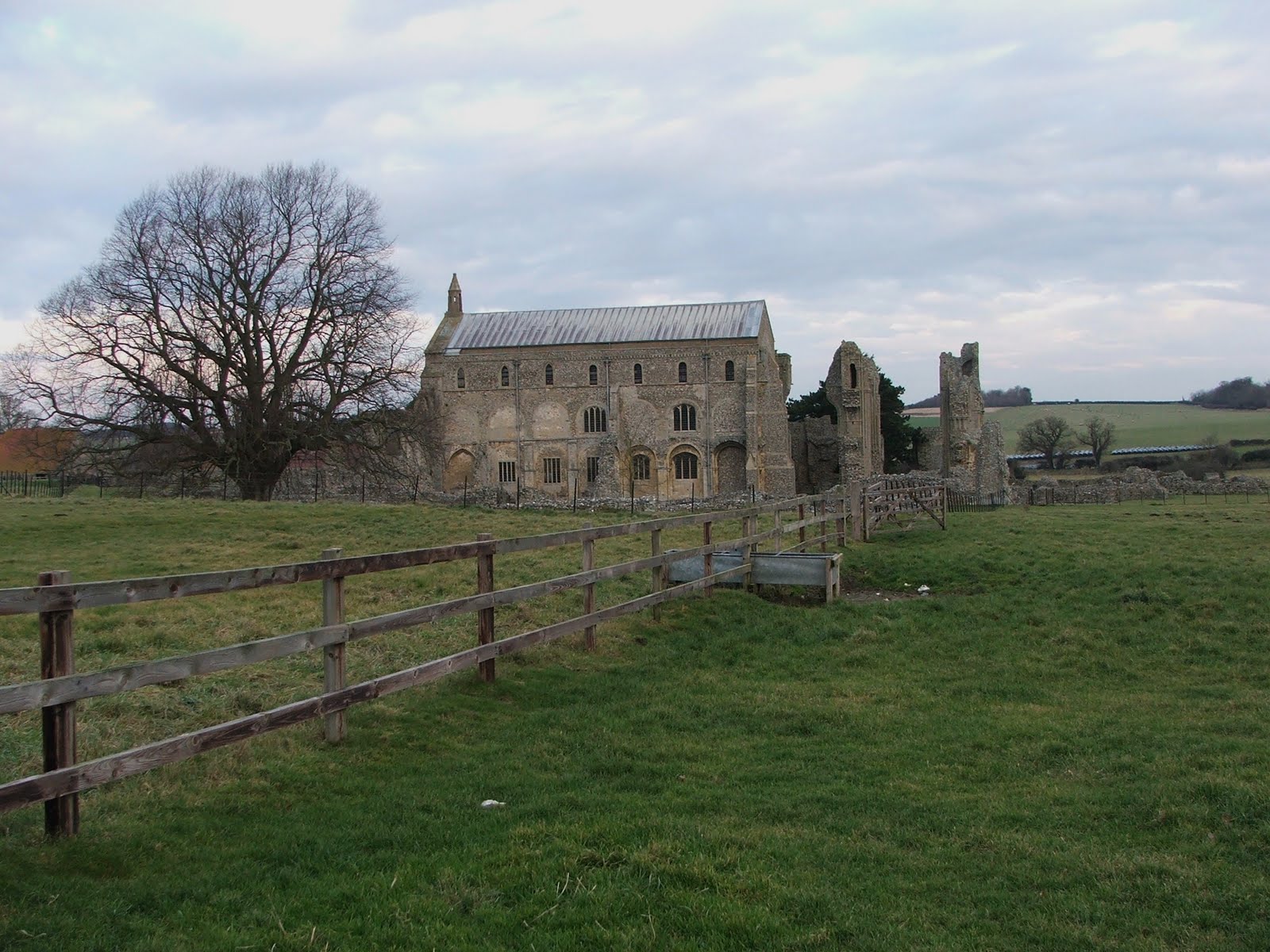
The final part of the advert for the Weston's Bed & Breakfast, is what you have to surmount before you are allowed off the property. I can tell you, each of these lasted me the full day in the field!
There were 4 birds in prospect today, all reported from the west end of the North Norfolk Coast, and I decided to tackle the most difficult first. The so called Northern Harrier is the North American version of the Hen Harrier found across much of Europe but is hoped by many that it will one day achieve 'single species status', what the birding world call a 'split'. A number of world authorities have already done the deed, considering it a completely separate bird from our own, but the British Trust for Ornithology (and others) haven't yet made that decision. So, for that reason alone many, especially the dedicated 'twitchers', feel it a must to have on their list should the day arrive when it is added to the Great Brian List.
 Unfortunately, this Marsh Harrier was not IT, but only a few moments after this fly-past the target bird appeared in the eastern sky.
 Much to the joy of the band of Twitchers / Birders awaiting the arrival in the shelter of the Old Coal Barn at Thornham. There were some smiling faces I can tell you, including Mike Spicer (green jacket, second left) who I sometimes meet at the Portland Bird Observatory where he is an annual visitor. Good to see you Mike, the photo's on the way.
 Other birds seen while waiting were Spotted Redshank, plus a couple of
 Brent Geese
 The next species was close by at the next village, Holme, but in typical fashion I overshot the given directions and ended up at the Holme Dunes Visitor's Centre.
 Back-peddling, there was this fungi attached to a tree but I'll have to leave that one to Dave the Fungal Punk to sort out.
 Also, among a thicket of bushes baring white berries, there could have been as many as 30 Fieldfare but not easy to see! Soon I found the sea-wall and small car park that had been described and crossing the vast sand flats came across Sanderling, Dunlin, Ringed Plover, Knot, Oystercatcher, Turnstone, Bar-tailed Godwit,
 and a number of Grey Plover buzzing around (all seen before) but by way of a bonus ,while looking for the bird in question, came across a Black-throated Diver. It was associating with c2 Red-breasted Merganser and a female Goosander, while close to them was the target of my desire, Long-tailed Duck in fact c9 of them.
 That was not all that was buzzing around as this fighter aircraft, one of 4, were tooing and froing across the Wash, on some sort of exercise I guess.
 In addition, this small skein of Barnacle Geese flew over
 the Water Mill at Thornham Marsh and that's when my attention was drawn to a
 fairly large flock of small birds some distance up the beach, I had been told there were Snow Bunting here, which were one of the wanted four, but this is about as close as they would allow me! Happy to have score 3 out of 4 already it was time to make another move, this time back to
 Holkham and a view that will be familiar to many a birder, Lady Anne's Drive which leads to The Pines (memories of Red-breasted Nuthatch) and later to the sea-shore and Holkham Gap. Here was the prospect of another little beauty Shorelark, but noting the
 Pink-footed Geese a little closer decided on a shot of them first.
I did meet one birder who gave some guidance, but apart from turning right I was otherwise alone to search the vast expanse of saltings and fore-shore. However, my luck held as 2 sea-watchers appeared from over the dunes and immediately started looking through their telescopes at something fairly close at hand.
 It was them, the Shorelarks I mean, all c8 of them, but seemingly
 a little jittery and flew
 just a short distance down the beach,
 which they did 3 or 4 times during my stay. On the way back to the car park, which for those who might visit is now 'pay & display' and starts at £2 for the first hour, there was a small mixed flock of Goldfinch and Linnet, the latter being yet another and the final addition of the day to the Year List.
 Opposite the drive is the Holkham Estate and Hall which once again was close, so unfortunately you only get the Gatehouse.
 Also on this stretch of the drive are some rather nice properties, as is the case at
 the village of Wells crossing the river.
 Further along is the small fishing village of Wells Next the Sea, looking up the Inner Harbour,
 and the Outer Harbour looking to seaward.
 Of interest was this old sailing vessel, but I know nothing about her.
 In my humble opinion, Stiffkey village has the best designed sigh with an alighting Tern motif, and all of this was on the way, in rapidly decreasing daylight to see if I could locate even more Snow Buntings at the Salthouse car park. Here they are fed making them easy to view but time was against me, but on the plus side I did have a bag of seeds.
 Within minutes of scattering the feed Black-headed Gull, Turnstone and even Teal were taking advantage, and soon after the
 Snow Buntings flew in,
 about 20 in all.
Tomorrow I head for pastures new, Emsworth in Hampshire where we should be visiting Farlington Marshes and Pagham Lagoon. Norfolk has been a fantastic 4 days, and I have already passed on the bad news to the Weston's as Arnold said "I'll be back"! While unable to say I 'cleared up' only missing the Waxwings (which had left before I arrived) and being unable to find Grey Partridge (what is understood to be a much more difficult bird now even in Norfolk) it has been terrific. Seeing so many good birds, meeting many, many new and familiar people and enjoying this unique county (particularly in the breakfast department) has been a dream. When you come my way please be in touch. If I don't know 'what's about', I know a man who does!
CHEERS
Finally, I need to adjust and get the GB Year List up to date, as reconciling the notebook against the computer spread sheet something was amiss? Having already added Ross's Goose, this had to be withdrawn as this species isn't, as yet, on the GB List. Omissions included Barnacle Goose and Rough-legged Buzzard and there are 5 more additions today =
Great Britain Year List @ 06/01/2011 = 138
GB Mammal List ditto = 9 Rabbit, Fox, Grey Squirrel, Roe Deer, Sika Deer, Muntjac, Chinese Water Deer, Stoat and Grey Seal (off-shore near Long-tailed Ducks)