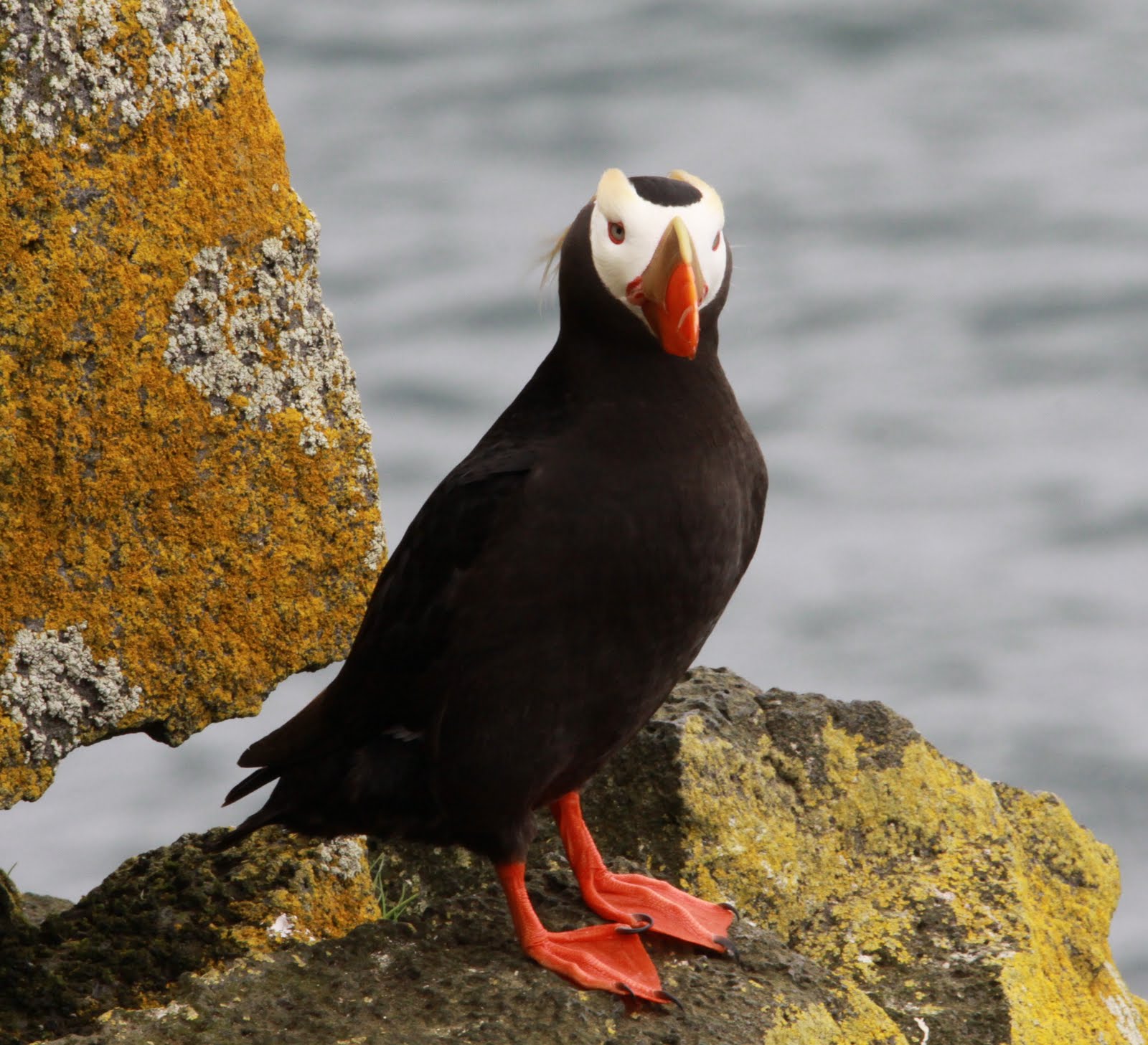
The weather in St Paul has been unseasonable, to say the least, with the last 2 weeks having been more or less 'wall to wall' sunshine, good thing that it stayed that way for my visit. There was a single exception, my last night here when it 'chucked it down' none stop leaving a trail of overly moist air and a good deal of mist. These conditions were not exactly conducive with 'birding' so by mid-morning and with what proved to be the final species of the stay we headed off to do some sight seeing.
I have been mad keen to view anything to do with the Fishing Industry and today turned out to be an ideal opportunity as Michelle's husband was returning from a few days 'long-lining' for Halibut in the Bering Sea.
I have been mad keen to view anything to do with the Fishing Industry and today turned out to be an ideal opportunity as Michelle's husband was returning from a few days 'long-lining' for Halibut in the Bering Sea.
 Michelle was there waiting as the
 Voyager secured alongside the fish quay, and there on deck was
 Michelle's husband Terenty, but still family life had to remain on hold as there was much work to be done.
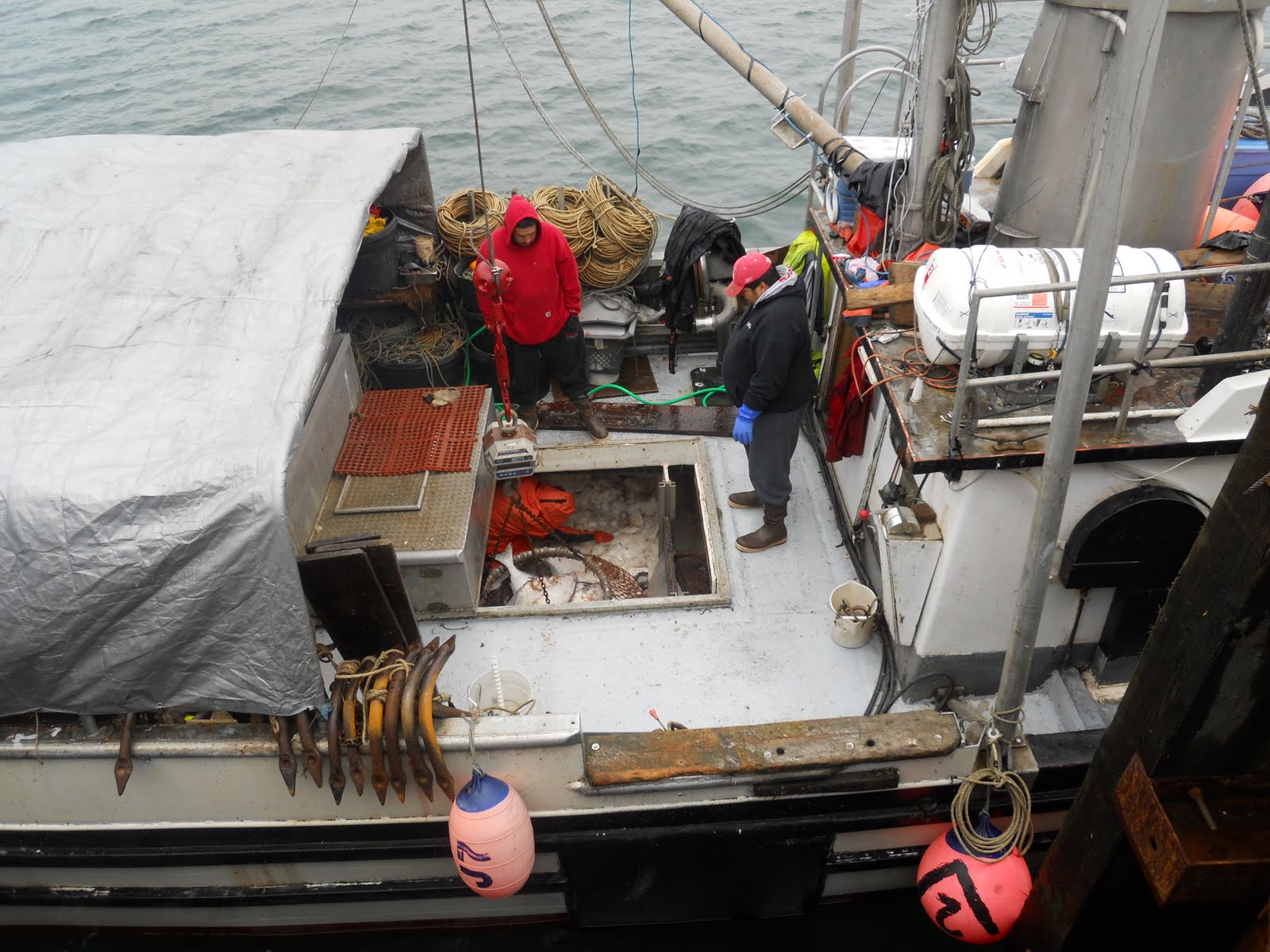 The shore-side crews were also waiting to unload the 6,000lb of prime Halibut, so off Terenty scurried down the fish-hold to begin the process.
 Some sizable halibut among that lot.


Inside the Processing Factory


 Filleting takes about 15 seconds on each fish,
 before they are loaded onto the 'skinning machine'
 but it is not known what happens to all that skin.
 Packers then send the fillets off all around the world.
 There was also time to look around the 'City', starting at the Russian Orthodox Church
 and the views from the hillside before
 taking a look at the museum.
 Seal fur coat.
 The small thimble size 'grass woven' objects on the top shelf take a minimum of 100 hours to produce.


 Seal Skin Stretchers
and finally a visit to the
 where I met the delightful
 Aquezina Lestenkof a pillar of the community.
 On the way back to the hotel we spotted these 5 Steller's Eiders
 you may have to take my word for that!