To start on a 'high note', as predicted yesterday's unusual mystery plant was identifies by John Gifford as the highly poisonous shrub Solanum pyracanthum, more commonly known as Porcupine Tomato. Thanks for your efforts John!
Given the weather conditions and a self imposed restriction on birding hours today (you have to draw the line somewhere to get other things done) it was inevitable that a good bird would show up. It did!
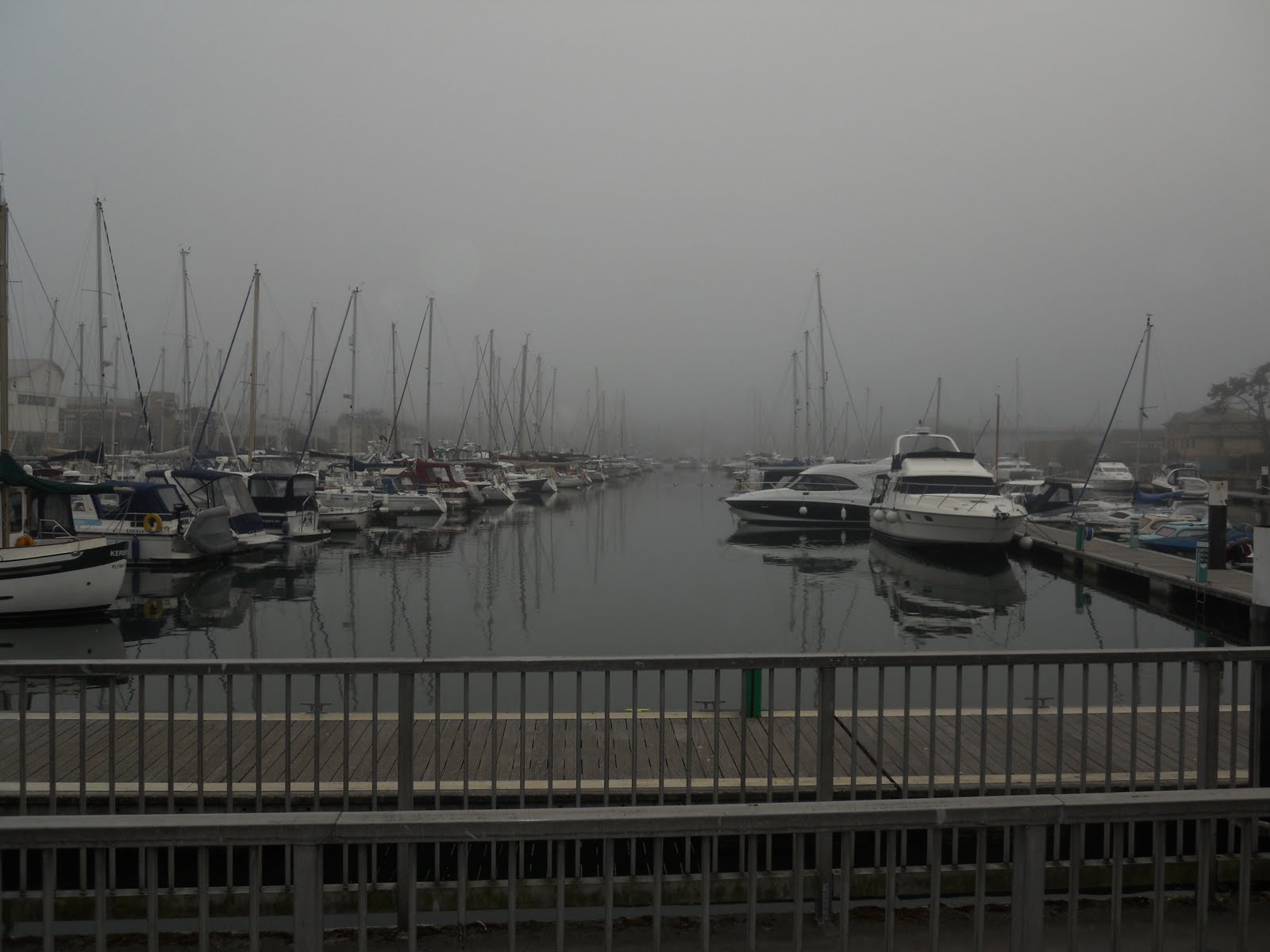 Pea Soup (an old English expression for 'thick fog') didn't come into it when taking the same view as yesterday along the Backwater, you couldn't even see Weymouth let alone Portland. But, it's an ill wind that doesn't blow some good, so surely a rare bird would have been forced to land amidst all of this?
 It was the same picture at Ferry Bridge and with 'spring tides' with us once again it was well worth watching the first couple of hours of the ebb in the hope something might drop in!
 The water was pushed right up to the sea wall when I arrived, deciding to do a 'species count' and photograph as many of them as I could. Not surprisingly first on the scene was this semi-resident
 Herring Gull in company with a few
 Black-headed Gulls plus
 3 Turnstones.
 A look across the road into Portland Harbour drew a visual blank, with the band of brighter light, centre, being where the Isle of Portland was yesterday.
 It is at such tides that the small patches of low-lying ground running along the inside of Chesil Beach fill with water, which remains as the water drops back, making a fine habitat for many species of bird. Mells (not a word I cn find in the dictionary) as they are referred to locally are always worth a look, and in doing so this morning came to realise just how much beautiful
 pink Thrift is still in bloom.
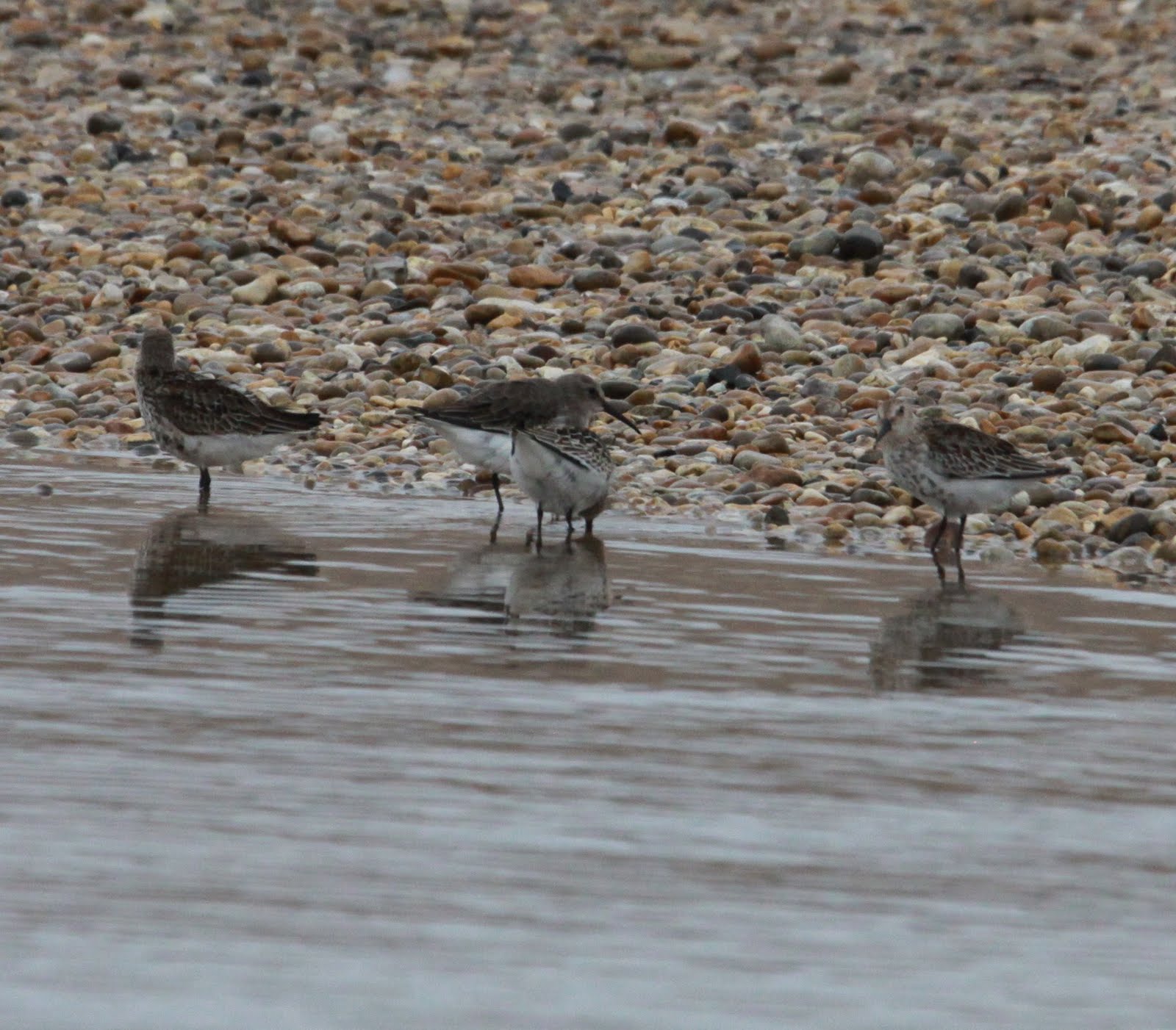 A few Dunlin were the first Waders to arrive,
 closely followed by equally few Ringed Plover
 as 2 Little Egret flew along the line of the Beach.
 Among the smaller birds, this Dunnock looked every bit as if is was still feeding young with others in attendance included Skylark, Linnet, 3 Stonechat, Goldfinch, Pied Wagtail, Starling, Wheatear, Swallow plus Meadow & Rock Pipit. More Gulls had now landed including
 this adult and
 a 'first winter' Mediterranean Gull,
 along with this Sandwich Tern.
 On my way back towards the bus, I came across this discarded plastic container left 'high & dry', between the pebbles and the dead Zostra (Eel) Grass, by the falling tide not unusual in this day an age of the perpetual 'Little Lout'.
 However, on closer inspection it was teeming with life within forming something of a mini aquarium. Clicking on the image will magnify it, where both small Shrimp-like creatures and fish can be seen.
As for today's 'Rare Bird', it was a
 Blyth's Reed Warbler, caught close to the Portland Bird Observatory. Continuing to be self disciplined I didn't go but have dug a picture out of the archive of one that I photographed while visiting Estonia last year. Finally, to complete the 'morning list' both Great and Lesser Black-backed Gull were seen as well as Cormorant, Carrion Crow, Jackdaw and a Peregrine with prey.