Thursday, 7 July 2016

Waders of the Lost Arc - Revisited II

While today's Post, the second and final part of the Waders Saga, once again harks back to Sunday there are initially a few Moths to catch up with including 3 additions to the Year List.

 CLAY
TOADFLAX PUG
 and the enormously variable, both in
size and
pattern

COMMON RUSTIC
 2 completely differing examples of
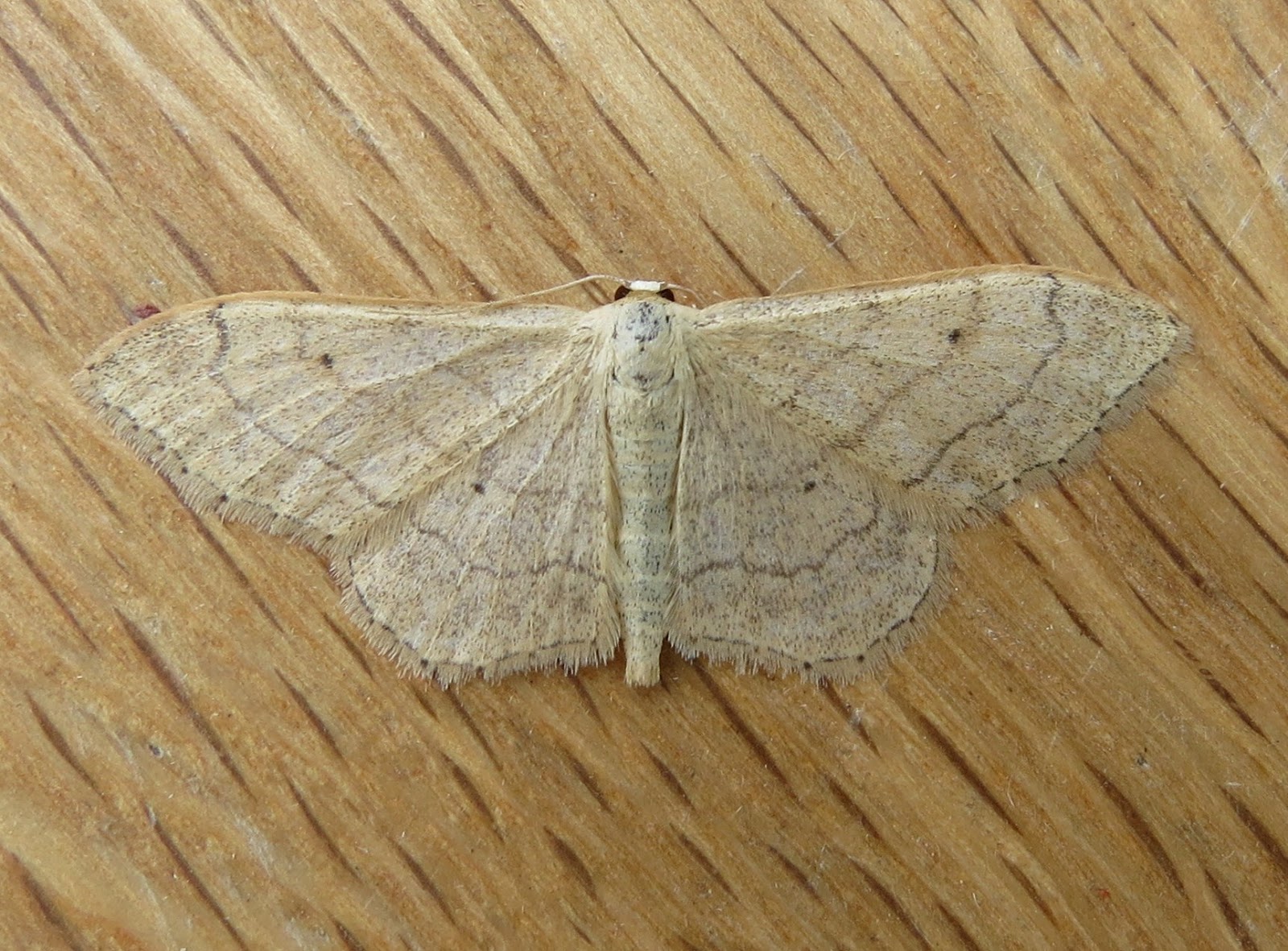
 RIBAND WAVE
which was first caught much earlier in the year
and
SMOKY WAINSCOT
ditto.
While 'full permission' has been granted to enter the
ECO RECYCLING WORKS
at any time of the day or night, Sunday is undoubtedly the best time.
Rarely is there work in progress on that day so no need to keep a
weather eye open for diggers, tractors, bulldozers and all other plant
but access now necessitates driving the full length of the

 NEW BUND,
 which is changing rapidly as the vegetation takes hold, followed by a
walk of some 200 yards over terrain not even suitable for a
Strange Rover.
 The disadvantage to this, compared to taking the vehicular access via the main gate,
 is that it may disturb the Wildlife, but so used has it become to all comings and goings,
plus the noise, that little attention is paid to human activity.
Our first target on the day was to spend a little time monitoring the
  SAND MARTIN BANK
which was met with great delight
with there not only being an increase from the last count of 29 to 33
NEST HOLES
but also that most of them are still active.
 Young birds enjoying what little sun there was,
 flexing growing wings and
keeping obbo for Mum and Dad returning with the groceries!
Shall We Stay or Shall We Go?
It won't be long either way!
Hardly having to move from that spot we started crossing the
hard-standing areas,
with soils and gravel of varying grades and sizes,
which is where we heard, and then saw, our first
LITTLE RINGED PLOVER
of the day and which made up our 'third' Wader Species.
In company with a Pied Wagtail (distant) this pair looked rather like
an adult (center) with a juvenile in the foreground.
Beyond this is a large area of rubble strewn land, an ideal habitat for these Plovers,
so it was no surprise to here even more 'calling' with a series of shots being taken in rapid succession.
 However many there was much activity both
 in flight and running on the ground
 making an accurate count mighty difficult, or maybe more simply impossible.
A good deal of time was spent concentrating on accuracy, but finally
we could only ascertain that the number was upwards of 10 individuals.
Very little vehicular activity takes place in this area but what has ensued in the past,
and mostly behind the
 SOIL SEPARATOR,
 have left ruts now filled with rainwater and of great benefit to all birds with
 MALLARD
 having brought off at least
 3 broods of
DUCKLINGS
already this year and a sanctuary for what are thought to be

NONE-BREEDING BIRDS
This area is also an ideal breeding site for the 4th and final of our
WADERS
  LAPWING
 which have already brought off Chicks here this season
 but it would seem
 we were getting a little to close to this one
 so
Beat a Hasty Retreat.
While things were so quiet the opportunity was taken to look through some of the
Sheds and other out-buildings where Stock Dove and possibly Feral Pigeon
are 'thought' to nest and where firstly a
CASUALTY
was found which looks rather like a Blackbird????
 SWALLOW


(juveniles)
most certainly nest here as do
HOUSE MARTIN
and so we come to the end of our most interesting
Sunday at the Tip
 with the warm feeling of knowing that all 3 of the British Hirundines
procreate here, Little Ringed Plover numbers have reached 'double figures'
for the first time while Lapwing, it might be thought unusual, lag behind somewhat.
The Final Word


goes to
LITTLE RINGED PLOVER
Entry

Pageviews
United States
675
United Kingdom
322
Germany
201
China
38
France
12
Ireland
11
Netherlands
11
Brazil
10
Russia
10
Spain
9

Wednesday, 6 July 2016

Waders of the Lost Arc - Revisited I

A combination of time in the field, the number of images/videos and the editing thereof, prevented us bringing you last Sunday's report on the day. To redress, we will bring that most interesting day to you in Two Parts in an attempt to catch up! From the Moth Traps we saw 2 new additions to the Year List in the shape of a most elegant
SHARK
and
only our second ever
SMALL DOTTED BUFF
also thought of interest was a
much darker than usual
WILLOW BEAUTY
2 examples of shade variation in the immigrant
GEM
before heading back to Slight Return II
and surely made it just in time. It was thought that the rain might put an
end to the day but things quickly brightened up and we were on the road again.
 We have been watching and waiting for these Plants to bloom and while
 BLACK HOREHOUND
is not that impressive
 the start of the Thistle Season should soon change that
CREEPING THISTLE
these being one of my favoured Families in the
Plant Kingdom.
On our way to the Irrigation Pond where the pair of Coot
are still trying to produce a family we at long last found proof that
STOCK DOVE (juvenile)
 do in fact breed in our Recording Area. There has never been any doubt
that they do but obtaining concrete evidence, via a group of c4 youngsters,
now firmly puts this one to bed.
 On the face of it there seemed little to keep us at the Pond but about to leave
a movement caught the eye! In the margins was spotted a feeding
 GREEN SANDPIPER
which on evidence gleaned over the past few days

 may just be one of a trio of these Waders seen at various locations.
Having had our fill and with nothing else to keep us there it was quickly on to the
Gravel Pit
where we were met with a most familiar call, that of a 
 REDSHANK
which took over 5 minutes to locate and then found to be c2.
This elegant Wader has only ever been recorded here a single time,
when in April 2014 c4 graced the very same spot. Also in line with
those previous visitors, these 2 also quickly took to the wing and seemingly
headed purposefully south, so we continued our search.
At the Sewerage Works there was still no sign of a returning Grey Wagtail
but we did find this
SNAIL
 which we cannot put an identification to, the possibilities are
Kentish, a species that has not been recorded here, alternatively
White-lipped or Brown-lipped?
 This discarded EGG was of interest as on location there was a good
chance of it being that of a Bullfinch.
Closer examination showed none of the light purple suffusion around the
black spots, which would have pointed to the Finch, so we concluded
that it was a
SONG THRUSH 
Onward to our usual rounds of the Heath and so few were they that we are happy
to note all of the Birds recorded in full.
Stonechat, Swallow, Green Woodpecker, Meadow Pipit, Linnet, Chiffchaff,
Blackcap, Willow Warbler, pheasant, Carrion Crow, Magpie and Mallard,
a poor showing.
REPTILES
however were quite another matter and from under our
dozen or so covers we recorded
 c13
 SLOW WORM
 c6
SMOOTH SNAKE
and at long, long last a First For The Year
GRASS SNAKE
From here we did head directly for the
ECO RECYCLING PLANT
 taking full advantage of the fact that it was Sunday and making
the most of the absence of the workforce. However, that part of
our report will make up Part II of Waders of the Lost Arc.
Getting that little bit ahead of ourselves we decided to revisit first, the Gravel Pit and then the Irrigation Pond in the hope of relocating the Redshank, which very luckily we did at the latter. Just standing static at first before becoming a little more active and, as will be heard on the final video clip, also vocal.
REDSHANK
On the way back a stop at the only couple of acres on Parley Court Farm that might pass as Heath Land, not much of it and being overgrown, but it does attract some interesting Insects from time to time. On the day it was the turn of
 First of the Year
 RINGLET
 Ditto
SMALL SKIPPER
 a few Ant Hills developing
 MEADOW BROWN
and
LARGE SKIPPER
Entry

Pageviews
United States
679
United Kingdom
363
Germany
227
China
36
France
21
Brazil
12
Spain
9
Netherlands
9
Russia
9
Australia
7