Utqiaġvik, officially the City of Utqiaġvik
and formerly known as Barrow, is the largest city (and the borough seat)
of the Slope Borough in the US state of Alaska
and is located north of the Arctic Circle.
It is one of the northernmost public communities in the
world and is the northernmost city in the United States. Nearby, Poin Barrow is also the country's most northerly
point. Utqiaġvik's population was 4,581 at the 2000 census and 4,212 in 2010.
Loyal Readers will doubtless remember our touching on this subject before,
and at the time did promise a follow-up!
It has been a while but we can now issue something of a
PICTORIAL
With my then partner and still firm friend Sue
(who I am hoping to see next week)
we kicked off this trip in deepest
Baja California
where we were hoping to see, but 'dipped' on
YELLOW-FOOTED GULL
which was seen on a subsequent, solo trip to the same place,
but even then there was but a 'single' bird!
From there we had travelled overland the full length of the Alcan and Alaska Highways
and just as a tip, if you should be tempted to do the same
this is the way to go!
They don't go anywhere near barrow so it was Shanks's Pony seen here
crossing the very point of the
ARCTIC CIRCLE
The story has been told about the invitation to dinner by an Inuet lady before
being whisked off by 2 young lads on quad-bikes to veiw numerous
Wading Birds
x - marks the spot
ALASKA
Now where's the sign for Marks and Spencer?
SNOW BUNTING
(female)
SNOW BUNTING
(male)
just everywhere!
OUR HOTEL
warm and welcoming, clean and comfortable.
BAIRD'S SANDPIPER
The most spectacular
DUNLIN
either of us had ever seen.
A Welcome far beyond Warm!
LAPLAND BUNTING
(male)
WHALE BALEEN PALM TREEs
all over the place.
The location has been home to the Iñupiat, an indigenous
Inuit ethnic group, for more than 1,500 years. The city's native name, Utqiaġvik,
refers to a place for gathering wild roots. It is derived from the word utqiq,
also used for "potato". The name was first recorded in 1853 as
"Ot-ki-a-wing" by Commander Rochfort Maguire, Royal Navy. John
Simpson's native map dated 1855, records the name "Otkiawik," which
was misprinted on the subsequent British Admiralty Chart as "Otkiovik." – yeah, we all know what those RN Jonnies are all
about!
Here in the UK we call this little beauty
GREY PHALAROPE
whereas in the USA it is known as
RED PHALAROPE
a state of plumage rarely, if ever, seen this side of the Pond,
for my money the Yanks have got it right!
By contrast
RED-NECKED PHALAROPE
If my memory serves me, it will be a welcome change, it is believed that the
Inuet are allowed to hunt 26
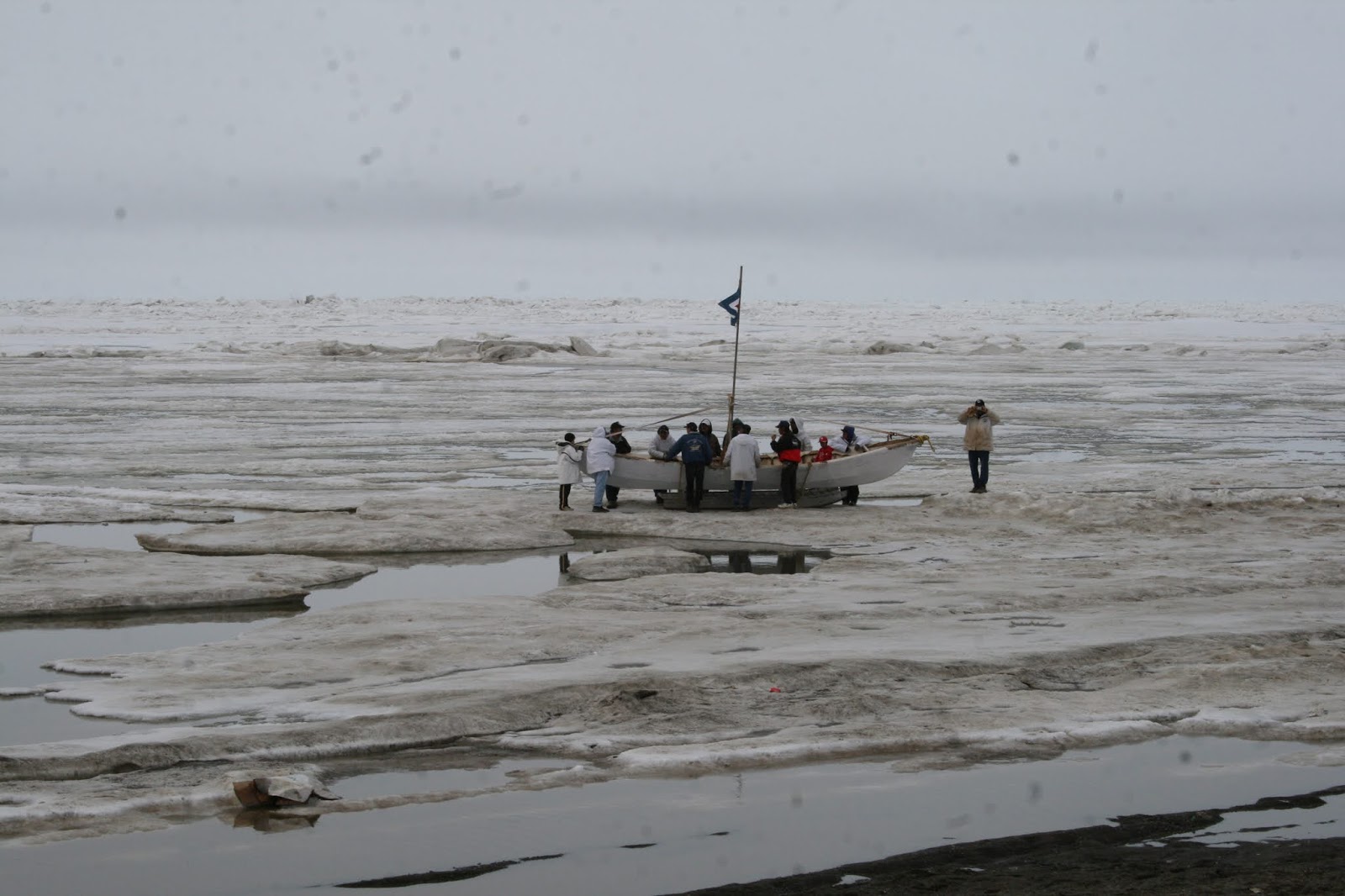
BOWHEAD WHALES
and we were lucky enough to encounter
FOREST (with Sue) the most prolific
Whale Hunter of that Season.
After being picked up on the side of the road, out in the wilds, by a Student Doctor,
he suggested he would provide the transport in exchange for our knowledge as he
knew nothing of Birds - A Deal......
Mostly 'PEEPS', as the Americans like to call small Wading birds, were as follows
LEAST SANDPIPER
SEMIPALMATED SANDPIPER
LONG-TAILED DUCKs
WESTERN SANDPIPER
WHITE-RUMPED SANDPIPER
but the very best was to appear chronologically last as a
SNOWY OWL
flew across what was believed to be the snow covered road
directly in front of us.
Unwittingly we stumbled across the nest
and if it gets any better than that we sure as hell want to be there!
Delighted, the young fella-me-lad had to be back at his studies by noon
so dropped us on the edge of the town square where there was 'something' going on????
It was in fact the Annual Bowhead Whale Festival
where reverance is paid to the creature that supplies much of the sustenance
in this part of the world.
We caught the action right on time as the prelude is manhandling the
most successful boat
that belonging to Forrest
into the square
for a few photo calls
The Crews and Families.
In the bowls
White-fronted Goose Stew
(If you are eating your porridge at this point maybe best to continue reading later!)
but far more prized than that is
'MUKTUK'
consisting of Whale blubber and skin cut into fine strips before being
fermented, over a year and stirred daily at dawn and dusk, in the animals own blood.
I have never in my life had to utter those immortal words,
"Oh, I do wish I had done this or that"!
YUM - YUM!
The
size of a Bowhead Whale is impressive, to say the least, considered one of the
largest Whale species in the world. They have an average length of 15 to 18 m
(49 to 59 ft) but have been reported up to 20 m (65 ft), and can weigh up to
100 tonnes!


 HOODED MERGANSER
 LONG-BILLED DOWITCHER