Saturday, 28 August 2010

Once (or maybe twice) In A Lifetime

The jury returned a verdict of RED-NECKED STINT

Without knocking the arse out of it, I've had my moment and now a few thoughts before it is confined to the history books. There are a million miles between standing alone on an empty foreshore looking at a strange little bird and sitting in the comfort of your home knowing exactly what it is. For those who have never been there, it's a daunting time and usually one in which you're damned if you do and damned if you don't, but you have to make your own call. Reacting differently may have allowed others to see this 'first for Dorset' (and 8th record for Great Britain) but despite that I have been well met by my fellow 'birders' today. With only a single exception, I wish every birder I know could have seen it but that was not to be, but I thank those both near and far who sent me 'best wishes' last evening and today. As for this Blog, the Stats went higher than ever before to a fantastic 483 'hits' yesterday, mainly due to the kindness of Martin Cade the Warden of the Portland Bird Observatory who highlighted the bird and my Blog on the PBO Website. In addition Dick Filby's company Rare Bird Alert and Steve Gantlett's magazine Birding World have undertaken to feature this find as the number of readers continued to climb. Arriving home at 16-15 I logged-on to witness the 1,000th 'hit' for today clock up and noted that the Falkland Islands and Malta have now also joined our ranks (which I also put down to PBO involvement).

Finally on this subject, I thank you the readers for your interest and hope you continue to look in, and maybe I'll get Dan Pointon off my back as well, having broken the record for the number of texts I have ever received in a 30 minute period - was rather looking forward to seeing you again matey!

One hour after high water today was about 12-30 when I had planned to return to Ferry Bridge for another look, but the signs didn't seem good under a clear blue sky featuring only the sun and a rapidly waning moon. Ideal conditions for Waders, or any other birds for that matter, to buzz off, which also applied to the cemetery where there was a single Coal Tit and several Goldcrests singing, and this

Wren that put in a brief appearance before I headed for the Bill.

Wheatear featured predominantly at Barleycrates Lane with 30+ showing with c19 Yellow Wagtails in the sheep field.

Willow Warblers were also present, plus c2 each of Chiffchaff & Tree Pipit, c4 Raven, c2 Peregrines, half a dozen Gannet, c2 Swift, a Stonechat and a few House Martins.

At the Obs there were a few other things including this Convolvulus Hawk-moth that had been released overnight from a bedroom in the lighthouse tower, plus another

Wasp Spider at least twice the size of the one shown here some days ago.

Believe it or not, this is a Merlin. As John Down gave me a lift back to Ferry Bridge this bird was 'posing' on a fence post but only until I tried, unsuccessfully, to photograph it perched!


and if they work, these are 2 further video clips from the Floating Oil Rig Buchan Alpha. One shows an example of some of the migration we used to enjoy (occasionally involving hundreds of thousands of birds), while the other is a Water Rail in an environment you may not have seen one in before?

Friday, 27 August 2010

The Jury's Still Out

Did someone say August? This morning, under the protection of 3 layers and a scarf, it seemed more like late October but with the rain gone and still some cloud cover to keep the glare at bay it was just about ideal. Heading for the cemetery, the wind appeared directionless at least in the heart of the conurbation, but further down the road it was felt to be in the north, with maybe a little east in it. Over the past few days it must have visited every point on the compass?

This ragged Robin was my first encounter, but failed to notice immediately the Garden Warbler sat on the Bramble just behind it. When it did manifest itself it was flying to the top of the bush not allowing time to even raise the camera. Perhaps needless to say that was the last that was seen of it, but on the 'plus' side it was a first record for me at this my 'local patch'.

Having announced only the day before yesterday that fungi was scarce in the cemetery today there were 3 of these that I can only presume are Toadstools. The Field Guide is in my hand but apart from there being hundreds of of varieties, they all look the same!

Arriving at Ferry Bridge it was confirmed that the wind was in the northern quarter, and what looked like the same bunch of Gulls were again roosting on the grassy area. On the sea wall was a lone Turnstone (thought you'd be fed up of photies of these by now) and this

Pied Wagtail. Having rattled off just 2 quick shots c2 Wheatear in company with a Swallow flew across the bay giving some hope of a movement of migrants, and the Gull /Terns were similar to yesterday except the c3 Sandwich Terns had increased to c5 with a Common Tern close by as well.

As with Turnstone, the readership may well have had enough of Mediterranean Gull also, but this juvenile perched on this lump of Portland stone was just too much to resist. Not only is this my favourite plumage phase of this stunning Gull the picture is also esthetically pleasing don't you think?

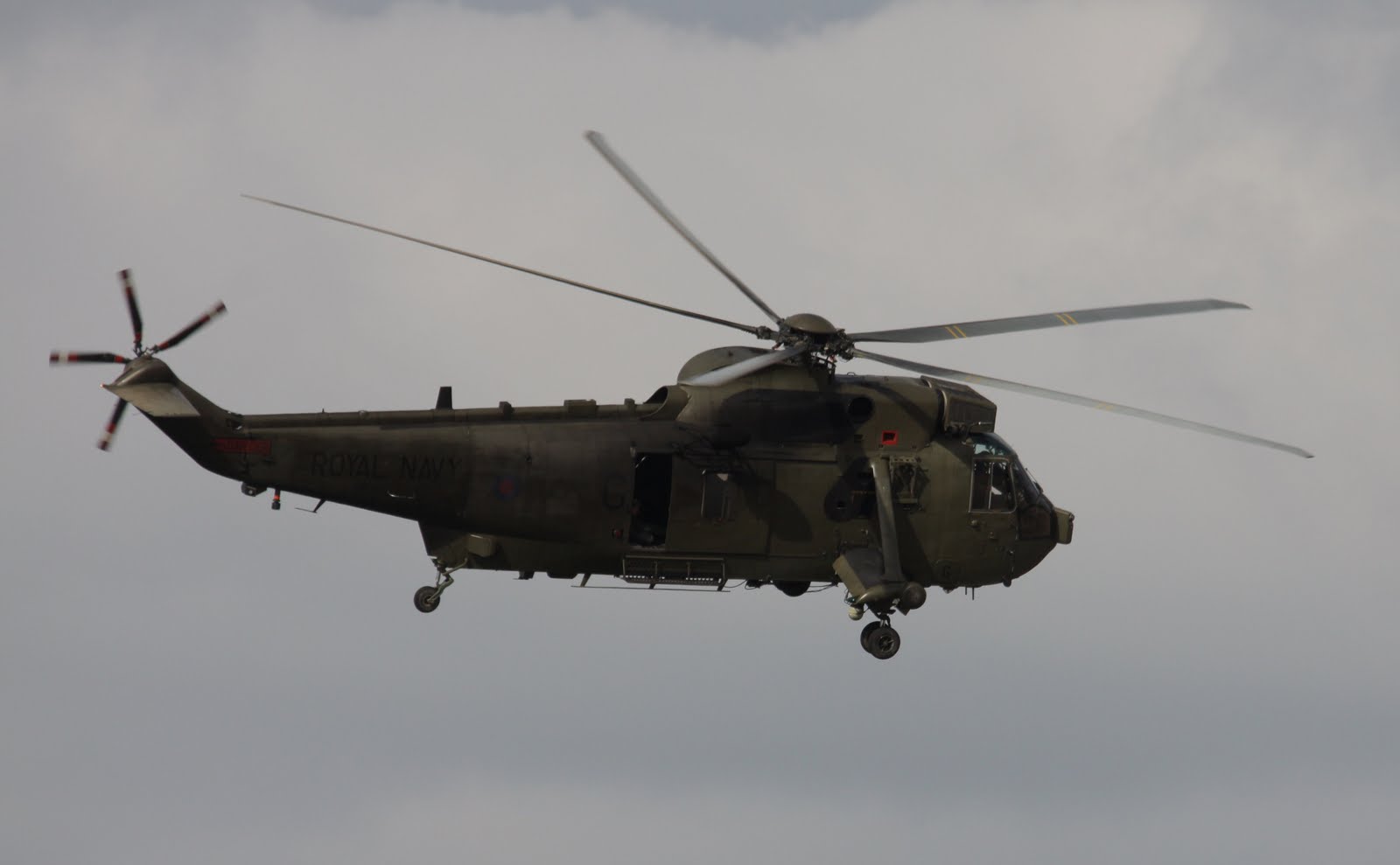
All of that was fine until the Royal Navy arrived in their Parafin Pigeon, well not quite the RN, they are in fact the Fleet Air Arm (or Waffoo's to me and you) a bunch of brave boys and girls who can't quite decide whether they want to be at sea or in the air, and while a decrepit ex-Submariner and they would never agree, it's Best Wishes to them all.

Having flushed everything in sight and undertaken a mid-air waving manoeuvre, obviously mistaking my gesticulations for some kind of greeting, I got to talking to fellow 'birder' Nick Stantiford who was one of the very few who went 'public' during the tussle with the RSPB. Nothing to report on the bird front, but apart from saying he is an ardent reader of this humble journal he has also invited me for a day off the Bill in his boat. Good on ya Nick, and great to see you again today! I waited until he had gone, then allowed this

Redshank to fly in

then spent the next 30 minutes or so

quietly stalking it to get these shots. In so doing a look across the now expossed vegetation to see

a very tiny, rufous Wader.

On size alone, compared with the accompanying

Dunlin, it was sure to be a Stint?

Little Stint was always most likely, but the few I have seen have never been this rufous, so the

doubt bells started to ring. That's when it took to the wing and headed off down the Fleet.

In the meantime this Dunlin was so obliging I couldn't resist it, but soon the bird in question

returned, giving opportunity to take these closer shots

even some with Dunlin

and Ringed Plover for comparison. Red-necked Stint was now being considered, but only ever having seen one in my life and knowing little about identifying such a bird I was perplexed.

Having contacted the usual circle of 'birders' by text announcing Little Stint I returned home not really sure what I had seen, and to refer to the Field Guide. The next move was to send the report and photographs to the PBO hopefully for inclusion on todays website (http://www.portlandbirdobs.org.uk/) which is well worth a look. By now it was looking good, in my humble opinion, for Red-necked.

Later this afternoon I had a call to say that on the photographic evidence there was a suspicion that it could indeed be a Red-necked Stint and several birders headed to Ferry Bridge in the hope of relocating it. By nightfall there had been no news, so I can only assume nothing has been seen of it but I'll await a final judgement from those more learned than I!
Please pass this 'link' to your family and friends

Thursday, 26 August 2010

Tide & Time Wait For No Man

After periods of heavy rain overnight, the day dawned with overcast sky, high wind but the rain had stopped. Complete with foul weather gear it was another wander down to ferry Bridge for me to catch yet another ebb of this weeks spring tides. Great Black-backed, Herring, Mediterranean and Black-headed Gulls were already in place on the grass margins and shingle, as a group of Dunlin and Ringed Plover appeared to be feeding a little further up the beach, but first to arrive were this family group of

adult (left) and 2 juvenile Sandwich Terns. I say family group as both youngsters were begging from the parent bird, but it was content to just rest and take little notice.

One of the juveniles in size comparison with a Herring Gull,

plus a closer look

and one in flight

High water was at 09-30'ish, with these tides seeming to have a quick change around. It seemed very short time between the 'flood' ending and the 'ebb' getting underway as by 10-30 some of the foreshore was already exposed. It never ceases to amaze me the rate of flow and the volume of water that pass through 'Small Mouth' (over which Ferry Bridge runs) an outlet of less than 100 yards?

I had already seen this Sanderling among the mixed flock feeding on the beach,

and lucky for me it was one of the first Waders to arrive at the waters edge.

A small Black Crab wasn't so lucky as this young Herring Gull made a quick mid-morning snack of it.

The attendant flock of Starlings, mostly juveniles, that forage around the car park and cafe are

now about 150 strong and in a variety of plumage's.

Having experienced a couple of squalls and the tide well out I decided on an early trip home, where I dug out of the archive a couple of video clips taken on the Buchan Alpha Oil Rig stationed 120 miles north east of Aberdeen, Scotland.

Perhaps they should be titled 'Grub Up On Deck'.


This Black-headed Gull caught this hapless Brambling on the helicopter deck,

shook it to death and then

swallowed it whole. Wots for pudding Mum?


A Merlin (Great Britain's smallest bird of prey) caught this prey item (can you identify it?) 'on the wing' and dispatched it among the pipework. The noise is from the Gas Compression Module (GCM) which sends 'produced gas', from the oil well, back down the hole to force up the oil.

and finally there are 2 messages I would like to convey, firstly to the people of Chile (and especially Jacqueline and all the others at the Hotel Sotomayor ) that many, many of us in the UK are thinking of those 33 brave men trapped in the mine, hoping they are soon rescued and returned unharmed to their loved ones.

and secondly a big welcome to the 'readership' to those on the Faroe Islands and in the Islamic Republic of Iran, who become countries number 90 & 91 to join the ever growing list.

Please send this link to your friends - Thank You!

It was pretty obvious the prey was a Redwing - yeah alright!

Wednesday, 25 August 2010

They Only Call Me Mushroom 'Cus I'm A Funguy!

The predicted rain started the moment I left home this morning, but unfortunately was not accompanied by the also promised high wind. It was hoped that this, coupled with stormy conditions in the Western Approaches overnight my have encouraged something interesting to fly over Ferry Bridge (such as a Skua or Petrel) or better still, settle. Unfortunately, the first thing that met my eye, before even reaching the cemetery, was the short line of Elm trees that once stood by the side of the road had been felled! All had scummed to the dreaded Dutch Elm Disease and were probable in danger of falling into the adjacent school grounds, but nonetheless had been (along with an overgrowth of Ivy and Bramble) the regular nesting site of Blackcap, Song Thrush, Chaffinch and Blackbird at the very least.

It would seem that the rain was encouraging bird-song as the graveyard was full of vocalists, not least Great & Blue Tit but the third most active species, and very welcome too, was Goldcrest. Most of the pines seemed to be hosting a number whilst an adult Robin, also vocal, continued to feed a juvenile.

Probably due in part to the frequent mowing, fungi is only occasionally found here so this unidentified species was a welcome sight, although I have to say they look rather like some you could expect to find in the local Asda supermarket.

The Rodwell Trail was also full of song proving particularly that the numerous Wrens haven't gone away but just remained silent of late, and the tunnel of trees gave some shelter from the rain by now getting even harder. At Ferry Bridge the bows of the small boats were all still on an easterly heading, indicating the 'flood' was still in progress but this was short lived as I reached the Fleet Reserve Visitor's Centre. Here the overhang of the building affords some protection from the elements and with the variable wind remaining in the southern quarter it was quite comfortable scanning what birds were there. As yesterday an array of Mediterranean Gulls, sporting just about every plumage phase in the range, were again accompanied by 50 or so Black-headed Gulls and maybe as many as 200 mixed Dunlin and Ringed Plover with the occasional Turnstone.

This 'second summer' Great Black-backed Gull was one of just 2, the other being an adult,

while more interesting was this juvenile Common Tern which landed only briefly,

before flying purposefully south.

A lone Little Egret was the only other feature of note as it flew back and forth a few times, and so to add a little more interest here are a few more images, from the archive, of scarce and rare visitors to the UK over previous years.

White-billed Diver at Copperhouse Quay, Cornwall, and an

American Golden Plover on the Scilly Isles.

This Chough was photographed at St David's Head in Wales, while a male

Woodchat Shrike was much closer to home at Portland.

Long-billed Murrelet couldn't even have been on anyone's 'fantasy list' as this highly unlikely individual paid a visit to Devon in November 2006. I recall 'twiching' a close relative of this bird, an Ancient Murrelet, on Lundy Island (12 miles off the coast of Devon in the Bristol Channel) in June 1990. Accompanied by birding friend Hugo Wood-Homer, I well remember my words as wedescended the steep cliff to meet the awaiting M/V Oldenburg for a return to the mainland, "we'll never see another Murrelet in the UK in our lifetime", and the taste of boot leather on the occasion described above!

PS:- The Murrelet is the only one of the 5 species featured that has not been recorded in Dorset.

Tuesday, 24 August 2010

Insects Keep Up The Interest

It hasn't been what could be described as a productive day, but compared to yesterday the weather conditions were far better. The sun already shining at 06-30 and with barely a rain cloud in sight the only 'fly in the ointment' was a near gale force wind. Along the Rodwell Trail things were as baron bird-wise, but there were a few insects on the wing, while at Ferry Bridge at least I managed to get onto the foreshore today. There, about 100 Waders were feeding while a small cluster of Gulls, always raising the chance of an oddity, made for an interesting scan. Unfortunately, I had already missed what might have been the best of the bunch as Peter Saunders informed me of a juvenile Yellow-legged Gull which had flown off just moments before my arrival.

Speckled Wood and

Painted Lady (scarce so far this year) were seen on the Trail, as were the usual flock of

House Sparrows nearly always recorded but rarely published here!

A closer look as the tide started to fall at about 08-30 produced a few

Dunlin feeding among the Samphire, plus c7

Mediterranean Gulls including this 1 of 3 juveniles with c4

'first summer' birds, this one bearing a ring. There were also more

Ringed Plover than I have noted here this end of the year (but I have been away) with adults being in the majority plus a couple of

juveniles. I found out later in the day, from Hugo Wood-Homer, that a Sanderling had also been there. There were also a few

Turnstone

most still retaining at least some of their 'summer plumage'.

A walk from Southwell along the east cliff turned up nothing, but stopping for a coffee and a catch up chat found there had been a few things seen this morning. Again it was left mainly to the 'insects' to provide the interest finding a few

Common Blue butterflies plus this single

Common Darter dragonfly. On the way back I did eventually see one migrant bird but this lone

Wheatear was all except for a juvenile Peregrine patrolling the Top Fields in search of a meal.

A weather system close to shore but still in the Atlantic as I write, looks like it will bring gale force winds and heavy rain to Dorset tomorrow, so with high (spring) tide being just after 8 'o clock on the morning looks like Ferry Bridge will once again be worth a try?

As well as Pete Saunders, who is always willing to give me a few pointers on taking better photographs, I also bumped into Colin Robertson a fellow 'twitcher' in days gone by and Roger Quiggley now Skipper of the Fleet Observer glass-bottomed boat. Roger and I worked together or several years on the old Trials Vessel 'Whimbrel', he as a Senior Scientific Officer and me in every position from Able Seaman to Captain. Great to see you both again!